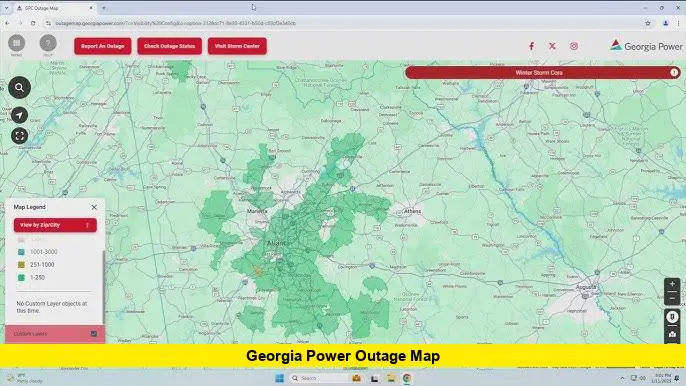
Ice, freezing rain, and high winds from a powerful winter storm have triggered widespread power interruptions, and the Georgia Power outage map now shows active outages affecting thousands of customers across the state. As conditions continue to deteriorate in northern and central Georgia, utility crews are working tirelessly to assess damage and restore service, while residents brace for prolonged outages amid treacherous travel and hazardous weather.
This comprehensive report paints a detailed, up-to-date picture of outage conditions, restoration progress, areas most affected, and what Georgians should know to stay safe and prepared in the coming days.
Table of Contents
Storm Conditions Fueling Power Interruptions
A major winter storm system moving through Georgia has unleashed significant ice and freezing rain, especially across the Atlanta metro area and north Georgia. These conditions are ideal for knocking out electrical service because ice buildup on trees and power lines increases weight and stress, often causing branches to fall directly onto infrastructure. Roads coated in ice have become dangerous or impassable, slowing crews trying to reach damaged areas.
Forecasters have reported ice accumulations ranging from a quarter inch to an inch or more in some counties, with wind gusts adding to the risk of structural damage and falling limbs. The combination of moisture and sub-freezing temperatures makes widespread outages a high probability as the storm progresses.
Outages Across the State: Latest Numbers
Real-time outage tracking shows that thousands of Georgia Power customers are currently without electricity. Latest data indicates that over 4,000 customers served by Georgia Power have lost power, with additional interruptions reported by other utilities serving different regions of the state. Outages are recorded across a mix of metropolitan and rural counties.
Some of the counties with the highest numbers of reported outages include:
- Gwinnett
- Fulton
- DeKalb
- Rockdale
- Pickens
These figures reflect the evolving nature of storm impacts, with outages rising and falling as conditions worsen or improve, and as crews update their status assessments.
Understanding the Georgia Power Outage Map Tool
The Georgia Power outage map is an interactive digital resource designed to display where service interruptions are occurring in near real time. It shows the location and approximate number of customers affected by each outage cluster. Users can view the map by neighborhood, ZIP code, or city to determine whether their home or business is within an outage zone.
The map also provides estimated restoration times when available, although these are subject to change as crews on the ground survey damage and adjust plans. This tool is updated frequently to reflect new outage reports and the work progress of repair teams.
Where Outages Are Most Concentrated
Across the state, outage clusters are most numerous where ice and freezing rain have been most severe. Metro Atlanta suburbs and areas north of the city have seen the greatest accumulation, and consequently more extensive damage to trees and power lines.
In addition to northern Georgia, some central and eastern counties have reported intermittent service interruptions connected to weather-related damage. Even areas that did not initially lose power early in the storm may see new outages as freezing precipitation continues to spread.
How Restoration Efforts Are Organized
Utility operators follow a structured approach to power restoration after storm-caused outages:
- Critical services first: Facilities such as hospitals, emergency response hubs, and water treatment plants receive priority.
- High-impact infrastructure: Crews focus on bringing major transmission lines and substations back online.
- Broad service areas: After the essentials are secured, efforts shift to the largest groups of residential customers.
- Individual and local repairs: Finally, smaller outages affecting isolated homes or neighborhoods are addressed.
While this method does not always return power to every location immediately, it helps ensure that the greatest number of customers benefit as quickly as possible.
Why Some Outages Take Longer to Fix
Several factors can stretch outage restoration into multiple days:
- Heavy ice: Thick ice makes travel hazardous for repair crews and complicates work at the outage site.
- Downed trees: Trees and large limbs must be cleared before repairs can begin safely.
- Remote locations: Rural and mountainous areas are often harder to access, delaying restoration.
- Safety protocols: Crews will not operate in unsafe conditions until it is confirmed that lines and roads are secure for work.
Experts warn that extended outages lasting two to three days or more are possible in areas hardest hit by ice.
Safety Tips During Power Loss
When power is out in winter weather, staying safe becomes a top priority. Residents should:
- Use generators only outdoors and away from open windows.
- Avoid using grills or gas appliances indoors for heat.
- Keep flashlights and batteries ready instead of candles to reduce fire risk.
- Dress in warm, layered clothing if heating systems are down.
- Stay clear of fallen or low-hanging power lines, and report them immediately.
Generators, space heaters, and indoor stoves can pose carbon monoxide hazards if used improperly, so caution is essential.
Tracking Outages and Reporting Issues
Customers experiencing an outage can use real-time tools to check status and report their situation. Reporting outages helps utility operators confirm locations and patterns of service loss, which can improve the speed and accuracy of response efforts.
Mobile apps and outage alert services give residents updates and notifications tailored to their specific address or area, helping them stay informed as conditions evolve.
Community Impacts of Power Interruptions
Beyond the inconvenience of losing lights and heat, prolonged outages affect daily life in many ways. Schools may close or shift to remote operations, businesses face interruptions in service, and traffic signals can fail, creating hazards on icy roads.
Healthcare facilities and essential services may rely on backup generators, but these have limits and require monitoring and fuel to remain effective.
Residents who rely on electrical equipment for medical needs should make contingency plans and communicate with caregivers or emergency services in the event of prolonged outages.
Conditions Improving or Worsening?
As the storm moves through and eventually begins to weaken, conditions may improve in some areas even while others are still struggling with lingering ice and low temperatures. Weather forecasts suggest that areas north of the state will see continued freezing conditions into the next day, prolonging the risk of new outages and complicating restoration work.
Residents should monitor conditions closely, as melting ice can also cause tree limbs to shift or fall later in the storm’s lifecycle.
Preparing for Future Severe Weather Events
This storm highlights the importance of preparedness. Georgians are encouraged to:
- Keep emergency kits stocked with supplies for several days.
- Have backup heat sources that are safe and well-ventilated.
- Check smoke and carbon monoxide detectors regularly.
- Stay informed with real-time outage and weather updates.
Understanding how power distribution and restoration work helps households anticipate timelines and make informed decisions.
Why Real-Time Outage Data Matters
Reliable, real-time data on outages plays a critical role not only for residents but also for local governments, first responders, and utility operators. It allows for:
- Smarter deployment of crews and resources.
- Better communication with affected communities.
- Rapid identification of extensive damage patterns.
- Prioritization of repairs to protect public health and safety.
Without immediate visibility into where power is out and how conditions are changing, the restoration process becomes slower and less efficient.
Looking Ahead
As utility crews continue working around the clock, residents can expect incremental progress each day. Restoration teams will focus first on the areas where the greatest number of customers can be brought back online swiftly, while also addressing critical infrastructure needs.
Even as storm conditions begin to ease, the aftermath of ice, fallen trees, and damaged equipment means that full power restoration will take time.
Families, businesses, and community leaders should remain vigilant, stay connected through outage tools, and heed local safety guidance as conditions evolve on the ground.

