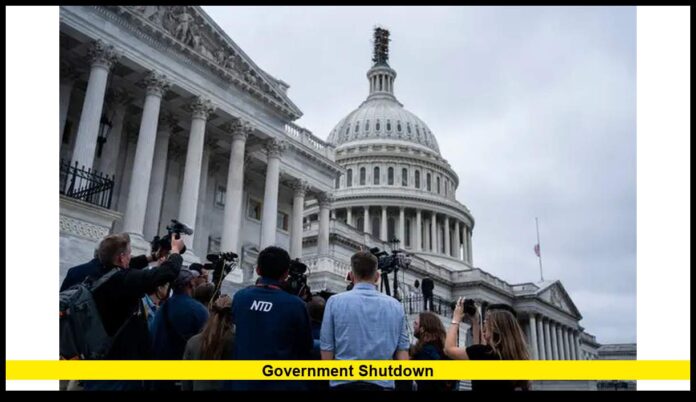
The government shutdown has entered its 40th day as of November 9, 2025, marking one of the longest and most disruptive closures in U.S. history. The prolonged stalemate in Congress has caused widespread disruptions across federal services, air travel, and social programs, leaving millions of Americans feeling the impact.
Table of Contents
What Exactly Is Going On?
The federal government shut down at 12:01 a.m. EDT on October 1, 2025, after lawmakers in Congress failed to pass a continuing resolution to fund federal agencies. Approximately 900,000 federal employees have been furloughed, and millions more are working without pay.
The core of the deadlock centers on disagreements over the extension of premium tax credits under the Affordable Care Act (ACA) and long-term spending levels. While one side of Congress wants to reopen the government immediately and negotiate healthcare policy later, the other insists that healthcare provisions must be included in the funding bill itself.
Recent Developments
The Senate convened for a rare Sunday session this week to address the crisis. Lawmakers debated a new funding package that would temporarily reopen the government while providing longer-term funding for critical programs.
However, negotiations remain stalled. Senate Republicans recently rejected a proposal that would have tied government reopening to a one-year extension of ACA tax credits. The impasse has kept the government partially closed for more than a month, surpassing all previous shutdown records.
As frustration grows, bipartisan talks have resumed, but progress remains slow. Several lawmakers have hinted that a compromise could be reached within days if both sides agree to separate healthcare reforms from the main funding bill.
Who Is Getting Impacted and How?
Federal Workers and Contractors
Hundreds of thousands of furloughed employees are struggling without pay. Many have turned to community assistance programs and temporary jobs to manage expenses. Federal contractors, who are not guaranteed back pay, face even greater uncertainty.
Travel and Aviation
Air travel disruptions have intensified nationwide. Thousands of flights have been delayed or canceled due to limited air traffic control staffing. The Federal Aviation Administration has warned that if the government shutdown continues into the holiday season, the nation could face one of the most chaotic travel periods in recent memory.
Food Assistance and Social Programs
The Supplemental Nutrition Assistance Program (SNAP) is under immense strain. Benefit distributions have slowed, and several states are using emergency funds to prevent hunger among low-income families. WIC (Women, Infants, and Children) programs are also facing funding shortfalls.
National Parks and Federal Services
Many national parks remain closed or are operating with minimal staff. Passport processing, visa approvals, and IRS support lines have slowed dramatically. Even some scientific and health research agencies have paused projects, delaying critical studies.
Economy and Broader Effects
Economists warn that if the shutdown continues, it could shave a measurable amount off U.S. GDP growth in the fourth quarter. Consumer confidence is falling, and private businesses that rely on federal contracts are seeing losses. Tourism, travel, and local economies near federal facilities are also feeling the ripple effects.
Timeline at a Glance
| Date | Event |
|---|---|
| Oct 1, 2025 | Government officially shut down at 12:01 a.m. EDT. |
| Oct 15, 2025 | Initial talks between Senate and House leaders collapse. |
| Oct 25, 2025 | Public protests begin outside Capitol Hill. |
| Nov 5, 2025 | Senate rejects proposal tying reopening to ACA extension. |
| Nov 9, 2025 | Shutdown enters Day 40 with limited progress toward a deal. |
Why Is Congress Stuck?
The political standoff is rooted in two major issues: healthcare policy and fiscal priorities.
- Democratic leaders want the extension of Affordable Care Act premium tax credits to be part of any funding agreement, arguing it’s vital for keeping healthcare affordable.
- Republican leaders argue that the government should reopen first, and healthcare discussions should follow later to avoid conflating two separate issues.
This philosophical divide has prevented both sides from approving even a temporary continuing resolution, despite mounting economic and public pressure.
Possible Next Steps
Several potential outcomes are being discussed:
- Short-Term Funding Agreement: Congress could pass a stopgap bill reopening the government for 30–45 days while broader negotiations continue.
- Comprehensive Funding Deal: Lawmakers might agree on a multi-agency funding package that settles fiscal disputes and addresses healthcare provisions.
- Extended Shutdown: If talks fail again, the closure could stretch past Thanksgiving, deepening economic damage and public frustration.
Moderate lawmakers from both parties have been pushing for a bipartisan compromise, emphasizing the toll on ordinary Americans and the economy.
What It Means for Americans Right Now
For millions of U.S. citizens, the shutdown’s effects are no longer abstract — they’re being felt every day.
- Federal Employees: Many workers have missed two paychecks and are uncertain when back pay will arrive.
- Travelers: Expect longer airport lines, flight cancellations, and delays through Thanksgiving.
- Low-Income Families: SNAP and WIC benefits could be further delayed or reduced without a new funding measure.
- Small Businesses: Federal loan approvals are on hold, and contracts remain unpaid.
- Taxpayers: IRS services such as refunds and inquiries are facing significant backlogs.
The longer the government shutdown continues, the greater the ripple effects will be across the economy, from local communities to national markets.
The Broader Implications
Beyond the immediate disruptions, the shutdown underscores a larger issue: deep political division in Washington. It has tested public trust in Congress and strained the patience of federal employees, contractors, and everyday Americans.
Experts warn that prolonged shutdowns erode confidence in government institutions and make future budget negotiations even harder. The situation could also influence voter sentiment ahead of the 2026 midterm elections.
As the government shutdown continues, millions wait for relief — and a solution that restores stability to the nation. Stay tuned and share your thoughts on how this historic closure is affecting you.

