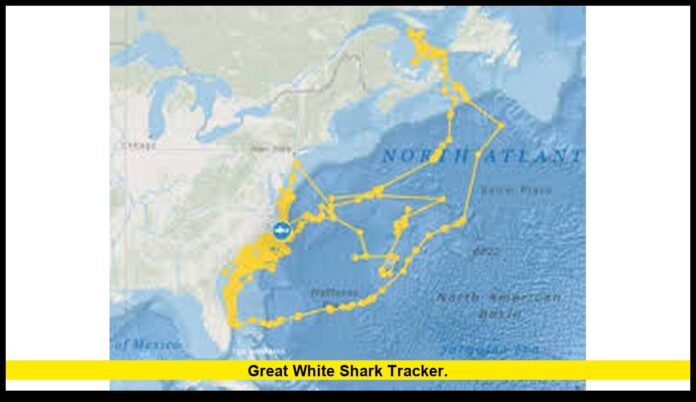
A great white shark tracker is a real-time system that uses satellite tags to monitor the locations and migration paths of tagged great white sharks.
The great white shark tracker is providing unprecedented, real-time insight into the movements of one of the ocean’s most powerful predators as of today, allowing scientists and the public to follow confirmed migration paths of tagged great white sharks across U.S. coastal waters and the open Atlantic. Recent tracking data shows multiple large individuals moving seasonally between northern feeding grounds and warmer southern waters, offering a clearer picture of how these apex predators use the ocean throughout the year.
Great white sharks remain among the most studied marine animals in the world, yet many aspects of their lives were mysteries until satellite tracking became widely used. Modern tracking programs now deliver precise location data, movement speed, dive behavior, and seasonal patterns. These verified records are reshaping what researchers know about shark ecology, coastal safety, and long-term conservation planning.
Table of Contents
What the Great White Shark Tracker Is and How It Works
A great white shark tracker is a system that follows individual sharks fitted with electronic tags. These tags transmit location data when the shark surfaces or passes acoustic receivers placed in the ocean. The information is then processed and displayed on interactive maps used by scientists and, in many cases, the general public.
Two main technologies power modern tracking:
Satellite Position Tags
These tags attach near the dorsal fin and send a signal to orbiting satellites whenever the fin breaks the surface. Each transmission creates a precise geographic location. Over time, these points form a detailed migration map.
Acoustic Tracking Systems
Acoustic tags emit sound pulses that are detected by underwater receivers anchored along coastlines and migration corridors. This system provides highly accurate regional movement data and shows how long a shark remains in a specific area.
Together, these technologies allow continuous monitoring without harming the animal. The shark swims freely while scientists receive verified, time-stamped data.
Why Tracking Great White Sharks Matters
Tracking great white sharks serves several critical purposes:
- It reveals long-distance migration routes.
- It identifies important feeding and breeding areas.
- It helps estimate population size and survival rates.
- It supports public safety planning along busy coastlines.
- It informs conservation policies for a species considered vulnerable worldwide.
Great white sharks play a vital role in maintaining healthy marine ecosystems. By regulating prey populations, they help keep food webs balanced. Understanding where they travel and why they choose certain regions helps protect both the sharks and the environments they depend on.
Current Migration Patterns Along the U.S. Coast
The latest verified tracking data confirms a well-defined seasonal cycle for great white sharks in the western Atlantic.
Spring and Summer Movement
During warmer months, many tracked sharks move north along the East Coast. They frequent waters off:
- Florida
- Georgia
- The Carolinas
- Virginia
- New Jersey
- New York
- New England
- Atlantic Canada
These regions offer abundant prey such as seals, large fish, and smaller sharks. Cooler water temperatures also suit the sharks’ physiology.
Fall and Winter Return South
As water temperatures drop, tracked sharks gradually migrate south. Winter pings often appear off:
- The Carolinas
- Florida’s Atlantic coast
- The Gulf of Mexico
This southward shift allows the sharks to remain within preferred temperature ranges while still accessing food sources.
The consistency of these seasonal movements across multiple years confirms that great white sharks follow reliable migratory corridors rather than wandering randomly.
Notable Sharks on the Great White Shark Tracker
Several individually tagged sharks have become widely followed due to their size, travel distance, and long-term data records.
Large Adult Males
Some of the largest tracked males measure over 13 feet in length and weigh well over 1,500 pounds. Their movements show:
- Extensive coastal travel covering thousands of miles per year.
- Regular north-south migration along the continental shelf.
- Occasional offshore excursions into deep Atlantic waters.
These sharks demonstrate how adult males range widely while still returning to familiar seasonal zones.
Adult Females and Reproductive Behavior
Tracked females often show different movement patterns. Some remain longer in specific regions believed to support mating or gestation. Others undertake offshore journeys that may relate to reproductive cycles, although research continues to clarify these behaviors.
Long-term tracking is essential for understanding where females give birth and how juveniles disperse.
Juvenile and Subadult Sharks
Younger sharks, usually under 10 feet, often stay closer to coastal nursery areas. Their movements help scientists identify critical habitats that require protection from heavy fishing pressure and pollution.
How Real-Time Tracking Benefits Coastal Communities
The great white shark tracker is not only a research tool. It also provides practical benefits for people who live, work, and recreate near the ocean.
Enhanced Public Awareness
When a tagged shark approaches popular beaches, tracking systems can alert local authorities. This information supports:
- Temporary swimming advisories.
- Adjustments to lifeguard patrol zones.
- Increased monitoring during peak beach hours.
Improved Risk Assessment
Although shark attacks remain extremely rare, knowing where large predators are located helps officials make informed decisions rather than relying on speculation or fear.
Education and Engagement
Public access to shark movement maps has changed how many people view these animals. Instead of being seen only as threats, great white sharks are increasingly recognized as vital, wide-ranging wildlife that deserves protection.
What Tracking Data Reveals About Shark Behavior
Travel Speed and Endurance
Great white sharks can travel more than 30 miles in a single day. Long-distance migrations may cover several thousand miles within a year. This endurance highlights their role as true ocean wanderers.
Depth Preferences
Satellite and acoustic data show that great whites regularly dive hundreds of feet below the surface. These dives likely relate to hunting, temperature regulation, and navigation.
Site Fidelity
Many tracked sharks return to the same regions year after year. This pattern suggests that certain coastal and offshore areas serve as reliable feeding or mating grounds.
Technological Advances in Shark Tracking
Tracking technology continues to improve, providing clearer and more detailed information.
Longer-Lasting Batteries
Modern tags can transmit for several years, allowing scientists to build multi-year movement histories for individual sharks.
Improved Location Accuracy
Newer satellite tags provide more precise coordinates, reducing uncertainty and improving migration mapping.
Environmental Sensors
Some tags now record water temperature, depth, and ambient light, helping researchers understand how sharks respond to changing ocean conditions.
These advancements allow scientists to link shark movements with climate patterns, prey distribution, and oceanographic features such as currents and upwellings.
Conservation Implications of Tracking Data
Great white sharks face several threats despite legal protections in many countries.
Bycatch and Fishing Pressure
Sharks can become entangled in commercial fishing gear or accidentally caught on longlines. Tracking helps identify high-risk areas where mitigation measures may be needed.
Habitat Degradation
Coastal development and pollution can affect nursery and feeding areas. Movement data highlights regions that require stronger environmental safeguards.
Climate Change Effects
As ocean temperatures shift, tracking shows how sharks adjust their ranges. These changes may alter prey availability and bring sharks into new areas, making ongoing monitoring essential.
How the Public Can Use Tracker Information Responsibly
While real-time data is valuable, it must be interpreted carefully.
- A shark’s presence does not mean danger is imminent.
- Tagged individuals represent only a portion of the total population.
- Sharks may pass through an area quickly without lingering.
Responsible use of tracking data focuses on awareness, education, and conservation rather than alarm.
The Role of Citizen Science
In addition to professional tracking, public sighting reports contribute to broader datasets. When combined with satellite and acoustic information, these reports help confirm:
- Seasonal arrival times.
- Regional abundance trends.
- Changes in nearshore activity.
This collaboration between scientists and ocean users strengthens the overall understanding of shark distribution.
Future Directions in Great White Shark Research
Ongoing projects aim to answer key questions:
- Where are the primary breeding areas?
- How do juveniles disperse after birth?
- How will warming oceans affect migration timing and routes?
- What factors influence long-term population recovery?
Expanded tagging programs and international data sharing will continue to refine migration maps and improve conservation strategies.
Key Verified Insights from Current Tracking
- Great white sharks along the U.S. East Coast follow consistent seasonal north-south migration routes.
- Large adults can travel thousands of miles annually.
- Coastal waters of the southeastern United States remain important winter habitats.
- Northern waters, including New England and Atlantic Canada, serve as major summer feeding areas.
- Both male and female sharks show strong site fidelity to certain regions.
These findings are based on confirmed, time-stamped tracking records and ongoing monitoring.
Why the Great White Shark Tracker Is Changing Public Understanding
Before satellite tagging, most knowledge of great white sharks came from rare sightings and fishing records. Today, continuous tracking has transformed perception.
People can now see:
- How predictable shark movements are.
- How rarely they remain near crowded beaches for long.
- How essential they are to marine ecosystems.
This transparency supports science-based management and reduces fear driven by misinformation.
Looking Ahead
As technology advances and more sharks are tagged, the great white shark tracker will continue to expand the global understanding of these iconic predators. Each new data point adds to a growing picture of how great whites use the ocean, how they respond to environmental change, and how humans can coexist with them safely and responsibly.
What do you think about following shark migrations in real time, and how do you feel this data should shape ocean conservation efforts? Share your thoughts and stay engaged with the latest updates.

