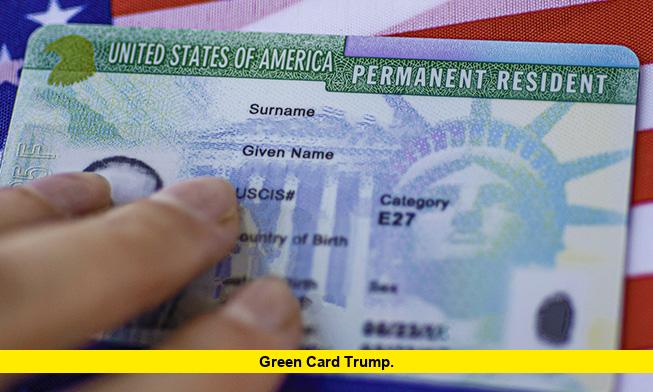
The U.S. Citizenship and Immigration Services (USCIS) and the Donald Trump administration have rolled out a set of dramatic immigration policy changes that are sending shockwaves through immigrant communities, businesses, and anyone hoping to secure or retain a green card. The changes — part of what advocates call the most sweeping overhaul of legal immigration in decades — significantly alter how work permits, asylum applications, and green-card processing will proceed going forward.
In this article, we break down what has changed, who is affected, and what it could mean in the months ahead.
Table of Contents
What triggered the overhaul: context behind the shift
Earlier this month, the administration cited a fatal shooting of two National Guard service members in Washington, D.C., allegedly committed by a man from Afghanistan, as justification for ramping up immigration restrictions. In response, USCIS issued a new internal policy guidance that tightens vetting rules and freezes or re-examines many pending immigration and residency applications.
Key among the moves: applications — including those for green cards, work authorization, asylum, and citizenship — filed by nationals of 19 countries deemed “high-risk” are now paused or under heightened scrutiny. The pause includes not only new applications but even previously approved benefactors’ cases. Individual approved green cards could now be subject to re-review.
What once were considered secure, stable immigration pathways now face uncertainty under a policy framework built around national security and public-safety considerations.
Major changes — what’s new under the “Green Card Trump” era
1. Pause and re-review of green cards and asylum cases from 19 countries
- All pending green card, citizenship, asylum, and related applications by individuals from the 19 specified countries are now on hold. Processing has stopped until further notice, regardless of where applicants are in the system.
- Even some previously approved green cards and residency benefits are subject to re-review. USCIS may require re-interviews or additional vetting to reassess eligibility.
- According to internal guidance, adjudicators must evaluate “security or public safety threats,” identify “related grounds of inadmissibility or ineligibility,” and decide whether to uphold or revoke benefits on a case-by-case basis.
2. Work-permit (EAD) validity drastically cut — from years to 18 months
- Starting December 5, 2025, USCIS significantly reduced the maximum validity period for both new and renewal employment authorization documents (EADs) to just 18 months.
- Those who already hold valid EADs retain their existing validity until expiration, but future renewals will be limited to 18-month increments.
- This change directly affects many immigrants waiting for green cards, asylum applicants, refugees, and those with other temporary legal statuses — introducing more frequent renewals and increased uncertainty about their work-status continuity.
3. Expanded vetting criteria for visas and immigration benefits including H-1B/H-4 paths
- The policy guidance allows USCIS to consider “negative, country-specific factors” in evaluating visa and benefit requests from nationals of the 19 high-risk countries.
- For certain visa programs — notably H-1B and H-4 — additional enhanced vetting is being rolled out. As of December 15, 2025, the State Department will require social-media screening for all applicants under those categories, expanding vetting beyond traditional security checks.
- The broadened scrutiny applies not only to new applicants but may also affect current visa holders seeking renewals or extensions.
Who is impacted — and how different groups are reacting
Green card applicants, asylum seekers, refugees
Those with pending applications — or hoping to apply — face substantial delays, indefinite pauses, or potential refusals. Asylum seekers waiting for final decisions will see their cases frozen. Refugees and asylum-granted individuals relying on EADs must renew more often, creating insecurity for those dependent on stable work authorization.
Current legal residents and green card holders from targeted countries
Even individuals who have already secured a green card could be subject to re-review. That introduces anxiety for many who believed their status was secure. Some may face additional interviews, delays, or in extreme cases, revocation of benefits.
Employers and businesses reliant on immigrant labor
Companies that depend on immigrant workers — especially skilled workers under H-1B, refugees, or asylum-granted employees — may face staffing instability as work-permit renewals become more frequent and subject to additional vetting. For small businesses and healthcare providers, in particular, that could disrupt operations.
Immigrant communities and legal advocates
Immigration attorneys report a surge in demand as clients scramble for clarity. Many express concern: what was previously a predictable legal process has become uncertain, lengthier, and riskier. For families separated by immigration status or from high-risk countries, anxiety and fear are high.
What motivated the policy — and what the administration says
The administration frames these changes primarily as nationalsecurity measures. The review was triggered by the recent shooting of two National Guard members. Officials argue that the 19 countries on the watch list pose heightened risk, and that existing immigration processes allow too much discretion without adequate vetting.
Under the statutory authority of Section 212(f) of the Immigration and Nationality Act, the president may impose restrictions on entry or benefits for certain classes of foreign nationals. The December 2025 policy memorandum directing hold and review of benefit applications cites this authority. The administration argues that these new steps restore “public safety” and “integrity” to the immigration system.
Potential long-term impact on U.S. immigration and society
Strain on legal immigration pathways
What once appeared as a robust, multi-layered legal immigration system may now shrink significantly. With lengthier processing times, more frequent renewals, and heightened risk of denial or revocation, green cards — long seen as a stable path to permanent residency — may become far less accessible, especially for people from the 19 targeted countries.
Economic and labor-market consequences
Workers waiting on green cards or holding temporary work permits may face disruption. Employers relying on immigrant labor, particularly in sectors like health care, agriculture, and technology, may struggle to maintain staffing. The increased burden on businesses could translate to slower growth or higher labor costs.
Social and humanitarian ripple effects
Refugees, asylum seekers, and immigrant families could find themselves in limbo. The freeze on asylum decisions, coupled with frequent renewals for work permits, may destabilize many lives. Community organizations that offer immigrant support will likely see increased demand, while uncertainty fuels anxiety among immigrant populations.
Legal battles and constitutional challenges
Given the magnitude of these changes, legal challenges are likely — especially around questions of due process, equal protection, and administrative authority. Courts may be asked to weigh the administration’s national-security rationale against the rights of immigrants and the principles underlying lawful permanent residency.
What to do right now — Guidance for visa-seekers and green card hopefuls
- If you’re from one of the 19 high-risk countries, expect delays: assume your application may take much longer, or be subject to re-review.
- If you hold an EAD or are planning to apply for one, note that renewals will now be limited to 18 months. Plan for earlier renewals and factor in potential delays.
- Employers relying on immigrant labor should anticipate staffing flux and consider contingency staffing or alternate hiring strategies.
- Consult a qualified immigration attorney if your application is pending or if you received prior approval — re-review may be required.
Why this matters — broader stakes for U.S. immigration and the future
This wave of policy changes marks a turning point. It signals that under this administration, legal immigration — including pathways long assumed secure — will face deeply increased hurdles. It also reflects a shift in how the U.S. balances national security against immigration policy.
The ripple effects could touch everything from labor markets and businesses to family migration, refugee protection, and the social fabric of immigrant communities.
Whether these measures remain temporary or become a new norm depends not only on administrative decisions, but also on legal challenges and broader political debates ahead.
If you’re part of an immigrant community, waiting on a green card, or affected by these changes — now is the moment to stay informed, plan ahead, and engage. Your voice and experiences matter.

