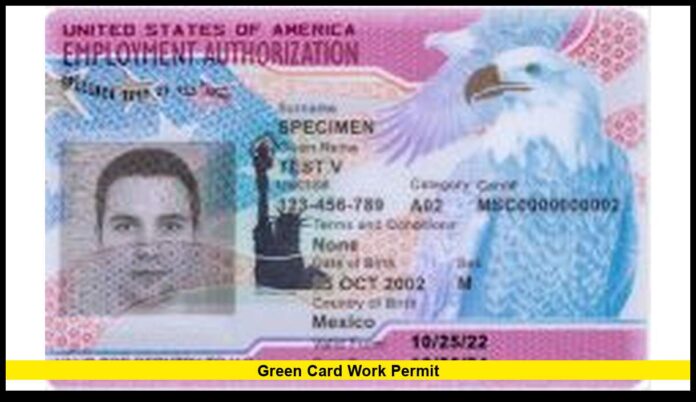
The green card work permit process has entered a new phase as U.S. immigration authorities implement confirmed changes affecting employment authorization, renewal timing, and overall document validity. As of this week, major policy updates have reshaped how applicants maintain work eligibility while waiting for permanent residency decisions.
Recent updates include a significant reduction in the maximum validity period for many Employment Authorization Documents (EADs). The widely used multi-year EADs are no longer being issued for several categories tied to pending green card applications. The new maximum validity is now 18 months. Additionally, automatic extensions that previously protected applicants from employment interruptions have been scaled back for several categories, leaving many individuals responsible for stricter renewal planning.
These changes affect both current workers and new applicants navigating U.S. employment rules while awaiting long-term immigration outcomes.
Table of Contents
Shorter EAD Validity and What It Means
The shift from multi-year EADs to an 18-month maximum has immediate consequences. Applicants who previously relied on longer authorization windows must now prepare for more frequent renewals. While cards issued before the change keep their original expiration dates, new and renewed cards fall under the shorter term.
This development increases the likelihood of renewal bottlenecks, especially for applicants with pending adjustment-of-status cases. Since many rely on EADs to continue working during the green card process, any delay in renewal can cause real employment challenges.
Employers must also adapt, as they now face more frequent I-9 re-verification obligations. Organizations that depend heavily on immigrant labor will need improved compliance processes to reduce disruptions.
Automatic Extensions No Longer Broadly Available
Another impactful shift involves the end of wide automatic extensions for many categories. Applicants who file for EAD renewal after the recent policy cut-off date may not qualify for the previous long extension period that temporarily protected workers while their renewal was processed.
This means:
- Applicants must file early to prevent gaps in work authorization.
- Renewal timing is now crucial to avoid employment interruptions.
- Workers and employers must closely track expiration dates and filing receipts.
Those who filed before the policy change may still receive limited protections under earlier rules, but new filings fall under the updated, stricter regulations.
Who Is Most Affected
Several groups feel the impact directly:
- Adjustment-of-status applicants waiting for green cards
- Refugees and humanitarian applicants
- Renewal-dependent workers with temporary employment authorization
- Employers who routinely hire EAD holders
Because many U.S. industries—including healthcare, hospitality, tech, and logistics—rely on employment-authorized immigrants, the practical effects stretch beyond the individual worker.
Steps Applicants Should Take Now
To stay compliant and avoid disruptions, applicants should act proactively. These steps help reduce the risk of losing work authorization due to a processing gap:
1. File EAD Renewals Early
Renewal applications can typically be filed up to 180 days before the expiration date. With shorter validity periods, this early window is more important than ever.
2. Track All Filing Dates
Applicants who filed before the policy shift may receive more generous extension benefits. Anyone filing afterward should not expect automatic protection and must monitor timelines closely.
3. Communicate Promptly With Employers
Provide renewal receipts immediately after filing. Employers need this documentation to stay compliant with verification requirements.
4. Keep All EAD and I-797C Notices
These documents serve as proof of timely filing, which is crucial during any employment verification review.
5. Seek Professional Guidance for Complex Cases
Situations involving humanitarian categories, travel plans, or overlapping applications may require tailored legal advice.
Timeline of Key Policy Shifts
| Date | What Changed |
|---|---|
| Recent Implementation | EAD validity reduced to 18 months for many categories |
| Policy Cut-Off Date | Automatic extensions no longer broadly applied for new filings |
| Ongoing | Processing times vary, increasing the importance of early renewal |
This timeline helps applicants understand which rules apply to their case.
Employer Responsibilities Under the New Rules
Employers must be more vigilant as policies tighten. Key obligations include:
- Updating internal I-9 processes
- Training HR teams to identify new EAD validity rules
- Requesting timely documentation updates from workers
- Monitoring expiration dates more frequently
- Avoiding assumptions that automatic extensions still apply
Even unintentional lapses in verification can result in penalties, so employers benefit from refreshing compliance procedures now.
Impact on Green Card Applicants
For those awaiting permanent residency decisions, these changes do not alter green card eligibility or adjudication rules. However, they do affect daily life and employment stability.
Shorter validity periods mean:
- More frequent renewals
- Increased financial and administrative burden
- Higher risk of temporary work interruptions
- Greater importance of timing and preparation
For many families, the green card process is already long and complex. These adjustments add an additional layer of planning.
Common Questions Answered
Will current EAD cards be shortened?
No. Cards issued before the change retain their full printed validity.
Can a worker continue employment while a renewal is pending?
Only if the category still qualifies for extension protection. New filings after the recent policy cut-off may not be covered.
Should employers hesitate to hire EAD holders?
No. EADs remain valid work authorization documents. Employers simply need updated verification procedures.
Quick Checklist for Applicants
- Submit renewal applications at the earliest eligible date
- Store all receipts and confirmation notices
- Inform employers of filings right away
- Review travel plans before leaving the country
- Monitor policy updates, as implementation guidance continues to evolve
Whether you are an employer, an applicant, or someone preparing for the adjustment-of-status process, these confirmed changes to the green card work permit system make early planning essential.
Share your experience or questions below—your insights help others navigating the same process.

