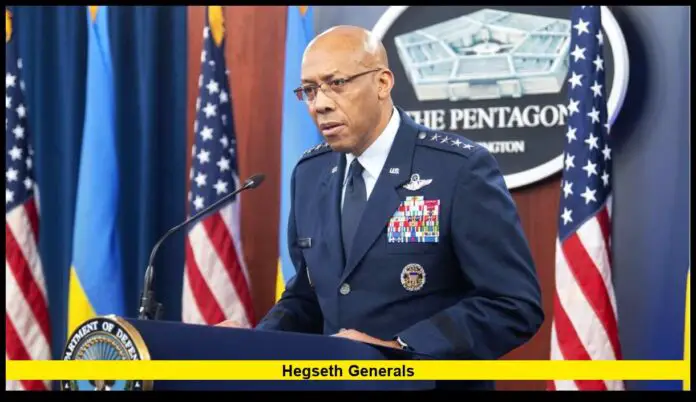
The phrase hegseth generals has been trending as Defense Secretary Pete Hegseth pushes forward with sweeping changes inside the Pentagon. In September 2025, Hegseth ordered hundreds of generals and admirals to attend a rare gathering at Marine Corps Base Quantico, sparking debate about his motives and the long-term impact of his restructuring plan.
This meeting, combined with his earlier moves to cut senior ranks and dismiss high-level officers, has placed U.S. military leadership under intense scrutiny.
Table of Contents
A Rare Gathering of Generals
Secretary Hegseth has called for one of the largest mass assemblies of senior officers in recent memory. Brigadier generals, admirals, and other high-ranking leaders from across the services have been summoned, including some brought back from overseas commands.
The unusual nature of this event has fueled speculation. Was the purpose to outline a new strategic vision, announce personnel changes, or reinforce discipline within the ranks? Whatever the reason, the urgency of the meeting has captured national attention.
Context Behind the Shakeup
The gathering comes on the heels of major changes already underway in the Pentagon.
- Earlier this year, Hegseth announced plans to reduce the number of generals and admirals by at least 10%, with the most significant cuts among four-star positions.
- Several senior officers have already been removed or forced into early retirement, including top judge advocates and intelligence leaders.
- These moves are consistent with Hegseth’s stated goal of streamlining military leadership and shifting resources toward operational units rather than upper-level bureaucracy.
By consolidating power and restructuring the hierarchy, Hegseth has signaled a desire to reshape how the military operates at its highest levels.
Why the Focus on Generals?
Hegseth has argued that the U.S. military has too many senior officers compared to previous generations. He believes trimming this number will:
- Reduce bureaucracy and speed up decision-making.
- Redirect resources from top salaries and staffs to front-line forces.
- Encourage accountability by limiting layers of command.
- Modernize leadership to reflect the demands of current threats.
The emphasis on fewer generals also reflects his belief that the armed forces should focus more on combat readiness than administrative overhead.
Possible Objectives of the Meeting
While the agenda has not been fully disclosed, defense observers have speculated about several possible goals of the Quantico summit:
- Unveiling a new doctrine focused on homeland defense and streamlined overseas commitments.
- Announcing further personnel cuts among generals and admirals.
- Setting expectations for discipline, loyalty, and alignment with new Pentagon priorities.
- Centralizing communication by delivering a unified message directly to all senior leaders.
The scope of the meeting suggests it is more than routine—it is a deliberate signal that Hegseth intends to put his stamp firmly on military leadership.
Reactions Among Military Leaders
The response among generals and admirals has been mixed.
- Some see the reforms as necessary, arguing the military has grown top-heavy and needs leaner leadership.
- Others worry the changes are destabilizing, especially at a time when global challenges require experienced senior officers.
- Concerns about morale are widespread, with some fearing the cuts could discourage talented leaders from pursuing long-term service careers.
The lack of transparency has added to uncertainty, leaving many wondering what will come next.
Implications for the Chain of Command
The hegseth generals plan could reshape the U.S. military chain of command in several ways:
- Consolidation of combatant commands: Some regional or service-specific commands could merge.
- Fewer four-star leaders: Reduction at the highest ranks would shift more responsibility onto three-star officers.
- More direct civilian oversight: Hegseth’s approach suggests tighter control from the top of the Pentagon.
- Accelerated promotions for younger officers: With retirements and cuts, opportunities may open faster for the next generation of leaders.
These changes could permanently alter how strategy is made and how decisions flow through the Pentagon.
Risks and Challenges
While the plan has clear goals, critics warn of potential risks:
- Loss of institutional knowledge: Rapid removals of seasoned leaders could weaken continuity.
- Operational disruption: If key commands are consolidated too quickly, coordination could suffer.
- Perception of politicization: Some fear that dismissals may be based on loyalty rather than performance.
- Strained alliances: International partners may be unsettled by rapid turnover among familiar U.S. commanders.
How these risks are managed will determine whether the changes strengthen or weaken the U.S. military.
What Comes Next
The Quantico gathering is unlikely to be the end of the story. Instead, it marks the beginning of a new phase in Hegseth’s effort to reshape the Pentagon. In the weeks ahead, watch for:
- Announcements of new retirements or reassignments.
- Adjustments in the number of active four-star commands.
- Shifts in military doctrine reflecting a leaner structure.
- Public statements from senior officers clarifying their alignment with the new agenda.
The decisions made in this period will set the tone for U.S. defense leadership heading into 2026 and beyond.
Final Thoughts
The hegseth generals story is about more than one meeting. It represents a broader reorganization of the U.S. military’s leadership culture. Secretary Hegseth’s reforms seek to streamline the Pentagon, cut down on top ranks, and refocus on combat readiness. Whether these moves bring efficiency or create instability remains a pressing question.
As the military adapts, the true test will be how well these changes prepare America’s armed forces for the challenges ahead. The eyes of the nation—and the world—will be on what comes out of this rare generals’ summit.
What do you think? Do Hegseth’s cuts make the military stronger, or do they risk weakening its leadership? Share your thoughts below.

