Opening Paragraph
If you’re wondering how do I find out if I have a 401(k), you’re not alone—and recent updates make it easier than ever. In 2025, the U.S. Department of Labor introduced a new Retirement Savings Lost and Found Database, designed to help Americans locate forgotten or abandoned retirement accounts. Millions of workers across the country have old 401(k) accounts left behind after job changes, and the new system makes finding them simpler and faster than ever before.
Table of Contents
Why It Matters to Check If You Have a 401(k)
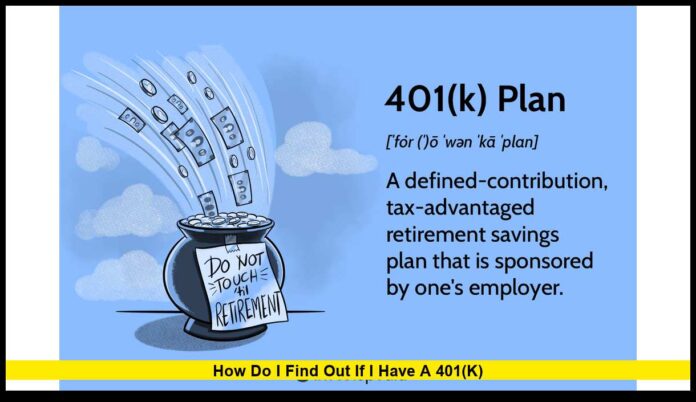
A 401(k) is an employer-sponsored retirement savings plan that allows employees to contribute a portion of their salary, often on a pre-tax basis, with many employers offering matching contributions. Over time, as people switch jobs or companies merge, these accounts can be forgotten.
It’s estimated that there are over 29 million lost or inactive 401(k) accounts in the United States, holding more than $1.6 trillion in assets. Locating and reclaiming these funds can significantly boost your retirement security and prevent unnecessary loss of investment growth.
How to Find Out If You Have a 401(k)
Here’s a clear, step-by-step process to help you determine whether you have a 401(k) and how to access it.
1. Contact Your Current or Former Employer
- Start by reaching out to your current employer’s Human Resources (HR) or benefits department. They can tell you whether you are enrolled in a 401(k) plan and who manages it.
- If you’ve changed jobs, contact your former employer’s HR department or benefits administrator. Ask if you ever participated in a retirement plan and whether your funds are still held there or transferred elsewhere.
- Keep old employment records such as pay stubs or W-2 forms, as these can help verify your plan participation.
2. Review Old Documents and Emails
- Search your emails and files for any 401(k) statements or notifications. Look for mentions of financial institutions such as Fidelity, Vanguard, Empower, or T. Rowe Price—common plan administrators.
- Check past tax documents. If you made contributions, your W-2 might indicate deferrals under “Retirement Plan.”
- If you have past benefit statements, they’ll include the plan name, account number, and contact details of the plan administrator.
3. Use Federal Search Tools
- The Retirement Savings Lost and Found Database by the Department of Labor allows users to look up lost 401(k) accounts tied to their Social Security number. It’s one of the most comprehensive government resources available today.
- You can also check the Abandoned Plan Search database to see if your employer’s plan was closed or merged, and where your funds were transferred.
- The Pension Benefit Guaranty Corporation (PBGC) also maintains a separate database that helps locate unclaimed retirement benefits for terminated plans.
4. Check State Unclaimed Property Databases
If your old 401(k) account was liquidated or rolled over into an unclaimed property account, it may appear in your state’s unclaimed property listings. Visit your state’s official website and search by your name and previous address. It’s a free service and worth checking in every state where you have lived or worked.
5. Search Private Registries
There are private databases, such as the National Registry of Unclaimed Retirement Benefits, that help individuals locate old or forgotten accounts. These registries are searchable by Social Security number and may include accounts not yet listed in federal systems.
What to Do Once You Find a 401(k)
Once you confirm that you have an account, decide what to do next. Options include:
- Keep the Account Where It Is
If your former employer’s plan allows, you can leave your funds in the existing 401(k). This can be beneficial if the plan offers strong investment options and low fees. - Roll It Over
You can roll your old 401(k) into your new employer’s plan or into an Individual Retirement Account (IRA). Rolling over helps consolidate your savings, simplifies tracking, and maintains tax advantages. - Withdraw the Funds (With Caution)
While withdrawing the money is an option, it’s usually discouraged unless absolutely necessary. Withdrawals before age 59½ may trigger taxes and a 10% early withdrawal penalty. - Update Your Contact Information
Once you locate your account, ensure your current mailing address, phone number, and email are updated with the plan administrator. This guarantees you’ll receive future statements and notifications.
Common Issues When Searching for a 401(k)
Finding an old 401(k) can be tricky, especially if:
- Your former employer went out of business or merged with another company.
- The plan administrator changed or was replaced.
- You changed your name or moved across states.
- You don’t have old records or login details.
If these apply, the federal Lost and Found database and your state’s unclaimed property resources are the best starting points. Keep in mind that federal tools are still expanding in 2025, so not all accounts may appear immediately. Regularly check back if you don’t find results right away.
Tips to Avoid Losing Track of Your 401(k) Again
- Keep a record of all jobs and benefit details — note the employer’s plan provider, account number, and contact information.
- Set up online access to your 401(k) accounts for easier monitoring.
- Roll over funds promptly when switching jobs.
- Update your address every time you move.
- Consolidate your retirement accounts to reduce paperwork and confusion.
Summary Table: Key Tools & Actions
| Step | Tool/Resource | Purpose |
|---|---|---|
| 1 | Contact employer HR | Confirm plan participation and provider |
| 2 | Review tax and plan documents | Identify past 401(k) accounts |
| 3 | DOL Lost & Found Database | Search nationwide for lost retirement plans |
| 4 | PBGC database | Find benefits from terminated plans |
| 5 | State unclaimed property | Recover rolled-over or unclaimed funds |
| 6 | Private registry | Locate unlisted retirement accounts |
Final Paragraph
If you’ve ever asked yourself, “how do I find out if I have a 401(k),” today’s digital tools make the process far simpler. Take the time to check these databases, contact your former employers, and reclaim any forgotten funds that belong to you. Share your experience or questions below—your insight could help others find their lost retirement savings too.

 using current databases, employment records, and retirement tools updated for 2025.)