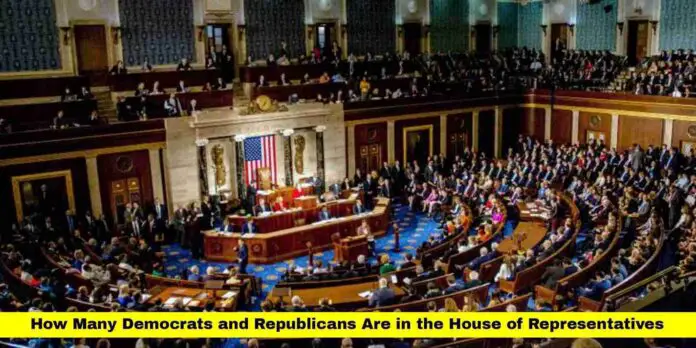
When asking how many Democrats and Republicans are in the House of Representatives, it’s important to understand the current balance of power in the 119th Congress as of March 2026. At present, the House consists of 220 Republicans and 213 Democrats, with a 2 seats temporarily vacant due to resignations or pending special elections. This distribution gives Republicans a slim majority and shapes how legislation is debated and passed.
Table of Contents
🏛️ U.S. House of Representatives (2026 Detailed View)
1. Current Party Control
- Republicans: ~220 seats ✅ (Majority)
- Democrats: ~213 seats
- Vacancies: 2
- Majority threshold: 218
👉 Control is narrow, meaning even a few votes can decide major legislation.
2. House Leadership
Republican Leadership (Majority)
- Speaker of the House: Mike Johnson
- Majority Leader: Steve Scalise
- Majority Whip: Tom Emmer
Democratic Leadership (Minority)
- Minority Leader: Hakeem Jeffries
- Minority Whip: Katherine Clark
- Caucus Chair: Pete Aguilar
👉 Leadership teams manage:
- Voting strategy
- Party messaging
- Legislative priorities
3. State-by-State Power Patterns
Republican-Strong States
- Texas
- Florida
- Ohio
👉 Tend to send more Republican representatives due to:
- Conservative voter base
- District maps favoring GOP
Democratic-Strong States
- California
- New York
- Illinois
👉 Strong urban populations and liberal-leaning districts
Battleground States (Most Competitive)
- Pennsylvania
- Michigan
- Arizona
👉 These states often decide:
- Which party controls the House
- Close national elections
4. House vs Senate (Quick Comparison)
| Feature | House | Senate |
|---|---|---|
| Total Members | 435 | 100 |
| Term Length | 2 years | 6 years |
| Representation | Based on population | Equal per state (2 each) |
| Current Control | Republican | (Often different—can be split) |
👉 Key difference:
- The House reflects population shifts quickly
- The Senate is more stable and slower-changing
5. Why the Narrow Majority Matters
With only a small margin:
- A few defections can block bills
- Bipartisan deals become more important
- Internal party disagreements have big impact
👉 Example effects:
- Budget negotiations become tense
- Leadership must carefully count votes
- Committee decisions can be tightly contested
6. What to Watch Next (2026 Cycle)
- Special elections that could shift seats
- Redistricting effects in some states
- National issues influencing swing districts
- Voter turnout in battleground areas
🔑 Bottom Line
The balance of power can shift quickly with even small changes
Republicans control the House—but narrowly
Democrats remain highly competitive
🏛️ Why the Party Count Matters
The balance between Democrats and Republicans in the U.S. House of Representatives is one of the most important forces shaping how the U.S. government actually functions day to day. Even a difference of just a few seats can shift national policy, legislative speed, and political strategy.
1. Majority Control Shapes the Agenda
- The party with at least 218 seats controls what legislation is brought to the floor.
- In 2026, Republicans hold a narrow majority, which allows them to:
- Decide which bills get votes
- Block proposals from Democrats
- Prioritize their own policy goals (taxes, spending, oversight, etc.)
👉 This means many bills never even reach debate unless the majority allows it.
2. Leadership Power Determines Direction
- The majority party elects the Speaker of the House, currently Mike Johnson
- The Speaker:
- Controls the House schedule
- Assigns bills to committees
- Influences negotiations with the Senate and the White House
👉 A slim majority can make leadership elections tense and uncertain, as seen when small factions demand concessions in exchange for support.
3. Committee Control = Policy Gatekeeping
- Committees are where most legislation is written, amended, or stopped entirely
- The majority party:
- Chooses committee chairs
- Holds more seats on each committee
- Controls hearings and investigations
👉 This gives the majority the power to:
- Advance its own bills
- Block opposing ideas early
- Launch investigations into political or national issues
4. Voting Dynamics Become High-Stakes
- With only a small margin:
- The majority cannot afford many defections
- A handful of members can swing outcomes
👉 This leads to:
- Intense internal negotiations within the majority party
- Greater influence for moderate or dissenting lawmakers
- Occasional reliance on bipartisan votes to pass critical bills
5. Legislative Stability vs Gridlock
- A large majority usually means smoother passage of bills
- A narrow majority, like now, often leads to:
- Delays in passing budgets
- Risk of government shutdowns
- More compromise—or complete stalemate
👉 In practice, this can slow down major national decisions.
6. Impact on National Policy
The party balance directly affects:
- Federal spending and budget priorities
- Healthcare, immigration, and defense policy
- Oversight of federal agencies and the executive branch
👉 Even small shifts (1–3 seats) can determine whether a major law passes or fails.
7. Elections and Special Races Carry Outsized Weight
- Because margins are tight:
- Special elections can flip control or weaken it
- Resignations or vacancies temporarily change voting power
👉 This is why even single-district races get national attention.
8. Influence on the Senate and Presidency
- The House does not operate in isolation:
- It must negotiate with the U.S. Senate
- It interacts with the President’s agenda
Factors Affecting House Composition
Several factors contribute to changes in the number of Democrats and Republicans in the House over time:
- Special Elections: Vacant seats can lead to shifts if won by the opposing party.
- Resignations and Retirements: When representatives step down, it creates temporary vacancies and potential opportunities for the minority party to gain seats.
- Party Switching: Although rare, representatives sometimes change their party affiliation, which directly affects the balance of power.
- Redistricting: Following the decennial census, congressional districts are redrawn, potentially changing the partisan composition in future elections.
These factors make the House dynamic, with party control capable of shifting mid-term in response to elections, resignations, or political realignments.
Vacant and Non-Voting Seats Explained
In addition to the 435 voting members, the House also includes non-voting delegates from U.S. territories and the District of Columbia. These delegates can participate in debates and committee work but cannot vote on final passage of legislation.
Vacancies in voting seats occur for various reasons such as resignations, deaths, or election disputes. These unfilled seats reduce the effective voting numbers for both parties until the vacancies are filled, which can temporarily influence the majority’s control and the passage of legislation.
Impact on Policy and Governance
The current narrow majority has several implications for the legislative process:
- Legislation Passage: Bills require near-total party support from the majority, meaning defections can stall proposed laws.
- Leadership Stability: Close majorities make party leaders vulnerable to internal disagreements, impacting strategy and decision-making.
- Negotiation Leverage: Minority party members may exert greater influence in tight votes, increasing the need for bipartisan cooperation.
- Special Elections Focus: Both parties prioritize resources to win or defend key districts, as a few seats can change the overall balance of power.
The House’s composition is crucial for shaping national priorities, from budget approvals to policy reforms and oversight.
What Could Change the Numbers
Several developments could alter the current Democratic-Republican balance:
- Upcoming Special Elections: Vacant seats may flip to the other party, tightening or widening the majority.
- Unexpected Resignations: Representatives leaving office mid-term can create vulnerable seats.
- Political Realignment: Rare party switches by sitting members could affect the balance.
- Future Elections: All 435 seats are up for election every two years, offering opportunities for significant shifts in control.
Monitoring these factors is essential for understanding the evolving dynamics in the House.
Conclusion
Currently, the House of Representatives is composed of 220 Republicans and 213 Democrats, with a few vacancies pending. This slim Republican majority determines legislative priorities, leadership roles, and committee control. However, the House remains dynamic, with special elections, resignations, and future contests capable of altering the party balance. Staying informed about these numbers is vital for anyone following U.S. politics.
FAQs
1. How many Democrats and Republicans are currently in the House?
- The U.S. House of Representatives has 435 seats in total.
- Republicans: about 220 members (majority)
- Democrats: about 212 members
- A few seats may be vacant at times due to resignations or special elections.
2. Which party controls the House right now?
- The Republican Party controls the House because it holds at least 218 seats, the number required for a majority.
- This allows Republicans to:
- Choose the Speaker
- Control committees
- Set the legislative agenda
3. Can the party balance change before the next election?
- Yes, the numbers can shift even before a general election due to:
- Special elections
- Resignations or deaths
- Members switching parties (rare)

