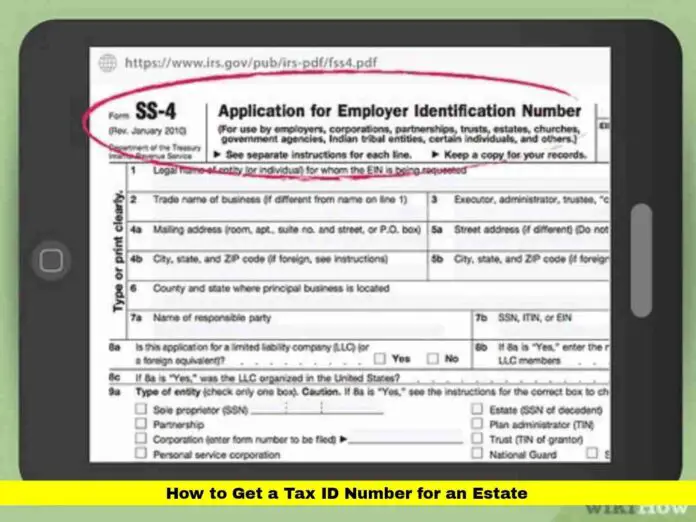
Handling the legal and financial matters of a deceased loved one can feel overwhelming. One of the most critical steps in managing an estate is understanding how to get a tax ID number for an estate. This number, called an Employer Identification Number (EIN), is essential for filing estate tax returns, opening bank accounts, and managing assets. Without an EIN, an estate cannot comply with federal regulations or handle financial transactions effectively. This guide walks executors and personal representatives through the process of obtaining an EIN, while providing tips, common pitfalls, and detailed examples.
Table of Contents
Key Points Summary
An Employer Identification Number (EIN) functions as a Social Security Number for the estate. It identifies the estate for all tax and financial purposes and is mandatory for estates that generate income or require banking services. Executors, or personal representatives, must provide accurate information when applying for an EIN to avoid delays. Estates that generate income, hold assets, or need a bank account require an EIN. Even estates with no immediate income benefit from having an EIN because it streamlines administration and ensures legal compliance. Applications can be completed online, by fax, or by mail, with processing times ranging from immediate approval online to several weeks via mail. Mistakes such as missing information, incorrect entity type, or inaccurate executor details are the most common reasons for delays.
Why Estates Need a Tax ID Number
An EIN is required for estates because it establishes the estate as a separate legal entity for financial and tax purposes. Without it, executors cannot file Form 1041 to report estate income or open bank accounts in the estate’s name. The EIN also allows the estate to manage assets like investments, real estate, or retirement accounts, ensuring all income is reported correctly. Using the decedent’s Social Security Number is prohibited after death, making an EIN essential. Additionally, federal regulations require estates to obtain an EIN to remain compliant. Having an EIN early in the estate process also reduces the risk of legal issues, simplifies administration, and prevents delays in distributing assets to beneficiaries.
Step-by-Step Process to Obtain a Tax ID Number for an Estate
The first step in obtaining an EIN is gathering all necessary information. Executors should have the decedent’s full legal name, Social Security Number, date of death, and last address. The executor or personal representative must also provide their full legal name, Social Security Number, and contact information. Estates should have details about the probate court and the date probate proceedings began. Having all this information ready prevents errors and streamlines the application process.
The next step is choosing an application method. The IRS allows applications online, by fax, or by mail. Online applications are the fastest, providing an EIN immediately after submission. Fax applications typically take four business days, provided a return fax number is included. Mail applications are slower, usually taking up to four weeks. Executors should select the method that best fits their timeline and resources.
Completing IRS Form SS-4 accurately is crucial. Executors must enter the decedent’s full legal name on line 1 and include the decedent’s Social Security Number on line 3. The decedent’s address at the time of death is required on line 4a. Line 7a should include the executor’s full legal name, while line 9a must indicate the entity type as “Estate.” Line 10 requires the date of death, and line 13 should include the executor’s Social Security Number and contact information. Accuracy is essential because mistakes can lead to delays or rejections of the EIN application.
Once the form is complete, it should be submitted through the chosen method. Online submissions provide an immediate EIN, but the session must be completed in one go to avoid timeout. Faxed applications require a return fax number to receive the EIN promptly. Mail applications must be carefully checked for accuracy before sending, as processing can take several weeks. Once the EIN is received, the confirmation letter should be stored safely, as it will be necessary for all estate-related financial and tax matters.
Common Mistakes to Avoid
Executors frequently encounter delays due to avoidable mistakes. Selecting the wrong entity type on Form SS-4 is a common error that can invalidate the application. Incomplete forms or missing critical information, such as the decedent’s Social Security Number or date of death, are frequent causes of rejection. Errors in the executor’s name or Social Security Number, particularly if they do not match probate court records, can also delay processing. By double-checking all information before submission, executors can prevent errors and expedite the EIN issuance.
When an Estate Must Obtain an EIN
Estates must obtain an EIN if they need to file tax returns, open bank accounts, or manage income-generating assets. Estates that earn income must report it on Form 1041 under the estate’s EIN. Banks require an EIN to establish accounts for the estate, ensuring that funds are legally separate from the executor’s personal finances. Income-producing assets such as investments, rental properties, or retirement accounts must also be reported under the estate EIN. Even estates without immediate income can benefit from having an EIN because it simplifies estate management, ensures compliance, and prepares the estate for future financial transactions.
Benefits of Obtaining an EIN Early
Applying for an EIN early in the estate administration process offers multiple advantages. Executors can manage estate funds, pay outstanding debts, and distribute assets more efficiently. Having a separate EIN prevents commingling of personal and estate funds, which is critical for legal and accounting purposes. Tax reporting becomes more straightforward because all income, deductions, and distributions are recorded under the estate’s EIN. Obtaining the EIN early also reduces potential disputes with beneficiaries or the IRS and ensures all estate transactions are properly documented.
Tips for Executors Managing the Estate EIN
Executors should apply for an EIN as soon as they are officially appointed to avoid delays in estate administration. It is important to maintain organized records, including copies of the EIN confirmation letter and all correspondence with the IRS. The EIN should be used consistently for all estate accounts, tax filings, and financial transactions to ensure clarity and legal compliance. Executors may benefit from consulting a tax advisor or probate attorney, especially for large or complex estates, to ensure compliance with all federal regulations and prevent errors that could lead to delays or penalties.
Advanced Considerations for Estate Tax Filing
Estates with income must file Form 1041 annually, using the EIN to report income, deductions, and distributions accurately. Distributions to beneficiaries are reported on Schedule K-1, which also references the estate EIN. Larger estates may require additional filings, such as Form 706 for estate tax purposes. Using the decedent’s Social Security Number after death is prohibited, which makes the EIN essential for all estate financial activity. Executors should keep detailed records of all transactions and filings to ensure compliance and provide transparency to beneficiaries.
Timeline for EIN Processing
The method of application affects the processing time. Online applications are processed immediately, but the session must be completed without interruption. Faxed applications generally take four business days, provided the return fax number is included. Mail applications can take up to four weeks. Executors should plan accordingly and consider the estate’s timeline for managing assets and filing tax returns. Early application ensures timely access to bank accounts, ability to pay debts, and smoother estate administration.
Frequently Asked Questions
Q1: Can I apply for an EIN before being appointed as executor?
No, only the officially appointed executor or personal representative is authorized to apply for the estate EIN.
Q2: Is there a fee to obtain an EIN for an estate?
No, the IRS provides EINs for estates free of charge.
Q3: Can the decedent’s Social Security Number be used instead of an EIN?
No, once the decedent has passed away, their Social Security Number can no longer be used for estate financial or tax matters. A separate EIN is required.
Disclaimer: The content in this article is for general informational purposes only and does not constitute legal or tax advice. Executors and personal representatives should consult a qualified professional regarding their specific estate situation.

