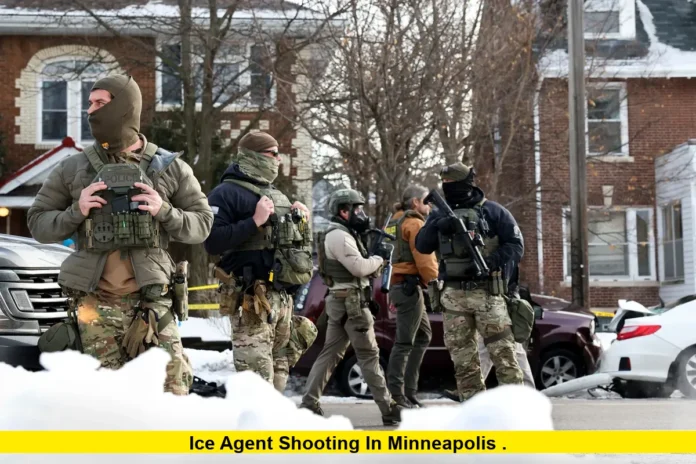
The ice agent shooting in Minneapolis has sent shockwaves through the city and beyond. On a cold January morning, a 37-year-old woman lost her life in a confrontation with federal immigration officers. This incident highlights escalating tensions between local communities and federal enforcement efforts. Residents demand answers as protests erupt across the area.
Renee Nicole Good, a local resident and mother of three, became the center of this tragedy. She drove a maroon Honda Pilot when the encounter unfolded. Federal authorities describe the event as a defensive response to an aggressive act. Yet, city leaders paint a different picture, fueling widespread outrage.
Table of Contents
The Sequence of Events Leading to the Shooting
Everything started around 9:30 a.m. near the intersection of East 34th Street and Portland Avenue in south Minneapolis. ICE agents conducted operations as part of a broader immigration enforcement surge. More than 2,000 agents deployed to the Twin Cities area in recent weeks.
Good’s vehicle positioned perpendicular to traffic, blocking the roadway. Agents approached in a truck with flashing lights. Video footage shows two officers exiting and moving toward her SUV. One yanked on the driver’s door, shouting commands to exit.
The situation escalated quickly. Federal officials claim Good accelerated, attempting to strike the agents. They label her actions as using the vehicle as a weapon. In response, an agent fired shots through the windshield.
Eyewitnesses describe chaos. One resident recalled hearing shouts and gunfire. “It happened so fast,” a bystander said. “People screamed as the car crashed into a parked vehicle nearby.”
Good suffered a fatal head wound. Paramedics rushed her to the hospital, but she succumbed to her injuries. Bloodstains and a deployed airbag marked the scene, a grim reminder of the violence.
Conflicting Accounts Fuel Public Distrust
Federal narratives clash sharply with local views. Homeland Security Secretary Kristi Noem addressed the media in Minneapolis. She called the incident a tragedy but defended the agents. Noem stated agents returned from an operation when their vehicle got stuck in snow. Protesters harassed them, leading to the confrontation.
She emphasized self-defense. “Any death is preventable,” Noem said. But she insisted operations would continue. Vice President JD Vance echoed this, calling the woman’s death “a tragedy of her own making” on social media.
Minneapolis Mayor Jacob Frey rejected these claims outright. At a press conference, he demanded ICE agents leave the city immediately. “Their presence causes chaos,” Frey declared. He pointed to video evidence contradicting the federal story. “That is bullshit,” he added bluntly.
City Council President Elliott Payne condemned ICE’s role. “They’re an escalating factor,” he said from the scene. “We need them out.” Governor Tim Walz warned for weeks about federal operations threatening public safety. He called for calm but hinted at deploying the National Guard if unrest grew.
Minnesota Attorney General Keith Ellison expressed heartbreak. “This spreads terror in our communities,” he posted online. Senator Tina Smith worked to gather more details, promising updates.
Who Was Renee Nicole Good?
Renee Nicole Good lived a life intertwined with her community. At 37, she raised three children, including a 6-year-old son. Tragically, the boy lost his father in 2023, making him orphaned after this shooting.
Friends and family remember Good as caring. Her mother, Donna Ganger, insisted she posed no threat. “She was terrified,” Ganger said. “Not involved in any protests.” Good reportedly observed federal actions, concerned for neighbors.
Her Instagram showed pride flags and she/her pronouns. She previously married a man, Timmy Ray Macklin Jr., before living with a female partner. Supporters at vigils chanted, “Say her name. Renee Good,” echoing past movements for justice.
One social media user shared: “Renee was out caring for her neighbors when this happened. Heartbreaking.” Another posted a video of the vigil, where hundreds gathered around firepits in the icy intersection.
Protests and Community Response Intensify
The shooting sparked immediate backlash. Protesters flooded the streets, clashing with law enforcement. They blocked intersections and chanted against ICE. Some burned American flags in defiance.
A video circulating online shows demonstrators shouting “Death to ICE” in Seattle, reflecting nationwide anger. In Minneapolis, crowds grew throughout the day. Mourners held candles and signs demanding accountability.
Minneapolis Public Schools canceled classes for the rest of the week. Officials cited safety concerns amid the unrest. “Out of abundance of caution,” the district announced.
Protesters turned the site into a memorial. Flowers and photos of Good lined the pavement. One activist tweeted: “This is what happens when federal agents invade our cities. We won’t stand for it.”
Federal officials blame “sanctuary policies” for inciting violence. Republican Congresswoman Michelle Fischbach called the incident a result of dangerous rhetoric. Yet, local leaders stand firm with immigrant communities.
Broader Context of Immigration Enforcement
This ice agent shooting in Minneapolis fits into a larger federal push. The Trump administration intensified deportations, targeting undocumented individuals. Operations in Minnesota focus on areas with high immigrant populations.
Critics argue these tactics endanger everyone. Former Vice President Kamala Harris called the shooting shocking. “ICE agents killed a woman in broad daylight,” she said.
Senate Minority Leader Chuck Schumer opposed federal agents in cities. “Local officials handle it better,” he told reporters.
Eyewitness footage raises questions. One clip shows the SUV stopped before agents approached. The driver appeared to steer away, not toward officers. Investigators now review body cameras and dash cams.
The FBI leads the probe. They examine key moments from the video. No agents reported injuries, though one claimed hospitalization initially.
Impact on Families and Communities
Good’s death leaves a void. Her 6-year-old son faces an uncertain future. Grandfather Timmy Ray Macklin Sr. vowed to care for him. “I’ll drive or fly to get my grandchild,” he said.
Neighbors like Tyrice Jones witnessed the aftermath. A woman with blood on her face screamed, “You killed my wife!” in his yard.
Communities rally in solidarity. Vigils draw hundreds, sharing stories of Good’s kindness. One post read: “She had no weapon, just her car. This is murder.”
Tensions rise as protests continue late into the night. Police prepare for more demonstrations. Chief Brian O’Hara noted elevated readiness.
Legal and Political Ramifications
Calls for reform grow louder. The ACLU demands an independent investigation. “Unarmed woman shot—unacceptable,” they stated.
President Donald Trump defended the agents. “She tried to run them over,” he said. Local leaders disagree, calling for withdrawal.
This event echoes past conflicts in Minneapolis. It reignites debates on federal overreach. Sanctuary city policies clash with national directives.
Experts predict lawsuits. Good’s family may sue for wrongful death. Video evidence could sway outcomes.
Politicians across aisles respond. Mike Pence urged support for ICE. “Hard job,” he said. Others decry the tactics.
Ongoing Developments and Public Safety
As night falls, protesters maintain control of the intersection. Chants fill the air against federal intervention.
Authorities monitor for escalation. Walz prepares emergency measures. Frey stands with refugees and immigrants.
Social media buzzes with reactions. One user shared: “Doctor on scene offered help, but agent said ‘I don’t care.'” Another posted footage of the SUV crash.
Minneapolis heals from this wound. But questions linger. Why did agents approach so aggressively? Was deadly force necessary?
The community seeks transparency. Investigations proceed, but trust erodes.
Residents unite in grief and anger. Good’s story becomes a symbol of resistance.
Federal operations persist despite outcry. Noem confirmed ICE stays in the city.
This tragedy underscores divides in America. Immigration policies test local-federal relations.
What Happens Next in Minneapolis?
The coming days bring more scrutiny. Press conferences and probes unfold. Protests may spread.
Families demand justice. Good’s children need support amid loss.
City officials push back. “Get out of our neighborhood,” echoes in videos.
National eyes watch Minnesota. This shooting shapes immigration discourse.
Communities brace for change. Healing requires accountability.
The ice agent shooting in Minneapolis reveals deep rifts. It calls for dialogue and reform.
What do you think about this incident? Share your thoughts in the comments below and stay tuned for updates.

