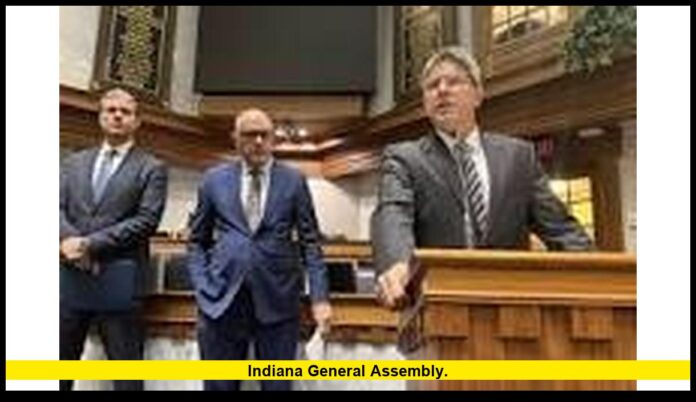
The Indiana General Assembly faced a turbulent political showdown in December 2025 as lawmakers weighed a controversial mid-decade congressional redistricting proposal. The push to reshape the map set off a week of intense debate, public pressure, and heightened security concerns at the Statehouse. Although the Indiana House advanced the measure earlier in the week, the Senate ultimately rejected it, closing the door — at least for now — on one of the year’s most watched state-level political fights.
Table of Contents
House approves disputed map and triggers statewide reaction
The debate began with the Indiana House approving a new congressional map on December 5, 2025. The bill passed with 57 votes in favor and 41 against after hours of argument over community representation, partisan balance, and the legality of redrawing districts mid-decade. Supporters argued that demographic shifts required adjustments and that certain regions would benefit from more competitive boundaries. Those opposed warned that the proposal would eliminate existing Democratic-held districts and consolidate long-term advantages for one political party.
The vote ignited strong reactions across the state. Critics described the process as rushed and unnecessary, while supporters insisted that legislative authority allows for map updates at any point during the decade. The passage set the stage for an even more contentious debate as the proposal moved to the Senate.
Senate blocks the plan after internal fractures become clear
On December 11, 2025, in a dramatic turn, the Indiana Senate rejected the House-approved redistricting bill. The final vote — 19 in favor and 31 against — represented a notable rebuke, especially given the Republican supermajority in the chamber. Several senators who faced high-profile lobbying efforts from national political figures ultimately sided against the measure, citing concerns about county splits, the integrity of existing community boundaries, and voters’ distrust of mid-decade map changes.
The Senate’s decision halted the proposal entirely, effectively freezing Indiana’s congressional boundaries in their current form. The rejection also highlighted internal divisions within the majority party, where some lawmakers emphasized local accountability over national political strategy.
Threats and security issues heighten political tensions
As the redistricting controversy intensified, several lawmakers reported receiving threats, harassment, or suspicious messages. Law enforcement increased security measures at the Capitol and at legislators’ homes. Reports included swatting attempts, threatening communications, and at least one credible device-related scare affecting an elected official’s residence.
Legislative leaders condemned the threats and reiterated that intimidation aimed at public servants would be prosecuted. The atmosphere raised concerns about staff safety, public attendance at hearings, and the ability of lawmakers to conduct business without interference. Many legislators acknowledged that the climate of hostility influenced how they approached the debate in both chambers.
School funding concerns add pressure during legislative turmoil
While redistricting dominated political headlines, school districts across the state continued raising alarms about budgetary strain. Many districts reported financial stress stemming from earlier property tax changes that reduced revenue for local schools. Administrators warned of potential staff cuts, curtailed programs, and delayed improvements if additional funding support is not addressed soon.
However, legislative leaders signaled that significant funding adjustments are unlikely before 2027, meaning school systems will continue navigating fiscal challenges for at least the next year. The combination of redistricting fights and financial pressure added to an already difficult atmosphere for policymakers.
National political pressure fuels backlash inside Indiana
Adding to the tension, national political figures publicly urged Indiana lawmakers to pass the redistricting plan. Public statements and social media campaigns sought to influence the Legislature’s decision, reflecting broader national efforts to shape Congressional maps across multiple states.
Some Indiana lawmakers pushed back against the involvement of national voices, arguing that their responsibility is to reflect the interests and concerns of local residents. The Senate’s dismissal of the map signaled resistance to outside influence and underscored the weight that constituent feedback carried during the deliberations.
What comes next for lawmakers and voters
The Legislature will reconvene for remaining end-of-year business, but with the redistricting bill formally defeated in the Senate, no immediate changes to Indiana’s congressional map are expected. A revised proposal remains possible, but any renewed attempt would require overcoming the same divisions that derailed the initial plan.
Absent legislative action, the next opportunity for redistricting would come in 2031 during the regular decennial cycle. Legal challenges remain possible but would face substantial procedural hurdles.
Impact on Indiana’s political landscape
The events of the week revealed deep tensions between local representation and national political objectives. Lawmakers across party lines acknowledged that the redistricting battle may have long-term implications for political alliances, voter engagement, and legislative strategy.
For voters, the immediate takeaway is clear: congressional districts will remain unchanged for now, and the Legislature’s focus will shift back to budget matters, public safety, and other core policy areas. Civic groups continue urging transparency and robust public involvement in any future mapping efforts.
State officials reassert commitment to civility and safety
Amid the threats and the heated political environment, officials emphasized the importance of maintaining a safe democratic process. Agencies pledged to strengthen security protocols and continue investigations into intimidation attempts. Lawmakers reiterated that disagreement is acceptable, but threatening behavior undermines public trust and cannot be tolerated.
Summary of the moment
This week’s developments underscored how quickly political pressures, public sentiment, and legislative dynamics can reshape major policy debates. The Indiana General Assembly’s split outcome — House approval but Senate rejection — demonstrated that even in a single-party-controlled Legislature, internal disagreements and voter concerns can prove decisive.

