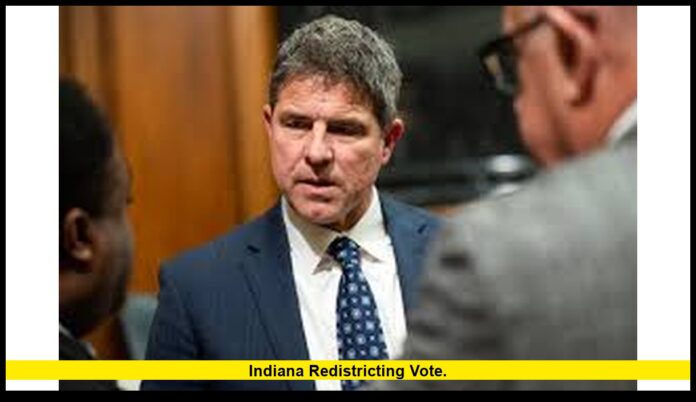
The [ indiana redistricting vote] reached a decisive conclusion when the Indiana State Senate voted 31-19 to defeat House Bill 1032, a proposed mid-decade congressional redistricting plan that aimed to reshape the political landscape ahead of the 2026 midterms. The vote closed months of debate over whether Indiana should adopt a more aggressive redistricting strategy that would likely secure additional Republican-leaning congressional seats.
Table of Contents
Senate outcome and what led to the bill’s defeat
The Senate’s 31-19 rejection reflected a rare bipartisan alignment, with twenty-one Republican senators joining all ten Democrats to block the proposal. The map would have significantly altered Indiana’s congressional boundaries and eliminated the two districts currently held by Democrats. Many lawmakers said constituent feedback, fairness concerns, and resistance to mid-cycle boundary changes shaped their final votes.
The bill had previously passed the Indiana House in a 57-41 vote, indicating strong partisan support in the lower chamber. But once in the Senate, the proposal encountered far more resistance than expected, particularly among GOP members who questioned the political and procedural risks of redrawing districts before the next census cycle.
Why the proposed map sparked statewide controversy
Supporters of HB1032 argued the new map would correct what they viewed as imbalanced districts and strengthen the Republican position in upcoming federal races. They said the changes were necessary to ensure representation aligned with voter trends and population shifts.
Opponents countered that the plan represented a clear case of mid-decade gerrymandering designed to eliminate Democratic competitiveness in two key districts. They also warned that sudden boundary changes could undermine voter confidence and deepen political divisions within the state.
The map drew national attention due to its strategic implications and the broader national trend of parties pursuing redistricting outside the normal post-census cycle. Indiana’s debate quickly evolved from a state matter into a prominent political storyline with nationwide interest.
Pressure from outside groups and national figures
Leading up to the vote, lawmakers reported intense advocacy efforts from national political figures encouraging approval of the map. While some Indiana legislators aligned with these national calls, a notable portion of the Republican caucus expressed discomfort with the level of outside involvement.
Several senators who opposed the map said they prioritized constituent messages over national pressure. They noted significant voter outreach urging lawmakers to preserve current district lines and avoid making sweeping changes without broader public engagement.
How the bill moved through the legislature
After passing the House by a substantial margin, HB1032 moved to Senate committees where it cleared preliminary hurdles. Floor debate focused heavily on the legal implications of mid-cycle map changes, public expectations surrounding stable district lines, and the political impact on Indiana’s congressional delegation.
Democratic senators introduced amendments intended to modify or limit the extent of the redistricting changes, but those motions were voted down. In the end, the final floor vote became the turning point that determined the bill’s fate.
Reaction from lawmakers after the vote
Republican senators who voted against the bill emphasized the importance of respecting public concerns. Some noted that the intensity of public outreach and the tone of the political environment contributed to their decisions. They expressed frustration that the issue had escalated into a contentious statewide debate that threatened to overshadow other legislative priorities.
Supporters of the rejected map voiced disappointment, saying the new districts would have provided what they described as more balanced representation. They argued that preserving the current map maintains what they view as an unnecessary political advantage for Democrats in two districts.
Impact on Indiana’s current congressional map
With HB1032 defeated, Indiana will continue operating under its existing congressional boundaries. This preserves the current distribution of political power heading into the 2026 midterms and avoids the immediate overhaul that a mid-decade redraw would have triggered.
The rejected proposal would have reshaped Indiana’s nine congressional districts, likely reducing Democratic influence. By voting against the bill, the Senate effectively maintained the status quo and prevented abrupt changes that would have redefined district competitiveness.
What this means for future redistricting efforts
Although this attempt at mid-decade redistricting failed, it does not eliminate the possibility of future proposals. Lawmakers could revisit the issue in later sessions, but securing support would require overcoming substantial bipartisan resistance.
The vote demonstrated that Indiana legislators are cautious about mid-cycle boundary changes, particularly when public sentiment leans strongly against them. Any renewed redistricting effort will likely involve deeper public hearings, broader debate, and a strategic recalibration to address concerns raised during this process.
National implications and wider political context
Indiana’s decision comes at a time when several states are scrutinizing mid-decade redistricting as a tool for gaining federal electoral advantages. The defeat of HB1032 stands out as an example of a state legislature choosing to maintain existing districts despite national political pressure.
This outcome may influence how other states approach similar efforts, signaling that pursuing aggressive mid-cycle map changes can lead to political risks, internal party divisions, and significant voter backlash.
Key developments to watch
- Whether state lawmakers reintroduce modified redistricting proposals in upcoming legislative sessions
- Potential advocacy campaigns from organizations concerned with voting rights and electoral fairness
- How Indiana’s stable district lines affect candidate recruitment and competitiveness for the 2026 midterms
Conclusion
The [ indiana redistricting vote] ended with the Indiana Senate rejecting a mid-decade congressional map that would have significantly altered the state’s political landscape. The decision preserves current district boundaries, highlights the influence of constituent engagement, and demonstrates the limits of national political pressure on local legislative processes.

