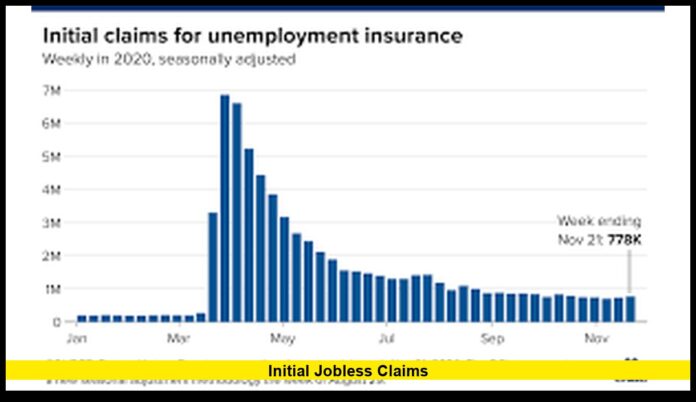
The latest data on initial jobless claims shows a sharp decline to 191,000 for the week ending November 29, 2025 — the lowest reading since September 2022. This unexpected drop cut 27,000 from the prior week’s revised 218,000, defying forecasts that projected roughly 220,000 new filings.
Table of Contents
What the Numbers Say
| Week Ending | Seasonally Adjusted Initial Claims (SA) | Change from Prior Week |
|---|---|---|
| Nov 29, 2025 | 191,000 | –27,000 |
| Nov 22, 2025 | 218,000 | –? (revised) |
The four-week moving average of initial claims also fell, reflecting a consistent downward trend. Meanwhile, continuing claims — the number of people still receiving benefits — slightly decreased to 1.939 million in the most recent week.
Why This Matters
- Labor market resilience: Such a low reading suggests layoffs remain limited and employers are not broadly triggering mass unemployment.
- Mixed economic signals: The low claims contrast with some headline job-cut announcements from major employers.
- Impact on policy: The data complicates decision-making for monetary policymakers. A strong labor market may argue against further interest-rate cuts — even as inflation remains above target.
What’s Behind the Decline?
- No major surge of layoffs yet: High-profile job-cut announcements may not have fully materialized into claims. Some workers could still be under severance or rehired temporarily.
- Slow hiring, not spike in firings: The drop in claims suggests not many people are being laid off. However, slower hiring means fewer new jobs — creating a “low-hire, low-fire” environment.
- Seasonal and statistical factors: The report comes right after the Thanksgiving holiday, a period where employment patterns may temporarily shift. Still — even after seasonal adjustments — the number remains notably low.
Broader Labor Market Context
The latest weekly claims data align with other recent labor indicators:
- Some private-sector payroll reports signaled job losses in November. Those losses haven’t yet translated into rising unemployment-benefit claims.
- Meanwhile, interim estimates suggest the overall unemployment rate remains elevated.
- Some economists warn of “labor-market fragility,” especially if slower hiring continues and layoffs accelerate.
In effect, the labor market seems stuck in a state of inertia: layoffs are limited, but so is hiring. That dynamic makes initial jobless claims a critical barometer to watch.
What This Means for Workers, Firms, and Markets
- For job seekers: The low number of new claims suggests fewer layoffs, but slow hiring may mean stiffer competition for open roles.
- For businesses: Companies may delay hiring until demand picks up, while also holding off on mass layoffs — maintaining staffing levels for now.
- For investors and policymakers: Strong claims data could reduce the urgency for further rate cuts by the central bank. That may weigh on asset prices sensitive to interest-rate moves.
Looking Ahead: What to Watch
- Whether upcoming weeks continue to show low initial claims. A sustained downtrend would reinforce a stable labor market narrative.
- Upcoming job-growth reports and hiring metrics from agencies and payroll firms. They’ll help clarify whether the low claims reflect real stability or just a temporary lull.
- The outcome of the central bank’s December policy meeting: Will policymakers lean on strong labor data to hold rates steady, or prioritize inflation and other economic risks?
The drop in initial jobless claims to 191,000 underscores a surprising degree of labor-market strength — even in a period of economic uncertainty and mixed hiring sentiment. But behind the headline, slower job creation and uncertain business conditions leave plenty of questions unanswered.
Let me know what you think — and whether you’ll be watching the next report to see if this trend sticks.

