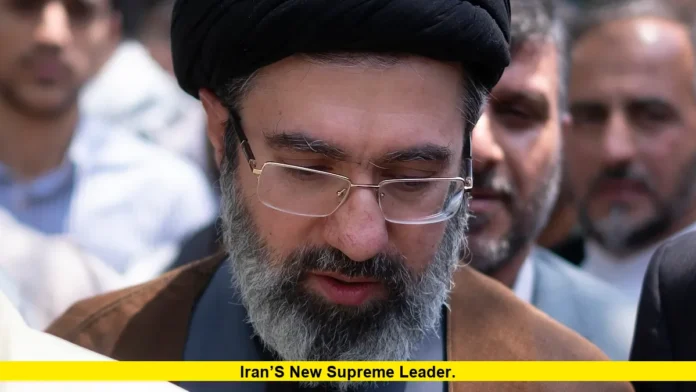
In March 2026, Mojtaba Khamenei suddenly became one of the most talked-about political figures in the world. After the death of his father, Iran’s long-time Supreme Leader Ayatollah Ali Khamenei, Iran’s Assembly of Experts appointed Mojtaba as the country’s new Supreme Leader. The move immediately sparked global headlines, debates about Iran’s future, and questions about whether the Islamic Republic was drifting toward a hereditary system of power.
For decades, Mojtaba had remained a shadowy but influential figure inside Iran’s political and security establishment. Though he rarely appeared in public, many analysts believed he played a key role behind the scenes in shaping Iranian policy and maintaining his father’s authority.
Now, with his elevation to the highest position in the Iranian state, Mojtaba Khamenei’s life, influence, and legacy have come under intense global scrutiny. His leadership marks a significant turning point in Iran’s political history and could shape the country’s domestic policies and international relations for decades to come.
Table of Contents
Early Life and Family Background
Mojtaba Hosseini Khamenei was born on September 8, 1969, in Mashhad, Iran, into one of the most influential religious families in the country. His father, Ali Khamenei, later became Iran’s second Supreme Leader after the death of Ayatollah Ruhollah Khomeini in 1989.
Growing up during the years following the 1979 Iranian Revolution, Mojtaba witnessed the transformation of Iran from a monarchy into an Islamic Republic. His father quickly rose through the political and religious hierarchy, eventually becoming one of the most powerful figures in the country.
Mojtaba’s upbringing was deeply connected to Iran’s clerical establishment. He attended school in Tehran and later pursued Islamic theology studies, reportedly studying under his father and other prominent clerics in Qom.
Despite being the son of a powerful leader, Mojtaba maintained a relatively low public profile for much of his life. However, insiders within Iran’s political system believed that he was gradually gaining influence behind the scenes.
Military Experience and Early Political Influence
Like many young men in Iran during the 1980s, Mojtaba participated in the Iran-Iraq War, which lasted from 1980 to 1988. He joined the Islamic Revolutionary Guard Corps (IRGC) in 1987 and reportedly served in combat operations during the conflict.
This experience helped him establish strong connections with the Revolutionary Guards, which later became one of the most powerful institutions in Iran. Those relationships would prove crucial to his political rise.
Over time, Mojtaba built a reputation as someone with close ties to the IRGC leadership, and analysts often described him as a key bridge between the military establishment and the clerical leadership.
These alliances played an important role in shaping Iran’s internal power dynamics and would later influence the succession battle after his father’s death.
The “Shadow Power” of Iranian Politics
Although Mojtaba Khamenei did not hold a high official government position for many years, he was widely believed to be one of the most influential individuals in Iran’s political system.
He reportedly worked within the Office of the Supreme Leader, overseeing access to his father and helping manage sensitive political and security matters.
Political analysts frequently described him as a “shadow power” behind the scenes. His influence extended across several key areas:
- Coordination with the Revolutionary Guard Corps
- Influence in Iran’s intelligence and security networks
- Connections with conservative religious leaders
- Strategic involvement in major political decisions
Some reports also suggested that Mojtaba played a role in shaping outcomes during Iran’s controversial 2005 and 2009 presidential elections, where accusations of election interference and repression of protests emerged.
Although the Iranian government never officially confirmed many of these claims, they contributed to Mojtaba’s reputation as a powerful political operator.
Succession Speculation Before 2026
For years, speculation surrounded the question of who would succeed Ali Khamenei as Supreme Leader. Because the role holds ultimate authority over Iran’s government, military, judiciary, and religious institutions, the succession process is one of the most important decisions in the country.
Mojtaba was frequently mentioned as a possible successor because of his proximity to power and his connections with influential institutions.
However, the idea of the Supreme Leader’s son inheriting the position sparked controversy. Critics argued that it could make the Islamic Republic resemble a monarchy — something the 1979 revolution had originally opposed.
Despite these concerns, Mojtaba’s influence continued to grow, and many observers believed he had quietly positioned himself as the most likely successor.
The 2026 Turning Point: Becoming Supreme Leader
In March 2026, a dramatic geopolitical event transformed Mojtaba’s political future.
Following the death of his father during escalating regional conflict, Iran’s Assembly of Experts appointed Mojtaba Khamenei as the country’s new Supreme Leader.
He became the third Supreme Leader in the history of the Islamic Republic.
The decision was controversial both inside and outside Iran. Critics questioned whether the appointment represented a hereditary transfer of power, while supporters argued that Mojtaba possessed the experience and connections necessary to lead the country.
His selection also occurred during a tense period of conflict in the Middle East, making his leadership particularly significant for global politics.
Global Reactions to His Leadership
Mojtaba Khamenei’s rise immediately triggered strong international reactions.
Many Western governments expressed concern about his hardline reputation and his ties to Iran’s military establishment. Some analysts warned that his leadership could lead to more confrontational foreign policy decisions.
At the same time, some countries signaled support for the new leader. Russia, for example, congratulated Mojtaba and pledged continued cooperation with Iran.
Meanwhile, ongoing regional tensions intensified, affecting global energy markets and raising fears of broader conflict in the Middle East.
The appointment highlighted the importance of Iran’s leadership in shaping geopolitical stability.
Domestic Challenges Facing Mojtaba Khamenei
As Iran’s new Supreme Leader, Mojtaba faces several major challenges.
1. Political Legitimacy
Because of the perception that power passed from father to son, some critics inside Iran question the legitimacy of his leadership.
Maintaining public trust will likely be one of his biggest political tests.
2. Economic Struggles
Iran’s economy has faced years of sanctions, inflation, and unemployment. The new leader must address these issues while managing international pressure.
3. Internal Power Balance
Iran’s political system is complex, involving competing factions among clerics, politicians, and military leaders.
Mojtaba must maintain balance between these groups while consolidating his authority.
4. International Relations
Relations with the United States, Israel, and Gulf states remain highly tense. Decisions made during Mojtaba’s leadership could reshape the Middle East’s strategic landscape.
Leadership Style and Ideological Views
Observers often describe Mojtaba Khamenei as a hardline conservative with strong ideological commitment to the principles of the Islamic Republic.
His views are believed to align closely with those of his father, emphasizing:
- Resistance to Western influence
- Strong support for Iran’s regional allies
- Preservation of the Islamic Republic’s revolutionary ideology
His close relationship with the Revolutionary Guards also suggests that the military establishment may play an important role during his leadership.
The Legacy of the Khamenei Family
Mojtaba’s leadership also extends the legacy of one of Iran’s most powerful families.
His father ruled Iran as Supreme Leader for more than three decades, shaping the country’s political structure and foreign policy.
The Khamenei family’s influence over Iranian politics has been immense, and Mojtaba’s rise further cements their place in the country’s modern history.
However, critics argue that hereditary leadership contradicts the ideals of the Islamic Revolution, which sought to eliminate monarchy and dynastic rule.
This debate over political legacy will likely continue throughout Mojtaba’s tenure.
Potential Impact on Iran’s Future
Mojtaba Khamenei’s leadership could have long-lasting consequences for Iran and the broader Middle East.
Possible outcomes include:
1. Continuity of Hardline Policies
Many experts believe his rule will continue the ideological direction established by his father.
2. Increased Military Influence
His ties with the Revolutionary Guards may strengthen the military’s role in political decision-making.
3. Regional Power Struggles
Iran’s relationships with neighboring countries and global powers may become even more complex.
4. Domestic Political Tensions
Opposition movements inside Iran may challenge his authority, especially if economic problems worsen.
Conclusion
The rise of Mojtaba Khamenei marks one of the most significant moments in Iran’s political history. For decades, he operated behind the scenes as an influential figure within the Islamic Republic. Now, as the country’s Supreme Leader, he stands at the center of global attention.
His leadership carries the weight of a powerful political legacy, the expectations of Iran’s ruling establishment, and the scrutiny of the international community.
Whether Mojtaba Khamenei ultimately strengthens the Islamic Republic or faces internal and external challenges that reshape Iran’s political landscape remains one of the most important geopolitical questions of the coming decade.

