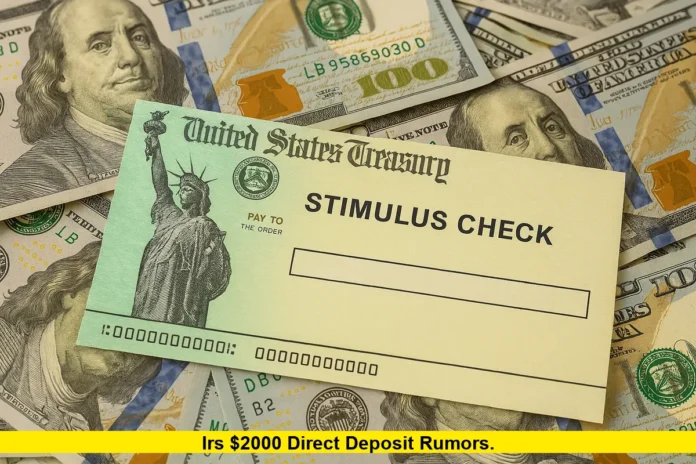
The U.S. Treasury and IRS have firmly debunked recent rumors circulating on social media about an impending $2,000 stimulus check direct deposit for Americans in August 2025. Despite widespread speculation, including on platforms like YouTube and Instagram, there is no legislative approval or official plan to issue new federal stimulus payments at this time.
These rumors appear to have gained traction amid ongoing discussions about economic relief in the run-up to upcoming political events. However, the reality is that no current bill or government action authorizes such a payment. The American Worker Rebate Act, a proposed legislation aiming to deliver stimulus-like payments funded by tariff revenues, remains under consideration but has not been enacted. This act would provide at least $600 per family member based on new tariff income collected from January 2025 onward, but it is distinct from the rumored $2,000 direct deposit and still faces significant hurdles in Congress.
Furthermore, Congress recently passed a large spending bill championed by former President Trump, which notably does not include any stimulus check provisions. This bipartisan legislative package focuses on broader economic and social policies but excludes fresh direct relief payments to individuals.
What households can expect in 2025 are various state-level stimulus and rebate payments, usually ranging from $300 to $1,700 depending on eligibility, income, and family size. These payments are part of efforts by some states to ease cost-of-living pressures, targeting low- to moderate-income families and certain benefit recipients. Additionally, federal benefit adjustments such as cost-of-living increases, retroactive payments, and recalculations may lead to some lump sum or increased payments totaling up to around $2,970 for qualifying recipients of Social Security, SSI, SSDI, and VA benefits, but these are not stimulus checks.
Key points to understand include:
- The $2,000 stimulus check rumors lack any grounding in current law or IRS announcements.
- The American Worker Rebate Act proposes tariff-funded payments but is unrelated to those rumors and not yet law.
- Recent federal legislation passed does not include any stimulus payments.
- Some states are issuing one-time stimulus-like payments between $300 and $1,700.
- Federal benefit programs may see cost-of-living and retroactive payment increases up to $2,970.
- The IRS continues to send pandemic-era Recovery Rebate Credit payments (up to $1,400) to individuals who missed out previously, but these are not new stimulus rounds.
The best way for Americans to stay informed is by monitoring official IRS communications and government websites, rather than relying on unverified social media claims. Ensuring tax filings are up to date and direct deposit information is current can help recipients get any legitimate payments faster.
If you’ve seen $2,000 stimulus check rumors circulating, now you know there is no legislative authorization for them. Instead, focus on the confirmed relief measures and stay vigilant against misinformation. Feel free to share your thoughts or questions below, and keep an eye out for official news on financial assistance programs.

