Opening Paragraph
Is real estate tax and property tax the same? This question has become increasingly relevant for homeowners across the United States as property values and local tax rates continue to shift. In 2025, many counties and municipalities have updated their assessment values, leading to higher property tax bills nationwide. Understanding whether these two terms mean the same thing — or something slightly different — can help homeowners better manage their finances and avoid confusion during tax season.
Table of Contents
Understanding the Basics: Real Estate Tax vs. Property Tax
In everyday language, “real estate tax” and “property tax” are often used interchangeably. Both refer to the taxes you pay on your home and the land it sits on. These taxes are collected by local governments — such as counties, cities, or townships — to fund essential public services like schools, roads, fire departments, and police.
However, there is a slight distinction in terminology:
- Real Estate Tax refers specifically to taxes levied on land and any permanent structures attached to it (like houses, garages, or commercial buildings).
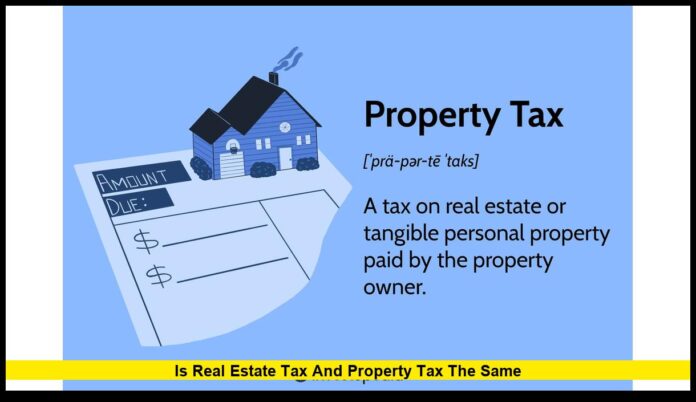
- Property Tax, in a broader sense, can also include taxes on personal property, such as vehicles, boats, or business equipment — depending on local laws.
While the difference might seem small, it becomes important when determining which taxes are deductible or when understanding how your tax bill is calculated.
Key Differences Between the Two
| Category | Real Estate Tax | Property Tax |
|---|---|---|
| Type of Property Taxed | Land, homes, and buildings | Real estate plus movable personal property (e.g., cars, boats) |
| Who Collects It | Local governments (county/city) | Local or state authorities |
| Tax Deductibility | Often deductible on federal tax returns if itemized | May not be deductible depending on the item taxed |
| Purpose | Supports local infrastructure and public services | May include multiple categories of taxation |
| Common Usage | Term used by tax authorities and the IRS | Term commonly used by homeowners and media |
For most homeowners, both terms describe the same annual local tax on their home. But for businesses or individuals who also own personal property, “property tax” can extend beyond real estate alone.
Why the Difference Matters
Knowing the difference between real estate tax and property tax can help you:
- Understand Your Tax Bill: Your bill may include both real estate taxes and personal property taxes, listed separately.
- Plan Deductions: Only certain real estate taxes qualify as deductible expenses on federal income tax returns.
- Prepare for Assessments: Local governments reassess property values periodically. Real estate assessments determine how much you owe each year.
- Avoid Overpayment: Misunderstanding your tax classification could lead to errors in payments or disputes over assessments.
Recent Updates in 2025
In 2025, many states have adjusted assessment ratios and exemptions to reflect rising housing values. Homeowners in states such as New York, California, Texas, and Florida have reported noticeable increases in property tax bills due to higher market appraisals. While real estate tax rates themselves may remain unchanged, the reassessed values of homes have caused an overall increase in total tax amounts.
Additionally, several states are reviewing exemptions and credits aimed at seniors, veterans, and low-income homeowners. These programs are designed to ease the burden of rising real estate taxes, particularly in high-cost regions.
For personal property taxes — such as those on vehicles or business equipment — a few states have introduced caps or phased reductions to make taxation more uniform. This reinforces the difference between the real estate tax (which applies to your home and land) and property tax (which can include personal property).
How Real Estate Taxes Are Calculated
Local assessors determine the value of your property based on:
- Market Value: What your property would sell for in the current market.
- Assessment Ratio: A percentage of the market value that is subject to taxation.
- Local Tax Rate (Mill Rate): The amount of tax per $1,000 of assessed value.
Example:
If your home’s assessed value is $300,000 and your local tax rate is 1.2%, your annual real estate tax would be:
$300,000 × 0.012 = $3,600
Your tax bill may also include additional fees or levies for schools, libraries, or infrastructure improvements.
Common Misconceptions
- “Real estate tax and property tax are completely different.”
Not always. For residential homeowners, they are effectively the same thing — taxes on the land and buildings you own. - “All property taxes are deductible.”
Only certain real estate taxes on your primary residence qualify for deductions under federal rules. Personal property taxes, like those on cars, may not be deductible. - “Tax rates are the same nationwide.”
Property tax rates vary significantly by state and even by county. States like New Jersey and Illinois have some of the highest average rates, while Hawaii and Alabama have some of the lowest.
How to Check Your Property Tax Classification
You can confirm whether your tax bill refers to “real estate tax” or “property tax” by reviewing your latest assessment notice or property tax bill. Most local tax offices specify:
- The type of tax (real estate, personal property, or both)
- The assessed value of your property
- The tax rate applied
- The due date and payment options
If you are unsure, you can contact your county assessor’s office or check your local government’s online property portal.
Tax Deductions and Federal Reporting
For those who itemize deductions on their federal income tax returns, real estate taxes paid on your primary residence and a second home may be deductible. However, there are limitations:
- The deduction cap for state and local taxes (SALT) remains at $10,000 for most taxpayers.
- Personal property taxes on vehicles, boats, or other assets may not qualify unless they meet specific requirements.
Always ensure you maintain receipts and documentation for all taxes paid, as this can be important for tax filing and future audits.
FAQs
Q1. Is real estate tax and property tax the same for homeowners?
Yes, for most homeowners, both terms refer to the same tax — the annual tax on your house and land.
Q2. Are property taxes deductible?
Real estate taxes on your primary and secondary homes may be deductible if you itemize, subject to the federal SALT cap.
Q3. Do all states charge real estate taxes?
Yes. Every U.S. state has property or real estate taxes, though rates and assessment methods differ by jurisdiction.
Q4. How often are real estate taxes assessed?
Most local governments reassess properties every one to three years, though frequency varies by county.
Q5. Can personal property taxes apply to vehicles or boats?
Yes. Some states also levy taxes on personal property like cars, boats, or RVs, which are separate from real estate taxes.
Final Takeaway
So, is real estate tax and property tax the same? For most U.S. homeowners, yes — they refer to the same tax on your home and land. However, “property tax” is technically a broader term that can also include taxes on personal items like vehicles or business assets. Understanding this distinction helps you read your tax bill accurately, plan deductions properly, and ensure you’re paying the correct amount.
Stay informed about local tax updates and assessment changes — and if in doubt, check your county assessor’s website or speak with a licensed tax professional.
Disclaimer
This article is for informational purposes only and does not constitute legal or financial advice. Tax rules vary by state and municipality. Always consult a qualified tax professional or local assessor for guidance specific to your circumstances.

