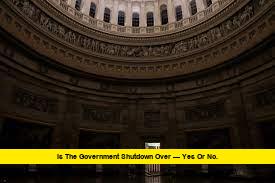
Yes — the government shutdown is over. On November 12, 2025, the U.S. federal government was officially reopened after a historic funding lapse, ending the longest such shutdown in the nation’s history.
Table of Contents
Latest Update & What It Means
The key phrase is the government shutdown over is now answered: absolutely yes. A funding bill passed by the United States House of Representatives and signed by Donald Trump late on November 12 ended the 43-day shutdown that began on October 1, 2025.
This legislation restores funding to most federal agencies, guarantees back pay for affected workers, and resumes multiple federal services and benefits that were paused or disrupted.
Why the Shutdown Happened
The shutdown began because Congress failed to pass a continuing resolution or appropriations bill to fund the government for the 2026 fiscal year. The fiscal year started on October 1, and without the necessary legislation the government entered a funding lapse.
Key triggers included:
- A sharp policy fight between Republicans and Democrats over funding levels and conditions.
- Democratic insistence on extending health-insurance subsidies under the Inflation Reduction Act and the Affordable Care Act marketplaces, which Republicans largely opposed.
- A stalemate in the Senate and House that kept the government in limbo until early November.
How the Shutdown Was Resolved
Here’s how the shutdown ended:
- The Senate passed a funding package on November 10 (60-40 vote) that included a stopgap funding measure through January 30, 2026.
- The House convened on November 12, voted 222-209 in favor of the package, and sent it to the President.
- President Trump signed the bill that night, officially reopening the government after 43 days of closure.
What the Deal Covers
Here are the major components of the legislation that ended the shutdown:
- The government is funded at current levels through January 30, 2026, with some agencies receiving full-year funding.
- Back pay is guaranteed for furloughed federal workers and those who were required to work without pay.
- The Supplemental Nutrition Assistance Program (SNAP) and other social-assistance programs have been restored to normal operations.
- Some agencies are still recovering from service delays, contract interruptions and staffing shortfalls—but the reopening is in progress.
Impacts & After-Effects
Although the shutdown is over, its effects will be felt for some time. Here’s a breakdown:
Federal Workforce
- Roughly 900,000 federal employees were furloughed or required to report to work without pay.
- Back pay will now begin flowing, but many staff will face backlog, missed overtime, and delays in clearing furlough status.
Public Services & Benefits
- Some services (permits, regulatory reviews, national parks) were paused or reduced; they are now resuming.
- Travel and aviation were hit—staff shortages at the Transportation Security Administration caused flight delays. Those will ease but may persist temporarily.
- Food-assistance programs like SNAP saw benefit interruptions; they are now restored.
Economy
- The shutdown caused billions in lost economic output. The Congressional Budget Office estimated losses of $7 billion to $14 billion, with some losses permanent.
- Recovery will take time. Some sectors (travel, contracting, federal grants) were especially impacted.
Why It Matters to American Households
For everyday Americans, ending the shutdown means:
- Federal employees now have certainty regarding pay and job status.
- Benefit recipients no longer face the risk of paused or delayed assistance.
- Businesses, especially those that depend on federal services or contracting, can resume normal operations.
- Taxpayers will be relieved of additional disruptions and uncertainty.
Moreover, the resolution ensures critical government functions now resume. But importantly, it also poses caution: the funding is temporary and underlying budget conflicts remain unresolved.
So, Is the Government Shutdown Over?
Yes—clear and confirmed. The government shutdown is over. Lawmakers acted, funding was restored, and services are coming back online. That said, the answer comes with caveats: while the shutdown is over, the budget fight isn’t. Some programs remain in recovery mode, and future funding deadlines loom.
Looking Ahead: What to Watch
- Whether Congress extends or replaces the temporary funding beyond January 30, 2026.
- How lawmakers address the unresolved demand for extending health-insurance subsidies under the Affordable Care Act marketplaces.
- The speed at which agencies clear backlog, hire staff, and restore full capacity.
- The economic ripple effects—will sectors recover fully or face persistent setbacks?
Feel free to share your thoughts below or check back for future budget updates and how they may affect you.

