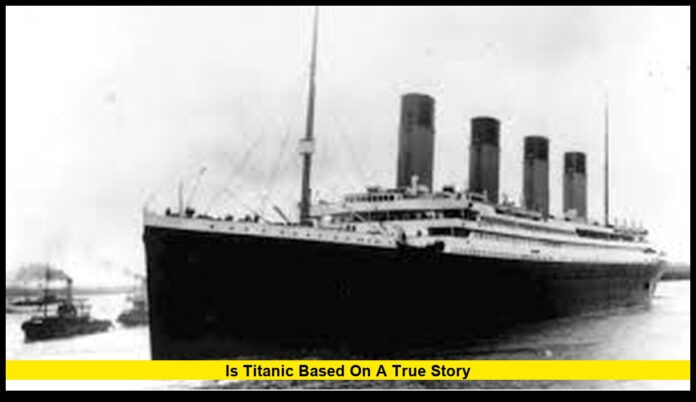
Is Titanic based on a true story remains one of the most searched movie questions in the U.S., especially as renewed interest in the film continues through streaming trends, anniversaries, and ongoing public fascination with the real ship’s history.
The short answer is yes and no. Titanic (1997), directed by James Cameron, is based on a real historical disaster, but its central romance and several characters were created for the film. Below is a fully factual, up-to-date breakdown explaining exactly what parts of Titanic are real, what was fictionalized, and why the movie still holds historical significance today.
Table of Contents
The Real Titanic Disaster
The RMS Titanic was a real British passenger liner operated by the White Star Line. It was considered one of the largest and most advanced ships of its time.
Key verified facts:
- Titanic began its maiden voyage on April 10, 1912
- It struck an iceberg late on April 14, 1912
- The ship sank early on April 15, 1912
- More than 1,500 people died
The disaster occurred in the North Atlantic Ocean while the ship traveled from Southampton to New York City. This historical event is the foundation of the film.
What Parts of the Movie Are Historically Accurate
James Cameron aimed for a high level of realism. Many elements in the movie closely match verified historical records.
The Ship Itself
- The layout of decks, staircases, and dining areas reflects original blueprints
- First-class interiors were recreated using archival photos
- The grand staircase design matches documented details
The Iceberg Collision
- The timing and location of the collision are historically consistent
- The damage pattern aligns with survivor testimony
- The slow flooding of compartments matches engineering studies
The Sinking Timeline
- The ship sank in about two hours and forty minutes
- The stern rose before breaking apart
- Electrical lights stayed on until near the end
These details are supported by survivor accounts and modern underwater exploration.
Which Characters Were Real People
Several characters in Titanic were based on real individuals who were aboard the ship.
Notable real-life figures include:
- Captain Edward John Smith
- Thomas Andrews, the ship’s designer
- Molly Brown, later known as “The Unsinkable Molly Brown”
- Bruce Ismay, White Star Line chairman
Their actions and personalities in the film closely resemble historical descriptions, though some scenes were dramatized.
Jack and Rose: The Fictional Love Story
The movie’s emotional core revolves around Jack Dawson and Rose DeWitt Bukater. These two characters did not exist.
James Cameron created them to:
- Represent different social classes aboard the ship
- Guide audiences through multiple areas of Titanic
- Add emotional depth to the historical event
Their relationship serves as a narrative lens rather than a historical record.
Was There a Real Jack Dawson?
A real passenger named J. Dawson was buried in Halifax after the sinking. However:
- He was not involved in a romance like the movie portrays
- His background differs entirely from the film character
- Cameron confirmed the similarity was coincidental
The movie’s Jack Dawson remains fictional.
How Accurate Was the Class Divide Shown in the Film
The film accurately depicts the social divisions aboard Titanic.
Verified facts:
- Third-class passengers faced more barriers to reaching lifeboats
- First-class cabins were closer to upper decks
- Language barriers affected evacuation
However, locked gates were used primarily for immigration control, not deliberate confinement during the sinking. The movie condensed complex procedures for dramatic effect.
Lifeboats and Survival Rates
The movie accurately shows that Titanic carried too few lifeboats.
Confirmed numbers:
- Titanic carried 20 lifeboats
- Capacity was about 1,178 people
- More than 2,200 people were onboard
Survival rates varied sharply:
- Women and children in first class had the highest survival rate
- Third-class men had the lowest
Many lifeboats launched partially filled, a fact supported by records.
The Ship’s Breakup: Movie vs. Reality
For years, historians debated whether Titanic broke apart. The film showed the ship splitting in two.
This depiction is now confirmed as accurate:
- The wreck was discovered in 1985
- The bow and stern rest separately on the ocean floor
- Modern scans confirm structural breakup
At the time of the film’s release, this was still disputed, making Cameron’s portrayal notably ahead of public consensus.
How James Cameron Researched the Film
James Cameron conducted extensive research before making Titanic.
Verified efforts include:
- Multiple deep-sea dives to the wreck site
- Collaboration with historians and engineers
- Use of real survivor transcripts
The director personally visited the wreck more times than any other filmmaker.
Why Some Scenes Are Historically Questioned
Despite its accuracy, a few elements remain debated.
Examples:
- Officer Murdoch’s portrayal has been criticized by historians
- Some evacuation scenes were dramatized for pacing
- Timelines were slightly compressed for storytelling
These changes were made for cinematic clarity, not deception.
Modern Interest and Cultural Impact
Interest in whether Titanic is based on a true story remains strong due to:
- Ongoing streaming popularity in the U.S.
- Social media discussions about historical accuracy
- Renewed attention during major anniversaries
The movie continues to spark curiosity about the real people involved in the tragedy.
What the Film Gets Right Emotionally
While Jack and Rose are fictional, their experiences mirror real emotions reported by survivors.
Survivor accounts describe:
- Panic during evacuation
- Acts of bravery and sacrifice
- Stark contrasts between luxury and chaos
The emotional truth aligns with documented testimonies.
Why the Movie Still Matters Today
The film introduced millions of Americans to:
- Maritime safety failures
- Class inequality during disasters
- The human cost of technological overconfidence
Many viewers first learned about Titanic through the movie, later exploring the real history.
So, Is Titanic Based on a True Story?
The answer is layered.
The ship, sinking, timeline, and many characters are real.
The central love story and some supporting figures are fictional.
The movie blends fact and fiction to tell a story grounded in a genuine historical tragedy.
The question of whether Titanic is based on a true story continues to resonate, and if this topic fascinates you, join the conversation or stay tuned as public interest in Titanic’s real history endures.

