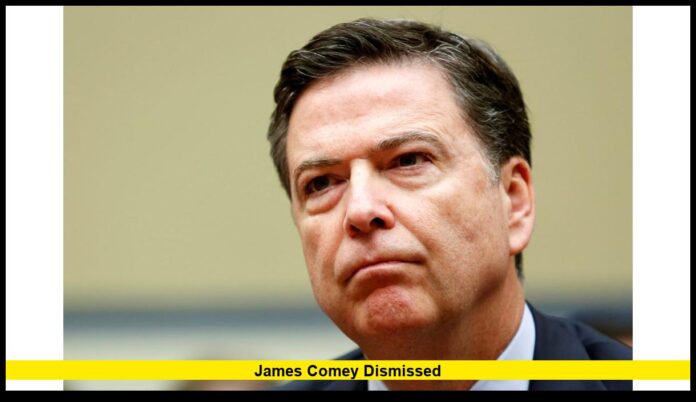
The phrase James Comey dismissed remains one of the most discussed moments in recent American political history. As of November 2025, the effects of his removal as FBI Director still influence conversations about presidential power, political accountability, and the independence of U.S. law enforcement agencies.
Comey’s firing by then-President Donald Trump on May 9, 2017, sent shockwaves through Washington and triggered investigations, hearings, and lasting debates that continue to shape the political landscape today.
Table of Contents
The Background of James Comey’s Tenure at the FBI
James Brien Comey Jr., a former U.S. Deputy Attorney General and corporate lawyer, was appointed as Director of the Federal Bureau of Investigation (FBI) by President Barack Obama in September 2013. His 10-year term was meant to extend through 2023, a tenure designed to keep the bureau insulated from direct political interference.
Before leading the FBI, Comey had built a reputation as an independent thinker. His career included roles in the Department of Justice and private law firms, as well as his notable stance during the George W. Bush administration, when he resisted pressure to approve a surveillance program he believed was illegal.
When he took charge of the FBI, Comey vowed to maintain political neutrality, even when the bureau found itself at the center of politically sensitive investigations.
The 2016 Election and the Clinton Email Investigation
Comey’s most controversial actions as FBI Director occurred during the 2016 presidential election, when the bureau investigated Hillary Clinton’s use of a private email server while serving as Secretary of State.
In July 2016, Comey held a rare public press conference announcing that the FBI would not recommend criminal charges against Clinton but described her handling of classified information as “extremely careless.”
Then, just 11 days before the election, Comey notified Congress that the FBI had reopened the email investigation after discovering new emails on a separate device. Many Democrats argued that the timing of that announcement hurt Clinton’s campaign, while Republicans praised his transparency.
That moment significantly changed Comey’s public image. To his critics, it was political interference. To his supporters, it was a demonstration of integrity.
The Trump Presidency and Growing Tensions
After Donald Trump took office in January 2017, Comey initially stayed on as FBI Director. However, tensions quickly grew between the two men, especially after the FBI began looking into Russian interference in the 2016 election and possible connections to Trump’s campaign team.
During a private dinner in February 2017, Trump allegedly asked Comey for his “loyalty,” a request Comey declined. The former FBI chief later documented the meeting in detailed memos, which would become key evidence in later investigations.
The president also reportedly expressed frustration with the FBI’s investigation into former National Security Adviser Michael Flynn, who had resigned earlier that month over misleading statements about contacts with Russian officials.
The Dismissal: May 9, 2017
On May 9, 2017, James Comey was officially dismissed from his position as FBI Director while he was visiting Los Angeles. News of his firing broke on television before Comey himself had been informed through official channels.
In a letter to Comey, Trump wrote that he was terminating him based on recommendations from Attorney General Jeff Sessions and Deputy Attorney General Rod Rosenstein. The White House initially claimed the firing was due to Comey’s handling of the Clinton email investigation.
However, in an interview days later, Trump publicly stated that the dismissal was related to the Russia investigation, saying, “When I decided to just do it, I said to myself, you know, this Russia thing with Trump and Russia is a made-up story.”
This statement drew sharp criticism from lawmakers and raised questions about potential obstruction of justice.
Immediate Fallout and Political Repercussions
Comey’s firing set off a political firestorm in Washington. Lawmakers from both parties called for greater transparency and oversight.
Key developments following the dismissal included:
- The Appointment of Robert Mueller (May 17, 2017): The Department of Justice named Mueller as Special Counsel to oversee the Russia investigation, expanding its scope and independence.
- Senate Testimony: Comey later testified before the Senate Intelligence Committee in June 2017, detailing his meetings with Trump and alleging attempts to influence the FBI’s investigation.
- Public Reaction: Polls at the time showed that most Americans viewed Comey’s firing as politically motivated, though opinions were sharply divided along party lines.
Comey’s Later Work and Public Statements
After leaving government service, Comey became a vocal advocate for transparency and ethics in leadership.
He published his memoir, “A Higher Loyalty: Truth, Lies, and Leadership,” in 2018, which detailed his time as FBI Director and his interactions with Trump. The book became a bestseller and was later adapted into a miniseries.
Since then, Comey has continued to lecture, write, and comment on issues of law enforcement integrity and political accountability. He has also taught at universities and spoken about the importance of maintaining nonpartisan public institutions.
As of 2025, Comey remains an influential voice on topics related to democracy, justice, and ethical leadership, though he has stayed largely out of active political life.
Legal and Institutional Impact of the Firing
The dismissal had far-reaching effects on both the FBI and the broader justice system.
Institutional Independence:
Comey’s removal underscored the tension between the executive branch and independent agencies. It reignited debates over whether the FBI Director should have stronger protections against political termination.
Special Counsel Investigations:
The appointment of Robert Mueller led to a two-year investigation that resulted in dozens of indictments and guilty pleas but did not establish that the Trump campaign conspired with Russia. The investigation, however, did outline multiple instances of possible obstruction of justice.
Public Trust:
Comey’s firing and the subsequent investigations deepened political divides in the United States. Confidence in the FBI and the Department of Justice fluctuated sharply depending on party affiliation, revealing how partisan narratives can shape public perception of law enforcement.
How the Event Continues to Resonate in 2025
Eight years later, the firing of James Comey still carries political weight. It remains a reference point in discussions about executive power, the limits of presidential authority, and the need for checks and balances.
The event also served as a cautionary tale about the risks of politicizing law enforcement. Many former government officials and legal scholars have cited Comey’s dismissal as a pivotal moment that changed how the public views the relationship between the White House and the FBI.
In recent interviews, Comey has reflected on his tenure, stating that the controversy surrounding his dismissal reinforced his belief in the importance of truth, transparency, and accountability in leadership.
The firing of James Comey reshaped modern American politics, influencing how the nation views presidential authority and the independence of federal investigations. What are your thoughts on how this event changed U.S. governance? Share your views in the comments below.

