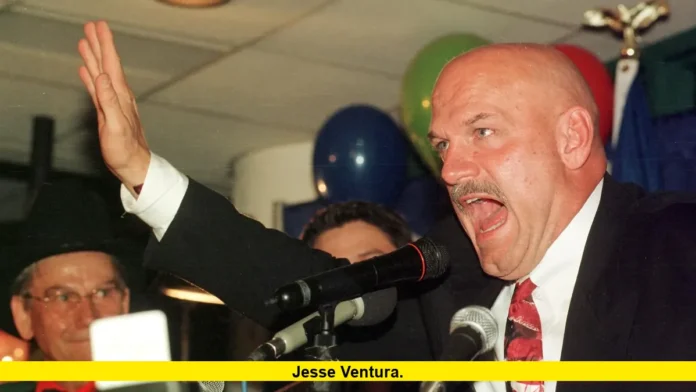
On January 9, 2026, former Minnesota governor and longtime political firebrand jesse ventura once again captured national attention with blunt remarks about American politics and a highly visible public appearance in Minneapolis. His comments, delivered amid heightened tensions following a federal law enforcement incident near a public high school, reignited debate about constitutional rights, political accountability, and the tone of modern political discourse in the United States.
This article outlines the confirmed facts surrounding Ventura’s recent statements, his appearance at the school, and the broader reaction across political and civic communities.
Table of Contents
Jesse Ventura’s Continued Role in American Political Debate
Jesse Ventura served as governor of Minnesota from 1999 to 2003 after building a public profile as a professional wrestler, media personality, and outspoken independent thinker. Since leaving office, he has remained politically active through commentary, public appearances, and media projects that consistently challenge both major political parties.
Ventura has long described himself as a critic of entrenched power and centralized authority. His political identity is built around skepticism of party leadership, concern over civil liberties, and a belief that constitutional protections are being weakened by modern governance. Those themes resurfaced prominently in his most recent remarks.
The Minneapolis High School Incident That Sparked Attention
In early January 2026, a confrontation involving federal immigration agents occurred near a Minneapolis public high school. During the incident, chemical irritants were deployed as crowds gathered outside the campus. Students were present in the area at the time, and multiple staff members were detained during the confusion that followed.
School officials canceled classes for the remainder of the week and announced a review of the incident. The event quickly became a focal point for discussions about federal authority, community safety, and the presence of enforcement operations near educational institutions.
Ventura’s Appearance at the School
The day after the confrontation, Jesse Ventura appeared at the high school to speak with staff and members of the community. His visit was intended to show solidarity with those affected and to publicly address what he described as troubling developments involving federal enforcement actions.
During his appearance, Ventura referenced a separate fatal shooting involving a federal agent elsewhere in the city, describing the broader situation as alarming and deeply concerning. He framed the incidents as examples of excessive force and government overreach, particularly when actions impact civilians and public institutions like schools.
Sharp Criticism of the Republican Party
While addressing the situation, Ventura delivered some of his strongest political language to date. He stated that he views the Republican Party as “domestic enemies to our Constitution,” arguing that its leadership has repeatedly failed to uphold democratic principles.
Ventura tied this claim to past national events involving challenges to election results and disruptions of constitutional processes. He emphasized that, in his view, accountability and adherence to constitutional norms must outweigh party loyalty.
These remarks immediately sparked strong reactions, both supportive and critical, across political circles.
Calling America a “Third World Country”
Ventura also described the United States as resembling a “third world country” when discussing militarized law enforcement tactics and federal responses to civil unrest. He compared recent events to conditions he has witnessed abroad, arguing that aggressive enforcement and erosion of civil liberties undermine America’s global standing.
Supporters of Ventura argue that his language draws attention to serious concerns about rights and governance. Critics counter that the comparison is extreme and dismissive of the country’s institutions and stability.
Renewed Attacks on National Political Figures
In addition to criticizing party leadership, Ventura reiterated his long-standing condemnation of former President Donald Trump. He again referred to Trump as a “draft-dodging coward,” revisiting arguments related to military service deferments during the Vietnam War era.
These remarks align with Ventura’s past statements and reflect his broader critique of political leaders he believes lack accountability and personal integrity.
Public Reaction Across the Political Spectrum
Ventura’s comments have triggered wide-ranging responses:
- Supporters praise him for speaking bluntly about constitutional concerns and federal power, particularly in the context of law enforcement activity near schools and residential areas.
- Critics argue that his rhetoric is inflammatory and risks deepening political polarization at a time of national tension.
- Community leaders have focused on the need for calm, transparency, and clear communication as investigations into the Minneapolis incident continue.
The combination of a sensitive local event and high-profile political commentary amplified national interest in Ventura’s remarks.
How These Statements Fit Ventura’s Longstanding Views
Ventura’s latest comments are consistent with themes he has emphasized for decades. He has frequently described both major political parties as failing ordinary Americans and has warned about unchecked authority at the federal level.
His focus on constitutional protections, civil liberties, and skepticism of centralized power has remained constant, even as his language has grown sharper in recent years. The Minneapolis appearance represents a continuation of that approach rather than a departure from it.
Broader Implications for Political Discourse
Legal scholars and civic educators often note that vigorous criticism of government is a cornerstone of democracy. At the same time, the language used in such criticism can influence public trust and social stability.
Ventura’s decision to label a major political party as a constitutional threat places him at the center of ongoing debates about free speech, political responsibility, and the impact of extreme rhetoric on public discourse.
What Comes Next
As of today, investigations into the Minneapolis school incident are ongoing, and no additional actions involving Ventura have been formally announced. His remarks continue to circulate widely online and in political discussions, suggesting that his role as a provocateur and commentator remains firmly intact.
Whether these events lead to further activism, public engagement, or political involvement from Ventura remains to be seen.
Conclusion
Jesse Ventura’s recent appearance in Minneapolis and his forceful statements about American politics have once again placed him at the center of national debate. His criticism of federal enforcement actions, his condemnation of Republican leadership, and his stark assessment of the country’s direction have resonated with supporters and alarmed critics alike.
The episode underscores how quickly local events can escalate into national conversations when prominent voices weigh in with uncompromising views.
What’s your take on Ventura’s latest remarks and their impact on today’s political climate? Join the conversation and stay engaged as this story continues to unfold.

