
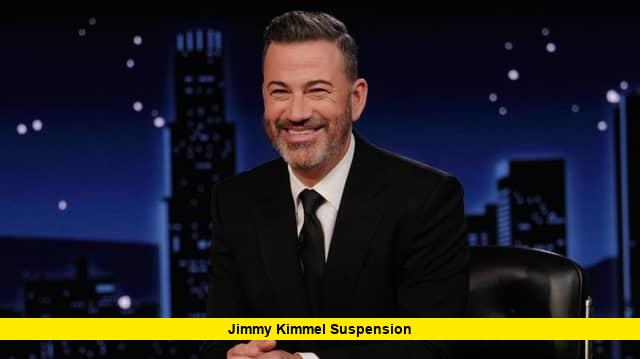
The Jimmy Kimmel suspension has become one of the most talked-about moments in American television this year. What began as a single late-night monologue quickly evolved into a national debate involving free speech, corporate responsibility, and the growing tension between entertainment and politics. ABC’s decision to temporarily pull Jimmy Kimmel Live! off the air sent shockwaves across the media industry, sparking viewer outrage, affiliate boycotts, and a storm of discussion about how far networks can—or should—go in controlling their talent.
Table of Contents
How the Jimmy Kimmel Suspension Started
The controversy began in mid-September 2025, after Jimmy Kimmel addressed the assassination of conservative activist Charlie Kirk during his opening monologue. Kimmel criticized the political reactions that followed the killing, arguing that some public figures were exploiting the tragedy for partisan gain. His comments were met with immediate backlash online, particularly from conservative groups, who accused him of being disrespectful and politically biased.
Within forty-eight hours, ABC announced that Jimmy Kimmel Live! would be suspended indefinitely. The network released a brief statement calling the move a “temporary pause” to reassess “editorial balance and audience sensitivity.”
The decision was seen as extraordinary—especially for a veteran host like Kimmel, who has helmed his show since 2003. For over two decades, he has been known for blending humor, political commentary, and social satire. The sudden suspension, then, marked a serious escalation in how networks respond to controversy.
A Timeline of Events: How It Unfolded
| Date | Event |
|---|---|
| September 10, 2025 | Conservative commentator Charlie Kirk was assassinated at a Utah university event. |
| September 15, 2025 | Kimmel delivered a monologue that referenced the political reactions surrounding the tragedy. |
| September 17, 2025 | ABC suspended Jimmy Kimmel Live! indefinitely, replacing it with reruns. |
| September 18–21, 2025 | Online backlash intensified; millions took to social media calling for Kimmel’s reinstatement. |
| September 22, 2025 | Disney executives confirmed that Jimmy Kimmel Live! would return to air the following day. |
| September 23, 2025 | The show resumed with a powerful monologue defending freedom of speech and artistic expression. |
| September 26, 2025 | Affiliate broadcasters that had dropped the show began airing it again after public pressure. |
This weeklong suspension became a media firestorm that united comedians, actors, and even political figures in public debate about censorship and corporate influence.
Why ABC Suspended Jimmy Kimmel
While ABC described its decision as an internal measure, the factors behind the suspension were complex. The immediate reason cited was “inappropriate timing and tone” following a national tragedy. However, industry insiders pointed to several deeper issues:
- Affiliate Pressure – Major ABC affiliate owners expressed concern that Kimmel’s comments could alienate local viewers, especially in conservative regions. Some even announced they would stop airing the show.
- Regulatory Scrutiny – Members of the Federal Communications Commission (FCC) reportedly raised concerns about the content, increasing pressure on ABC to act swiftly.
- Corporate Sensitivity – As part of Disney, ABC has been especially cautious about political backlash that could affect its streaming services, park attendance, and brand reputation.
The decision, however, seemed to backfire. Critics from across the political spectrum viewed the suspension as an overreach—a corporate attempt to silence creative voices in response to public pressure.
The Fallout: Business, Ratings, and Public Backlash
The Jimmy Kimmel suspension quickly triggered tangible consequences for Disney and ABC. Fans launched online campaigns calling for boycotts of Disney+, Hulu, and affiliated platforms. Hashtags demanding Kimmel’s reinstatement trended for days.
According to market analysts, Disney’s streaming platforms experienced a noticeable dip in subscriptions during the suspension period. Churn rates—representing user cancellations—rose significantly across both Disney+ and Hulu in late September. Estimates suggested millions of cancellations tied to public frustration with the company’s perceived censorship.
At the same time, Kimmel’s reinstatement episode became a massive ratings success. The September 23 broadcast drew more than double his average nightly audience, peaking at over six million live viewers. The show’s YouTube clips accumulated tens of millions of views within 48 hours.
This surge demonstrated how controversy, while risky for brands, can sometimes revitalize viewer engagement. It also highlighted the growing divide between network decisions and audience sentiment in the streaming era.
Kimmel’s Response on His Return
When Jimmy Kimmel returned to his desk on September 23, he didn’t hold back. Opening the show to a standing ovation, he began with a blend of humor and seriousness.
“I wasn’t on vacation,” he said, before thanking fans who had voiced support during the suspension. He clarified that his remarks had been taken out of context and reiterated his belief that comedians have a right—and a duty—to speak honestly about the world around them.
He then addressed the broader issue of censorship:
“If we can’t talk about tragedy, how are we supposed to make sense of it? Comedy has always been a mirror, not a muzzle.”
The monologue went viral, praised by fellow late-night hosts, journalists, and celebrities who saw it as a defense of free expression.
Industry Reaction and Free Speech Debate
The Jimmy Kimmel suspension became a rallying point for entertainers across television and film. Late-night hosts like Stephen Colbert, Seth Meyers, and Jon Stewart voiced their support, warning that silencing comedians over political comments sets a dangerous precedent.
Media unions, including the Writers Guild of America (WGA) and SAG-AFTRA, released statements criticizing the decision. They argued that networks should protect creative independence rather than bow to political or regulatory pressure.
Legal experts also weighed in, emphasizing that while networks can manage their content, regulators should not influence editorial decisions. The suspension, they said, blurred the line between corporate caution and government interference.
Disney’s Damage Control and Strategic Reversal
Disney executives faced growing pressure from shareholders, employees, and audiences to bring Kimmel back. Internal reports indicated that the suspension was creating financial strain and damaging the company’s image among key demographics.
Within a week, Disney reversed course. The company framed Kimmel’s reinstatement as a “return to open dialogue and creative freedom.” However, analysts noted that the decision likely reflected business pragmatism as much as principle.
Behind the scenes, affiliate networks that had stopped airing Jimmy Kimmel Live! began to restore it after negotiations with ABC. While some initially maintained their blackout, the majority reinstated the show by the end of September.
Disney’s quick pivot showed the difficulty of managing modern media scandals—especially when audience backlash moves faster than corporate decision-making.
How the Suspension Changed Late-Night Television
The Jimmy Kimmel incident didn’t just affect one show—it reshaped late-night television as a whole. Broadcasters across networks reportedly began reviewing editorial guidelines for on-air commentary. Some shows even adjusted their scripts in the weeks following to avoid political controversy.
However, others took the opposite approach. Comedians and hosts spoke more boldly about free speech, making the Kimmel suspension a symbolic moment of resistance. Viewers noticed, too: ratings for several competing shows spiked as audiences tuned in to see how other hosts would respond.
This event also highlighted a growing divide between traditional broadcast networks and digital platforms. While television affiliates hesitated to air politically charged content, streaming audiences increasingly demanded authenticity and unfiltered opinions.
The Broader Significance: Free Speech Meets Corporate Power
The Jimmy Kimmel suspension reignited America’s ongoing debate over free speech in entertainment. The situation exposed how fragile the balance can be between corporate interest and creative independence.
For networks, the risk is double-edged. Taking decisive action may appease some audiences but alienate others. For creators, it underscores how vulnerable their platforms can be to shifting cultural and political winds.
Kimmel’s case may serve as a turning point. Many industry professionals now view it as a test of whether major media companies will defend their talent’s right to speak freely—even when the message is uncomfortable.
What Happens Next
As of October 2025, Jimmy Kimmel Live! remains back on the air, and viewership has stabilized at higher-than-average levels. ABC has reportedly implemented new communication guidelines with its affiliate stations to prevent future conflicts.
Disney, meanwhile, is facing continued scrutiny from both political commentators and shareholders. Whether the company will change its approach to handling public controversies remains to be seen.
For Kimmel himself, the suspension appears to have only strengthened his public image. His show’s return was widely viewed as a victory for free expression, and his audience loyalty remains strong.
In the long run, the Jimmy Kimmel suspension may be remembered less as a controversy and more as a defining moment for modern media—a reminder that comedy, commentary, and controversy are often inseparable parts of the same conversation.
The Jimmy Kimmel suspension has ended, but its echoes continue across the entertainment world. Do you think ABC was right to suspend him, or did the network overstep? Share your thoughts and stay tuned for more updates on this evolving story.