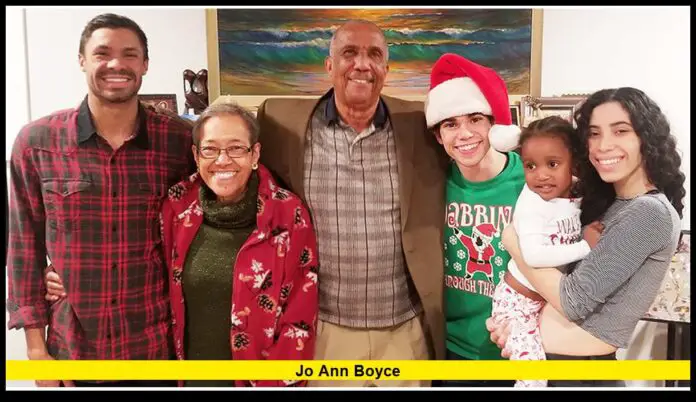
Jo Ann Boyce, a core member of the historic Clinton 12 and a pioneering figure in the fight for school desegregation, has died at age 84. Her passing marks a significant moment for civil rights history, as Boyce’s story remains one of courage, resilience, and lifelong advocacy.
Table of Contents
A Life Shaped by Courage
Jo Ann Boyce passed away on December 3, 2025, at her home in Los Angeles after a long battle with pancreatic cancer. Her death prompted tributes from communities across the country who recognized her as a powerful witness to a defining era in America’s struggle for racial equality.
Born on September 15, 1941, in Clinton, Tennessee, Boyce was the oldest of three children. She grew up in a segregated community and attended all-Black schools that received fewer resources. Even as a child, she showed an early love for learning and music. She often sang in church with her sister, a hobby that later evolved into musical opportunities during her teenage years.
Stepping Into History: The Clinton 12
In 1956, the federal court order to integrate Clinton High School placed Boyce in a historic and dangerous position. At just 14 years old, she became part of the Clinton 12, the first group of Black students to attend the previously all-white school. It was the first such integration in the South after the Brown v. Board of Education ruling.
The first days of integration brought crowds, heckling, and a rapidly growing wave of hostility. Boyce remembered arriving at school to see large groups gathered, some spewing open hatred. The town soon became the site of violent protests. Cars belonging to Black residents were overturned, crosses were burned, and threats intensified.
Inside the school, experiences varied. Some classmates treated the Black students with respect, while others harassed them or left threatening notes. Boyce was elected vice president of her homeroom, yet the atmosphere remained tense and unsafe. Learning became a challenge, and fear became part of daily life.
As violence escalated around Clinton, the National Guard was deployed to stabilize the community. Despite the protection, the danger remained so severe that Boyce’s family eventually decided to move to Los Angeles. By December 1956, she left Tennessee, and only two members of the Clinton 12 remained long enough to graduate from Clinton High.
Even though her time at the school was brief, its impact defined her future. She often said she never regretted being part of the effort to integrate the school and believed it was her place to stand up for change.
Building a Life of Service and Expression
Once in Los Angeles, Boyce continued her education at Dorsey High School and graduated in 1958. She then pursued nursing school and became a pediatric nurse, fulfilling a longtime dream. She devoted more than 40 years to nursing, providing care and support to children and families across her community.
Music continued to play a role in her life. Soon after arriving in California, she and her sister joined with a cousin to form a singing group called The Debs. The group released several singles, offering Boyce a brief but meaningful chapter in the music world.
After marrying in 1959 and raising a family, she eventually returned to music as a jazz vocalist, performing at well-known venues. She also wrote poetry, some of which was published. Creative expression and storytelling remained central to her life.
One of her most influential contributions came in 2019 when she co-authored a children’s book titled This Promise of Change. The book detailed her experiences during the integration of Clinton High School and helped introduce younger generations to the human reality behind desegregation.
Teaching History Through Her Voice
Throughout her life, Boyce spoke to students, teachers, and civic groups across the nation. Audiences often described her talks as emotional and eye-opening. Her ability to recall the terror of 1956 while expressing forgiveness made her message powerful.
She frequently shared that former classmates had reached out to apologize for their behavior during those years. Instead of holding resentment, Boyce chose grace. Her focus on love and understanding became a hallmark of her legacy.
The Green McAdoo Cultural Center, dedicated to preserving the history of the Clinton 12, highlighted Boyce’s compassion and her commitment to ensuring the truth of what happened in 1956 would never be forgotten. Her voice helped keep the story alive for generations who might otherwise never fully grasp the depth of what the Clinton 12 endured.
Boyce is survived by her sister, her three children, and her grandchildren. Among them was actor Cameron Boyce, who passed away in 2019. She often spoke of her deep love for her family and the pride she took in their accomplishments.
A Lasting Legacy
Jo Ann Boyce leaves behind a legacy rooted in bravery and service. Her role in school desegregation placed her at the center of a historic shift in American society, even though she was only a teenager at the time. She showed resilience in the face of threats, hostility, and violence. As an adult, she transformed that difficult experience into decades of teaching, caregiving, and storytelling.
Key parts of her legacy include:
- Being among the first Black students to integrate a public high school in the South
- Sharing her experiences to educate future generations
- Advocating for unity, forgiveness, and understanding
- Serving communities for over 40 years as a pediatric nurse
- Promoting the history of the Clinton 12 through writing and public speaking
Her passing closes a chapter but strengthens the responsibility to preserve her story. Through her courage, Boyce helped pave the way for equality in American schools and inspired countless individuals with her message of perseverance and compassion.
Her life reminds us that progress often begins with those willing to stand up, even when standing up is the hardest choice of all.
If her story moved you, share your thoughts below and keep her memory alive.

