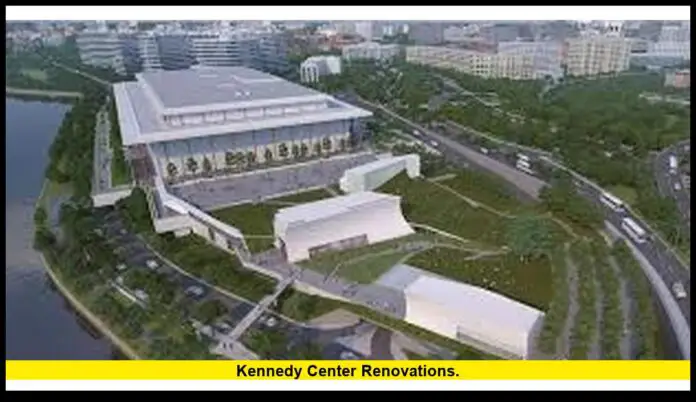
The highly anticipated Kennedy Center renovations are officially underway, marking one of the most significant upgrades in the history of Washington D.C.’s most celebrated performing arts venue. As part of a multi-year modernization effort, the John F. Kennedy Center for the Performing Arts is undergoing extensive infrastructure, design, and accessibility improvements to ensure the institution continues to meet the demands of modern audiences while preserving its historical grandeur.
This ambitious renovation project, backed by a major federal funding package and the leadership of the Kennedy Center’s board, aims to enhance everything from sound systems and lighting to visitor amenities and sustainability features.
Read also-Kennedy Center Closing: Two-Year Shutdown Confirmed as Major Renovation Plans Move Forward
Table of Contents
A Vision to Revitalize an American Icon
Opened in 1971, the Kennedy Center stands as both a national performing arts hub and a living memorial to President John F. Kennedy. For more than five decades, it has hosted world-class performances, historic moments, and generations of artists and audiences. While its cultural significance has never diminished, the building itself has inevitably shown signs of age after years of constant use and evolving technical demands.
The current Kennedy Center renovations mark a pivotal moment in the institution’s history. These efforts focus on revitalizing the Opera House, Concert Hall, and Eisenhower Theater—spaces that serve as the backbone of the Center’s programming. Improvements address seating, acoustics, stage technology, lighting systems, and backstage facilities, ensuring the venues meet modern performance standards while respecting their original design.
Beyond the theaters, the project includes major upgrades to the building’s infrastructure and public spaces. Aging mechanical systems are being modernized, accessibility features expanded, and visitor areas refreshed to improve comfort, efficiency, and sustainability. These updates are designed to support both large-scale productions and the daily flow of visitors, students, and artists who rely on the Center year-round.
At its core, the renovation effort is not simply about repair. It reflects a long-term vision to preserve the architectural legacy of the Kennedy Center while reimagining its role for the next 50 years. By blending restoration with innovation, the project positions the Center to continue serving as a premier destination for performances, education, and cultural exchange—honoring its past while preparing it for a dynamic future.
Scope of the Renovations
The renovation is an extensive, multi-phase effort focusing on four major areas of improvement:
1. Performance Halls and Acoustics
The Kennedy Center’s performance halls — including the Opera House, Eisenhower Theater, and Concert Hall — are receiving top-to-bottom updates to enhance acoustics, lighting, and seating comfort.
These upgrades will improve the overall audience experience while meeting modern technical standards for world-class performances. The acoustic overhaul also ensures better sound balance for both orchestral and amplified shows, addressing one of the most common feedback points from patrons.
2. Accessibility and Visitor Experience
Accessibility has been a key priority in the renovations. The updates include redesigned seating configurations, improved elevator systems, accessible restrooms, and widened walkways to accommodate all guests.
In addition, the main entrances and lobbies are being restructured to make navigation easier, and new digital signage systems will help guide visitors through the sprawling campus more efficiently.
3. Infrastructure and Sustainability
Behind the scenes, the Kennedy Center’s mechanical, electrical, and plumbing systems are being modernized for the first time in decades. The renovation includes the replacement of outdated HVAC units, new energy-efficient lighting systems, and better insulation to reduce environmental impact.
Sustainability is a central theme in this project, reflecting both federal green building standards and the Kennedy Center’s commitment to environmental responsibility. These upgrades will lower the center’s carbon footprint while reducing long-term operational costs.
4. Exterior and Campus Improvements
The renovations extend beyond the main building to include plaza enhancements and exterior façade restoration. The iconic marble-clad exterior is being cleaned and repaired to preserve its timeless aesthetic, while improved landscaping and lighting will make the campus more welcoming for visitors both day and night.
Additional outdoor areas are also being reimagined to host small-scale performances and public events, allowing the Kennedy Center to engage with the community in new ways.
Federal Support and Funding
The scope and ambition of the Kennedy Center renovations have been made possible through substantial federal investment. In 2025, the U.S. government approved an estimated $257 million capital funding package dedicated to long-overdue renovation and infrastructure modernization efforts at the iconic performing arts complex. This funding represents one of the most significant federal commitments to the Center since its original construction.
The allocation underscores the Kennedy Center’s unique national role. Beyond serving as a premier venue for music, theater, dance, and cultural programming, the Center functions as a federally designated memorial to President John F. Kennedy and a major public destination that welcomes millions of visitors each year. Federal support reflects recognition that maintaining the building’s integrity is a matter of national cultural stewardship.
The approved funds are designated for critical facility repairs, modernization of aging mechanical and electrical systems, and restoration of historic architectural features that define the Center’s character. Investments include improvements to climate control, safety systems, accessibility infrastructure, and essential behind-the-scenes operations that support large-scale productions and daily programming.
Federal funding is being complemented by private philanthropy and ongoing donor contributions, continuing the long-standing partnership between public and private support that has sustained the Kennedy Center for decades. Together, these funding sources ensure the renovations address both immediate structural needs and long-term operational sustainability, positioning the Center to remain a vibrant cultural institution for generations to come.
Balancing History and Innovation
One of the most complex aspects of the Kennedy Center renovations has been finding the right balance between preservation and progress. Architects and planners face the challenge of respecting the Center’s iconic mid-century modern design while integrating the contemporary systems required by today’s performers, audiences, and productions.
The building’s signature elements—including its white marble façade, soaring columns, and expansive public corridors—are being carefully preserved as defining features of the landmark. These exterior and structural characteristics remain central to the Kennedy Center’s visual identity and its status as a national memorial.
Inside, however, many spaces are being thoughtfully reimagined. Interior upgrades incorporate modern materials, advanced stage technologies, and improved lighting and acoustical systems designed to enhance comfort, safety, and performance quality. These changes are being implemented with sensitivity to the original architectural language, ensuring new elements complement rather than overshadow the historic design.
The overarching objective is continuity rather than transformation. By preserving the Kennedy Center’s character while updating its capabilities, the renovation project aims to ensure the institution remains a world-class performing arts facility. In doing so, it reflects the spirit of artistic innovation, openness, and cultural leadership that President John F. Kennedy championed—honoring the past while fully embracing the future.
Timeline and Progress
The Kennedy Center renovations are being carried out through a carefully phased approach designed to minimize disruption to performances, educational programming, and public access. Rather than closing the complex entirely, planners have structured the work so the Center can continue fulfilling its cultural mission while upgrades move forward.
2024–2025:
This initial phase focused on planning, architectural design approvals, and early system assessments. Engineers and preservation specialists evaluated aging infrastructure, finalized renovation priorities, and began targeted upgrades to critical mechanical and safety systems to prepare the building for larger-scale construction.
2025–2026:
Major construction work begins during this phase, including renovations to key performance venues such as the Opera House, Concert Hall, and Eisenhower Theater. Infrastructure modernization accelerates, addressing electrical, climate control, and backstage systems essential to supporting modern productions and year-round operations.
2026–2027:
The final phase centers on completing interior restorations and enhancing exterior areas, including public plazas and visitor circulation spaces. This stage emphasizes finishing details, restoration of historic design elements, and improvements to public amenities that elevate the overall visitor experience.
Throughout the renovation process, select performance spaces remain open, allowing concerts, theatrical productions, and special events to continue. This phased execution ensures the Kennedy Center remains an active and accessible cultural destination while its facilities are renewed for future generations.
Enhancing the Audience Experience
Once the renovations are complete, visitors to the Kennedy Center can expect a significantly elevated experience from arrival to final curtain call. Upgraded entrances and redesigned public areas are intended to improve circulation throughout the complex, creating a more intuitive and welcoming flow for audiences attending performances, tours, and educational events.
Inside the performance halls, audiences will benefit from a range of thoughtful improvements designed to enhance comfort and engagement. These upgrades include improved seating with increased comfort and legroom, clearer sightlines that enhance visibility from every section, and refined acoustics that allow performances to be heard with greater clarity and balance. Modernized lighting and stage systems further enhance the quality and versatility of productions across all genres.
Additional enhancements extend beyond the theaters themselves. New digital displays and interactive information kiosks will provide visitors with real-time updates, wayfinding assistance, and expanded access to program details, helping guests navigate the Center more easily and make the most of their visit.
Accessibility remains a central focus of the renovation effort. Updated elevators, ramps, seating accommodations, and assistive technologies are being incorporated throughout the facility to ensure guests of all abilities can move comfortably and independently. These improvements reinforce the Kennedy Center’s longstanding mission to make the performing arts welcoming and accessible to everyone, while meeting modern standards for inclusion and usability.
A Focus on the Future
While the physical renovations command the most immediate attention, the Kennedy Center’s transformation extends well beyond bricks and mortar. The modernization effort aligns with a broader institutional vision focused on expanding arts education, strengthening inclusivity, and embracing new forms of creative and technological expression.
As part of this evolution, the Center is investing in advanced audio-visual infrastructure designed to support hybrid and digitally enhanced performances. These systems will allow productions to be experienced both in person and through high-quality digital platforms, expanding access to audiences who may be unable to attend performances on-site. Enhanced broadcast capabilities, improved recording environments, and flexible stage technologies position the Center to meet the changing expectations of artists and viewers alike.
This digital-forward approach reflects a wider shift within the performing arts world, where virtual access and hybrid programming have become increasingly important. By integrating technology into its long-term strategy, the Kennedy Center is not replacing the live experience but extending it—ensuring its programming reaches broader, more diverse audiences while preserving the immediacy and emotional impact of live performance.
Together, these initiatives reinforce the Kennedy Center’s commitment to remaining a dynamic cultural institution. By pairing physical renewal with programmatic innovation, the Center is preparing to serve future generations of artists, educators, and audiences while continuing to honor its national mission and artistic legacy.
What the Renovations Mean for Washington, D.C.
The Kennedy Center renovations carry significance far beyond the institution itself. They represent a long-term investment in Washington, D.C.’s role as a global cultural capital and reaffirm the city’s commitment to the arts as a vital part of public life.
As the home of the National Symphony Orchestra, the Washington National Opera, and the Suzanne Farrell Ballet, the Kennedy Center serves as a cornerstone of the city’s cultural identity. It attracts visitors from across the United States and around the world, many of whom travel to Washington specifically to experience its performances. By modernizing its facilities, the renovation ensures that the city remains a premier destination for world-class music, theater, dance, and interdisciplinary art.
The project also delivers tangible economic benefits to the region. Large-scale renovations of this scope support hundreds of jobs across architecture, construction, engineering, design, and the performing arts. These roles contribute to sustained employment opportunities while reinforcing Washington’s creative economy and skilled workforce.
Beyond tourism and job creation, the renewed Kennedy Center strengthens the city’s cultural infrastructure for decades to come. By investing in a landmark institution that blends artistic excellence with public access, Washington, D.C. reinforces its standing as a city where national history, civic engagement, and cultural expression converge.
Community and Public Engagement
Throughout the renovation process, the Kennedy Center has placed a strong emphasis on transparency and public engagement. Recognizing its role as a national institution rooted in the local community, the Center has maintained open lines of communication with artists, audiences, educators, and Washington-area residents as work progresses.
Public tours, regularly updated online resources, and artist-led discussions provide insight into the renovation timeline, design choices, and long-term goals. These initiatives allow visitors and supporters to remain informed while fostering a sense of shared ownership in the future of the landmark. Artist Q&A sessions and behind-the-scenes features further connect the public to the creative professionals shaping both the performances and the spaces in which they take place.
A key component of this outreach is the “Art and Architecture in Motion” initiative, which frames the renovation as part of the Kennedy Center’s broader artistic narrative. Through exhibits, digital storytelling, and on-site interpretation, the program highlights how the building is evolving while honoring its original design and cultural mission. By turning the renovation itself into an educational experience, the Center invites audiences to engage not only with finished performances, but also with the process of renewal that supports them.
Together, these efforts ensure the Kennedy Center remains an active, accessible presence during renovation—strengthening its connection to the community while reinforcing its commitment to education, dialogue, and public participation.
Looking Ahead
By the time the renovations are complete, the Kennedy Center will emerge as a renewed symbol of American culture — an institution where art, architecture, and innovation meet.
Visitors can expect a revitalized environment that honors the center’s rich history while embracing the needs of a new generation. The project reaffirms the Kennedy Center’s enduring mission: to bring the performing arts to the heart of the nation and to inspire creativity, diversity, and excellence for decades to come.
Frequently Asked Questions (FAQ)
What is the purpose of the Kennedy Center renovations?
The renovations are designed to preserve the Kennedy Center’s architectural legacy while modernizing its facilities for contemporary performance, accessibility, and technology needs. The project ensures the Center can continue serving artists, audiences, and educational programs for decades to come.
When did the renovation project begin?
Planning and design work began in 2024, with early system upgrades taking place shortly after. Major construction phases are underway between 2025 and 2026, with completion expected by 2027.
Is the Kennedy Center still open during renovations?
Yes. The renovations are being executed in phases so that select performance spaces and public areas remain open. This approach allows performances, tours, and events to continue with minimal disruption.
Which areas of the Kennedy Center are being renovated?
Key performance venues—including the Opera House, Concert Hall, and Eisenhower Theater—are undergoing upgrades. In addition, the project includes infrastructure modernization, public space improvements, accessibility enhancements, and exterior plaza updates.
How is the renovation being funded?
The project is supported by an estimated $257 million in federal capital funding approved in 2025. This public investment is complemented by private philanthropy and ongoing donor contributions.
The Kennedy Center renovations are more than just a facelift — they’re a commitment to the future of American arts and culture. Share your thoughts below and stay connected as this transformation continues to unfold.

