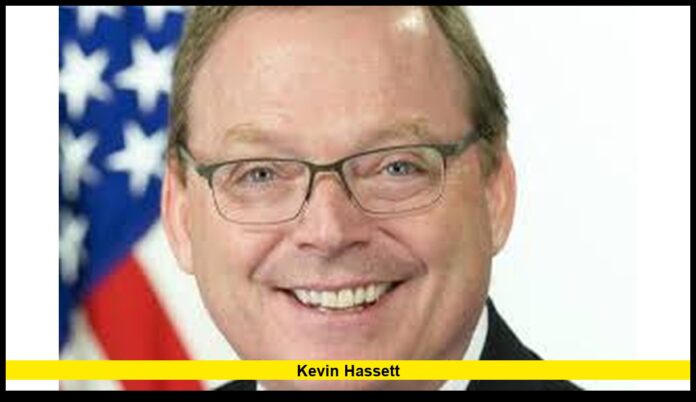
Kevin Hassett has become the central focus of national financial headlines as discussions intensify around who will lead the Federal Reserve when the current term ends in 2026. Kevin Hassett is now widely regarded as the top contender for the role, and recent developments have pushed him into the public spotlight as markets, policymakers, and analysts monitor every signal surrounding the potential leadership change.
Table of Contents
Who Kevin Hassett Is and Why His Name Matters Right Now
Kevin Hassett is a prominent American economist, policy expert, and longtime adviser within Republican economic circles. He previously served as Chair of the Council of Economic Advisers and currently holds a senior position within the administration, placing him at the center of national economic strategy.
He is known for his strong views on tax policy, pro-growth economic measures, and a data-driven approach to financial analysis. His extensive career includes academic work, government roles, and decades of influence in shaping economic platforms. Because of his background and his close involvement in federal economic planning, his potential move to the Federal Reserve has become one of the most closely followed developments in current U.S. financial news.
Why Kevin Hassett Is Considered the Leading Candidate
Recent activity surrounding the Federal Reserve leadership transition has put Hassett at the center of speculation. Public reporting shows that he is widely viewed as the frontrunner. Market forecasting platforms have also reflected increased expectations that he could be selected to lead the central bank when the current term expires.
Several factors support his position as the likely choice:
- He has a long history of experience in federal economic policymaking.
- He already works directly with national economic leadership.
- He is recognized in financial circles as someone who combines market expertise with policy insight.
- His economic views align closely with the direction the administration has signaled for future monetary policy.
As of early December 2025, he remains the most-discussed name in conversations surrounding the next Federal Reserve Chair.
Hassett’s Economic Perspective and What It Means for the Fed
If Kevin Hassett is selected, it would mark a shift in the Federal Reserve’s tone and possible approach to interest rates, inflation management, and economic growth strategies. Hassett has long emphasized the importance of policies that encourage private-sector expansion and investment. His past comments and policy work point to several themes that analysts believe could shape his direction:
- A greater focus on economic growth over tight inflation-only strategies
- Openness to more accommodative interest-rate policies
- Support for a regulatory environment that promotes business activity
- Interest in the evolving role of digital assets and innovation in financial markets
These views differ from the more traditional, inflation-guarded posture of the Federal Reserve in recent years. Because of this, investors are paying close attention to how markets might respond under a potential Hassett-led Fed.
How Financial Markets Are Reacting to the Possibility
The prospect of Kevin Hassett taking over the nation’s central banking system has already influenced market sentiment. Investors have responded to even small updates, signaling that the financial world sees his potential appointment as a major turning point.
Key market reactions include:
- Increased anticipation of interest-rate cuts
- Heightened volatility in currency markets
- Adjustments in bond yields
- Shifts in equity markets that tend to favor pro-growth policy expectations
Some analysts believe a Hassett-led Fed could bring a more aggressive approach to rate adjustments. Others warn that faster cuts could increase volatility or put pressure on the strength of the U.S. dollar. These diverging expectations show how significant his possible leadership may be for both domestic and global markets.
Timeline of What Comes Next
With the current Federal Reserve Chair’s term ending in mid-2026, the selection process is approaching a critical point. Discussions within the administration suggest that a decision could be announced within the coming weeks or months, depending on political strategy and confirmation planning.
The timeline generally includes:
- Internal finalization of the nominee
- Public announcement of the administration’s choice
- Senate review and confirmation hearings
- Transition of leadership in 2026
While the process may take time, financial institutions typically begin adjusting expectations long before a nominee is officially confirmed. That is why developments involving Hassett continue to carry significant weight.
Challenges and Criticism Surrounding His Potential Nomination
Kevin Hassett’s rise as the leading contender has also brought renewed attention to his record and views. As with any major economic figure, not all reactions have been positive.
Among the concerns raised:
- His close work with political leadership has led to questions about central bank independence.
- Some economists express caution regarding his more optimistic long-term projections in past writings.
- Others argue that a shift toward faster rate cuts could re-ignite inflation if implemented too aggressively.
- Discussions about his openness to digital-asset policy changes have raised debate about the future regulatory environment.
Despite criticism, supporters counter that Hassett has decades of experience working with complex economic models, advising senior leaders, and shaping policies that align with long-term national growth.
Broader Economic Impact if Hassett Takes the Helm
If Kevin Hassett becomes the next Chair of the Federal Reserve, the decision will directly influence U.S. households, businesses, and financial institutions.
Potential areas of impact include:
For borrowers:
Lower interest rates could make mortgages, personal loans, and business financing more accessible.
For consumers:
Monetary easing may stimulate growth but could also raise concerns about inflation pressure.
For markets:
Stocks, real-estate assets, and risk-based investments may respond positively to looser monetary policy.
For global trade:
A shift in U.S. rate policy could affect currency values and international capital flows.
For technology and digital finance:
Hassett’s interest in financial innovation may accelerate discussions around regulated digital-asset frameworks.
Because of these factors, his potential leadership change is viewed not only as an internal Washington decision but as a globally significant financial event.
What Americans Should Watch Going Forward
As updates continue, several upcoming developments will be important for the public:
- Official word from the administration
- Comments from key financial officials
- Early reactions from the Senate
- Market movements that follow each new development
- The Federal Reserve’s final meetings of 2025
Every shift in this story is likely to affect markets, household finances, and long-term economic planning.
As Kevin Hassett remains at the center of national attention, the coming weeks may bring one of the most influential economic decisions in recent years — a choice that will shape interest rates, inflation, and the direction of the U.S. economy. Share your thoughts below.

