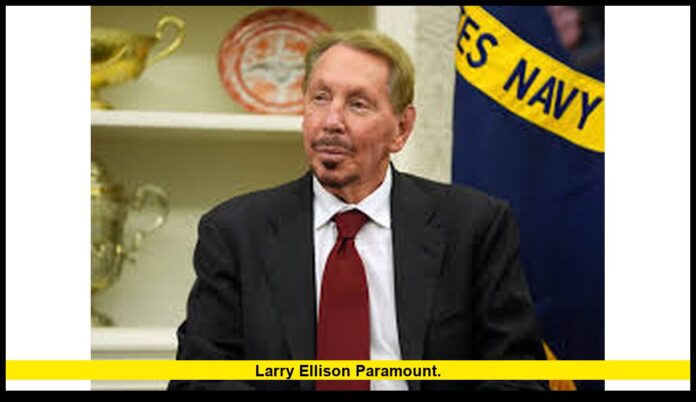
Larry Ellison Paramount has become one of the most significant and dynamic stories in U.S. business news as Oracle co-founder Larry Ellison dramatically strengthened Paramount Skydance’s hostile takeover bid for Warner Bros. Discovery. In a groundbreaking update, Ellison personally guaranteed $40.4 billion of the equity financing behind Paramount’s $108 billion all-cash offer in an effort to overcome financing objections and rival proposals. This bold move directly responds to Warner Bros. Discovery’s criticism of Paramount’s earlier financing structure and signals a new phase in a corporate confrontation with potentially massive implications for Hollywood, streaming, media consolidation, and shareholders nationwide.
As of today, Paramount Skydance maintains its $30 per share cash offer, has raised its reverse termination fee to match competing bids, and has extended the tender deadline into January 2026. With this unprecedented personal guarantee from one of the richest individuals in the world, the takeover fight has escalated and grabbed the attention of investors, media executives, regulators, and the broader business community.
This detailed, comprehensive article breaks down every key component of the Larry Ellison Paramount news — from the latest developments and financial structure to strategic implications, market reaction, and what lies ahead.
Table of Contents
The Latest Breakthrough: Ellison’s Personal Guarantee
In the most recent and definitive update to Paramount Skydance’s hostile bid for Warner Bros. Discovery, Larry Ellison has agreed to an irrevocable personal guarantee of $40.4 billion tied to the equity portion of the offer. This guarantee is designed to solidify Paramount’s financial footing and directly answer criticism from Warner Bros. Discovery’s board, which had previously questioned the credibility of Paramount’s financing commitments.
Under the revised bid:
- Larry Ellison personally backs $40.4 billion of the equity financing.
- Paramount retains its $30 per share all-cash offer for Warner Bros. Discovery’s outstanding shares.
- The reverse termination fee has been increased to $5.8 billion to rival competing offers.
- The tender offer deadline has been extended to January 21, 2026.
This financial commitment is widely viewed as one of the most substantial personal guarantees ever made in a corporate takeover bid and significantly alters the narrative around funding certainty. Investors and analysts now see Paramount’s proposal as more financially credible, which could impact shareholder decisions and regulatory views.
How We Got Here: Background on Paramount Skydance’s Hostile Bid
Paramount Skydance emerged earlier this year through the merger of Paramount Global and Skydance Media, creating a major media conglomerate under the leadership of David Ellison as chairman and CEO. The merged company controls a broad portfolio of entertainment assets, including broadcast and cable networks, streaming platforms, film studios, and content libraries.
On December 8, Paramount Skydance launched a hostile takeover bid for Warner Bros. Discovery, offering $30 per share in cash for all outstanding shares. This represented an enterprise value of approximately $108.4 billion — a sum larger than competing offers on the table.
Paramount positioned its all-cash offer as superior for several reasons:
- Immediate, guaranteed value to shareholders rather than stock-linked consideration.
- Control of all assets of Warner Bros. Discovery, including studios, streaming services, and cable networks.
- Potential for faster regulatory closure compared with deals involving public stock.
- A vision of combining two major content engines to compete more effectively against tech-led streaming giants.
Despite these arguments, Warner Bros. Discovery’s board recommended that shareholders reject the Paramount bid in favor of a negotiated merger with Netflix. The board argued that Netflix’s cash-and-stock deal offered better value, greater financial stability, and stronger regulatory prospects.
In response, Paramount forged ahead with its hostile strategy and, with the latest development, added Ellison’s personal guarantee to strengthen the financial base of its offer.
Warner Bros. Discovery’s Response and Shareholder Dynamics
Warner Bros. Discovery’s leadership has been explicit in its skepticism of Paramount’s bid. The company’s board rejected the offer and encouraged shareholders to support the existing merger agreement with Netflix on the grounds that it offers:
- Stability backed by the financial strength of a public company valued at more than $400 billion.
- Binding, transparent financing and a solid credit profile.
- A cash-and-stock mix that provides meaningful upside to shareholders.
- A clearer path through regulatory reviews.
Board members expressed concern that Paramount’s financing structure, which originally relied in part on an Ellison family trust, lacked the firm commitment required in such a transaction. Warner Bros. Discovery executives said that the trust’s assets were revocable and could be reallocated, leading to uncertainty.
The personal guarantee from Larry Ellison aims to address that uncertainty directly by removing doubts about the sufficiency of capital backing Paramount’s proposal.
In addition, major investors in Warner Bros. Discovery have indicated a willingness to reconsider Paramount’s bid now that financing concerns have been addressed. This factor could play a major role as the tender deadline approaches.
Comparing Paramount’s Offer to Netflix’s Deal
Two competing offers stand at the core of this battle:
Paramount Skydance’s Offer
- $30 per share in all-cash consideration.
- Entire Warner Bros. Discovery enterprise, including cable networks.
- Backed by Ellison’s personal financial guarantee and institutional financing.
- Higher reverse termination fee.
- Extended tender deadline.
Netflix’s Offer
- Cash-and-stock mix valued at approximately $27.75 per share.
- Focused primarily on studio and streaming assets such as HBO and HBO Max.
- Backed by Netflix’s robust financial position and investment grade credit profile.
- Generally perceived as a lower regulatory risk in some respects.
- Supported by the Warner Bros. Discovery board.
The contrast between the two proposals highlights different strategic visions and risk profiles. Paramount’s bid offers immediate cash and full asset control, while Netflix’s deal leverages stock and excludes certain assets, potentially easing regulatory concerns.
Market Reaction and Stock Moves
Following the announcement of Larry Ellison’s personal guarantee, Warner Bros. Discovery shares experienced a positive move, reflecting renewed investor confidence in Paramount’s bid.
Paramount Skydance’s stock also saw gains as markets responded to the clarity and solidity of the revised financing structure. Analysts interpreted the personal guarantee as a strong commitment signal that may sway fence-sitting shareholders.
Investors have been closely watching fluctuations in both Paramount and Warner Bros. Discovery share prices as the tender deadline approaches, with volatility tied to news flow, regulatory signals, and shareholder sentiment.
Strategic Implications for Hollywood and the Streaming Wars
If Paramount Skydance were to successfully acquire Warner Bros. Discovery under the updated terms, the result would be one of the largest media combinations in U.S. history.
A combined entity would encompass:
- Major broadcast networks and cable channels.
- Vast film and television production facilities.
- Global streaming platforms.
- Extensive content libraries spanning decades.
This consolidation would significantly reshape the competitive landscape, especially in the streaming sector where Disney, Netflix, and Paramount Skydance are vying for subscriber growth and content dominance. The combined portfolio could create a vertically integrated powerhouse capable of combining theatrical releases, television content, and digital platforms under one roof.
However, such concentration also raises regulatory and antitrust considerations. Federal authorities may scrutinize the deal to assess impacts on competition, content diversity, pricing, and consumer choice.
Political and Regulatory Considerations
Large media mergers inevitably draw political attention. In this case, discussions around potential changes at influential news outlets within Warner Bros. Discovery’s portfolio have added complexity. Media consolidation often triggers questions around diversity of viewpoints, competition, and market power.
Federal regulators, including antitrust enforcement bodies, will evaluate whether the merger would substantially lessen competition in key markets. Given the strategic importance of media platforms and the global reach of content distribution, regulatory review is expected to be thorough and potentially lengthy.
Political leaders, advocacy groups, and industry stakeholders may also weigh in, further shaping the environment in which this transaction unfolds.
Timeline of Key Events in the Larry Ellison Paramount Story
- August 7, 2025: Paramount Skydance formed from the merger of Paramount Global and Skydance Media.
- December 8, 2025: Paramount Skydance launches its $30 per share all-cash hostile bid for Warner Bros. Discovery.
- December 17, 2025: Warner Bros. Discovery rejects Paramount’s offer and recommends the Netflix merger.
- December 22, 2025: Larry Ellison announces a $40.4 billion personal guarantee in support of Paramount’s revised bid.
- January 21, 2026: Revised tender deadline for shareholders to decide.
What Comes Next
The battle for Warner Bros. Discovery is far from over. Key developments to watch include:
- Shareholder Decisions: Investors must weigh the certainty of Paramount’s cash offer and Ellison’s guarantee against the board-favored Netflix proposal.
- Regulatory Review: Federal agencies will assess potential competitive impacts, content control issues, and market concentration concerns.
- Possible Legal Challenges: Both sides may pursue legal strategies to influence the outcome, delay proceedings, or resolve disputes.
Shareholder votes and regulatory decisions in early 2026 will ultimately determine the fate of this high-stakes corporate confrontation.
The involvement of Larry Ellison in personally backing Paramount’s bid for Warner Bros. Discovery represents a dramatic chapter in U.S. media history. What will happen next could reshape Hollywood’s future — and this story is far from finished.
What do you think will happen next in this corporate showdown? Share your thoughts or stay tuned for more updates as the situation evolves.

