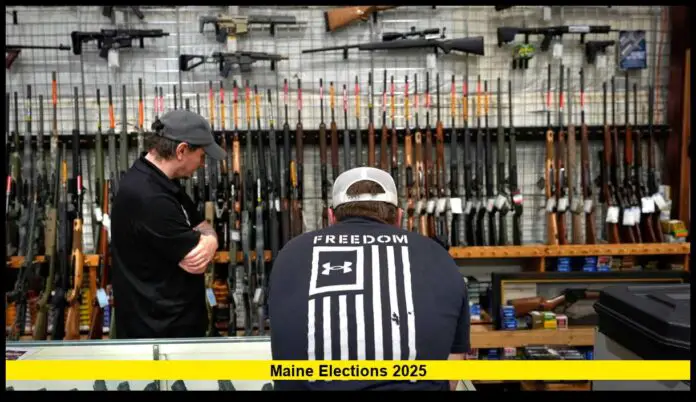
The Maine elections 2025 brought voters across the state to the polls on November 4 to decide two key referendum questions that could reshape both voting access and firearm safety laws. While no major statewide offices were on the ballot, the outcome of these measures will have lasting effects on Maine’s political and legal landscape.
Table of Contents
Focus on Two Major Referendums
The November 2025 ballot featured two statewide referendum questions: one centered on election procedures and the other on firearm safety.
- Question 1: Election Law Changes
This measure proposed requiring photo identification at the polls, reducing absentee voting by two days, restricting who can request absentee ballots on behalf of others, ending automatic absentee status for seniors and people with disabilities, and limiting the number of ballot drop boxes in each municipality. Supporters argued these steps were necessary to enhance ballot security, while critics said the restrictions could make voting harder for elderly, disabled, and rural Mainers. - Question 2: Expanded “Red Flag” Law
The second question asked voters whether Maine should expand its current “yellow flag” law into a broader “red flag” system. The change would allow family members—rather than only law enforcement—to petition courts to temporarily remove firearms from individuals considered a danger to themselves or others. Advocates said this would close dangerous loopholes, while opponents warned of possible infringements on due process and Second Amendment rights.
Turnout and Voter Engagement
Turnout in the Maine elections 2025 was strong for an off-year vote. More than 145,000 absentee ballots were requested before Election Day, with steady in-person participation across the state. Urban areas like Portland, Bangor, and Lewiston saw high engagement, while smaller rural towns also reported consistent turnout.
The strong voter participation was attributed to heightened public interest in both ballot questions. Local campaigns and community organizations spent weeks informing residents about the proposals and encouraging early voting.
Election Day Atmosphere
Election Day proceeded smoothly across most polling stations, with few reported disruptions. Poll workers noted that the photo ID proposal itself became a talking point at the polls, as many voters were already preparing for a possible future requirement.
Weather conditions were favorable throughout most of the state, contributing to steady voter flow. Early reports from election officials indicated that voting equipment and ballot tabulation ran efficiently.
Preliminary Results and Trends
As of Wednesday morning, unofficial results indicated that both referendums were closely contested.
- Early tallies showed Question 1—the election law change—garnering narrow support in rural regions, while urban centers leaned against it.
- Question 2, on the firearm law expansion, appeared to have stronger backing from suburban and coastal communities, reflecting concerns about public safety after recent incidents in the state.
The final certified results are expected later this month once all absentee and overseas ballots are counted.
What’s at Stake for Maine
The Maine elections 2025 represented more than just a local policy debate—they reflected national conversations over voting rights and gun legislation.
If Question 1 passes, Maine will become one of the more restrictive states in New England in terms of voting access. Election officials would need to implement new training protocols, update poll equipment, and run public awareness campaigns about identification requirements.
If Question 2 passes, courts will begin developing procedures for handling family-initiated firearm removal petitions. Law enforcement agencies would also need to coordinate closely with judicial officers to ensure proper execution of the new red flag provisions.
Legal and Administrative Implications
Both measures carry significant legal and logistical considerations.
- For Question 1, civil rights groups and advocacy organizations are expected to review the law’s constitutionality if enacted. Adjustments to absentee voting systems and voter outreach would need to be completed before the 2026 statewide elections.
- For Question 2, implementing the expanded red flag law would require new administrative protocols, judicial training, and clear guidance to ensure due process rights are protected.
Local clerks across the state have already begun preparing contingency plans in case both measures pass. Maine’s Secretary of State is expected to outline an official timeline for implementation once results are finalized.
Public Reactions
Public opinion throughout Election Day was mixed.
- Supporters of Question 1 said stricter identification standards would help restore voter confidence and prevent potential irregularities.
- Opponents said the measure would disproportionately impact older voters and those without easy access to government-issued identification.
Meanwhile, Question 2 drew emotional responses, particularly among families and communities still affected by past gun violence. Many residents saw the proposal as a needed reform to prevent future tragedies, while others viewed it as an overreach that could unfairly target law-abiding gun owners.
The Broader National Context
Maine’s 2025 ballot questions mirror similar debates taking place across the country. Several states have considered voter ID requirements and adjustments to absentee voting rules, while others have debated strengthening red flag laws following public safety incidents.
Political analysts see Maine as a bellwether for how smaller, politically diverse states may navigate these polarizing issues ahead of the 2026 midterm elections.
Looking Ahead
Once official results are certified, the Maine legislature will likely face calls to clarify enforcement procedures and funding allocations for whichever measures pass. State agencies may also need to coordinate new voter education campaigns and firearm safety initiatives.
Observers note that this year’s referendums could set the tone for Maine’s political landscape leading into the 2026 gubernatorial race. How these laws are implemented—or challenged—will shape voter confidence and public policy debates in the months to come.
The Maine elections 2025 highlighted the power of direct democracy, allowing citizens to decide two of the most consequential issues facing their state today. Whether you supported or opposed the measures, this election underscored how engaged Mainers remain in shaping their future.
What do you think about the outcome of the Maine elections 2025? Share your views and stay tuned for further updates as results are finalized.

