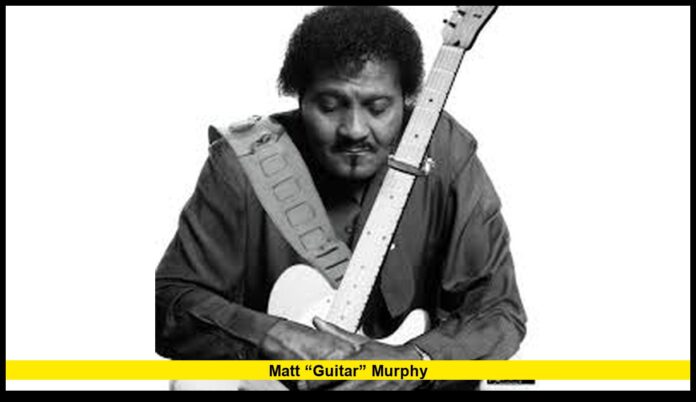
The name Matt “Guitar” Murphy stands among the most influential in American blues history. Known for his fiery guitar style and collaborations with legendary artists, Murphy’s career shaped modern blues and inspired generations of guitarists. Though he passed away in 2018, his legacy continues to thrive through reissues, tributes, and ongoing recognition from musicians and fans across the United States.
Table of Contents
Early Life and Roots in the Blues
Matt “Guitar” Murphy was born on December 29, 1929, in Sunflower, Mississippi, and raised in Memphis, Tennessee — two of the most musically rich areas in American history. Growing up surrounded by the sounds of the Delta and Memphis blues scenes, he developed an early passion for the guitar.
By the late 1940s, Murphy’s talent caught the attention of local musicians. His skill set him apart from the typical rhythm guitarists of the time. Instead of playing simple chords, he brought a jazz-influenced sophistication to blues guitar, using fluid runs and inventive phrasing that were ahead of his time.
Rise to Fame in the 1950s and 1960s
Murphy’s career began to take off in the early 1950s when he joined the bands of Memphis Slim and Muddy Waters. His unique tone and crisp solos earned him a reputation as one of the sharpest guitarists in the Chicago blues scene.
Throughout the 1950s and 1960s, Murphy played with nearly every major name in blues, including:
- Howlin’ Wolf
- Sonny Boy Williamson II
- Otis Rush
- Etta James
- James Cotton
His work with Memphis Slim was particularly significant. Murphy’s lead guitar can be heard on classic tracks like The Comeback and Sittin’ and Cryin’ the Blues. These recordings helped define the Chicago blues sound that would influence later rock icons such as Eric Clapton and Stevie Ray Vaughan.
Murphy wasn’t just a sideman — he was a musical innovator who blended blues, swing, and jazz in ways few guitarists could replicate. His fast, precise picking and melodic solos gave him a signature style that became instantly recognizable.
Matt “Guitar” Murphy and The Blues Brothers
Murphy reached a new level of fame in 1978 when he joined the Blues Brothers Band, created by comedians John Belushi and Dan Aykroyd. The group, which started as a musical act on Saturday Night Live, soon became a real performing band and recording success.
In the 1980 film The Blues Brothers, Murphy played himself, appearing as Aretha Franklin’s guitarist and husband in the iconic diner scene. His role introduced him to millions of new fans who might never have heard traditional blues before.
Murphy’s solo in Sweet Home Chicago and his performance during the movie’s live sequences are still considered some of the best guitar moments ever captured in a blues film. He also appeared in the 1998 sequel, Blues Brothers 2000, once again showcasing his electrifying stage presence and flawless technique.
Solo Career and Later Work
After decades of supporting other artists, Matt “Guitar” Murphy began focusing more on his solo career in the late 1980s and 1990s. He released several albums that displayed his virtuosity and deep understanding of blues composition, including:
- Way Down South (1990)
- The Blues Don’t Bother Me! (1996)
- Lucky Charm (2000)
These albums proved that Murphy could hold his own as a bandleader and not just as a sideman. His smooth phrasing, soulful bends, and rhythmic precision made his solo records a staple in the collections of blues guitar enthusiasts.
Murphy continued performing well into his 70s, often headlining blues festivals across the U.S. He remained a favorite at the Chicago Blues Festival and the Mississippi Delta Blues Festival, drawing audiences who admired both his technical skill and his warm, engaging personality.
Health Challenges and Passing
In 2002, Matt “Guitar” Murphy suffered a stroke, which temporarily limited his ability to play guitar. However, his determination to return to the stage demonstrated his resilience and love for music. Within a few years, he regained enough strength to perform again, a comeback celebrated by fans and peers alike.
Murphy continued to make selective appearances until his health began to decline later in life. He passed away on June 15, 2018, at the age of 88. The blues world mourned his loss deeply, but tributes from around the globe celebrated his extraordinary contribution to music.
Musical Style and Influence
Matt “Guitar” Murphy’s style was both precise and soulful. He combined technical mastery with a deep emotional connection to the blues. His ability to transition effortlessly between intricate jazz lines and raw Delta-inspired licks made him one of the most versatile guitarists of his era.
Key elements of his style included:
- Clean tone and fast runs – Every note was sharp and intentional, with a clarity that defined his sound.
- Jazz-influenced phrasing – He borrowed harmonic ideas from jazz, giving his blues solos a sophisticated edge.
- Strong rhythmic foundation – His background as a session player made him a rock-solid rhythm guitarist.
Murphy influenced generations of musicians, from bluesmen like Ronnie Earl and Joe Bonamassa to rock guitarists such as Keith Richards and Jimmy Page, who have acknowledged his role in shaping the sound of electric blues.
Legacy and Continued Recognition
As of 2025, Matt “Guitar” Murphy’s legacy continues to be honored through digital remasters, tribute concerts, and educational initiatives that teach the art of blues guitar. His recordings remain in regular rotation on blues radio stations across the United States, and his performances from The Blues Brothers films are still celebrated as essential viewing for music fans.
Notable honors and recognitions include:
- Posthumous tributes at the Chicago Blues Festival (2019)
- Induction into the Blues Hall of Fame (2021)
- Ongoing influence in guitar education programs at blues workshops and academies nationwide
Younger musicians frequently cover Murphy’s songs and solos, keeping his sound alive for new audiences. His impact is especially visible on YouTube and streaming platforms, where millions of listeners continue to discover his work each year.
Why Matt “Guitar” Murphy Still Matters
Matt “Guitar” Murphy’s contribution to blues is immeasurable. He bridged the gap between traditional Delta blues and modern electric styles, helping shape what became the foundation of American rock and R&B. His dedication to his craft, even in the face of personal challenges, exemplified the strength and endurance of the blues spirit.
For many, Murphy represents what it truly means to be a musician — someone who plays not just for fame or recognition, but for the love of the sound and the emotion behind it. His work continues to inspire both seasoned players and young guitarists picking up the instrument for the first time.
Matt “Guitar” Murphy’s music lives on as a vital part of American history, reminding listeners that the blues is not just a genre — it’s a heartbeat that never fades

