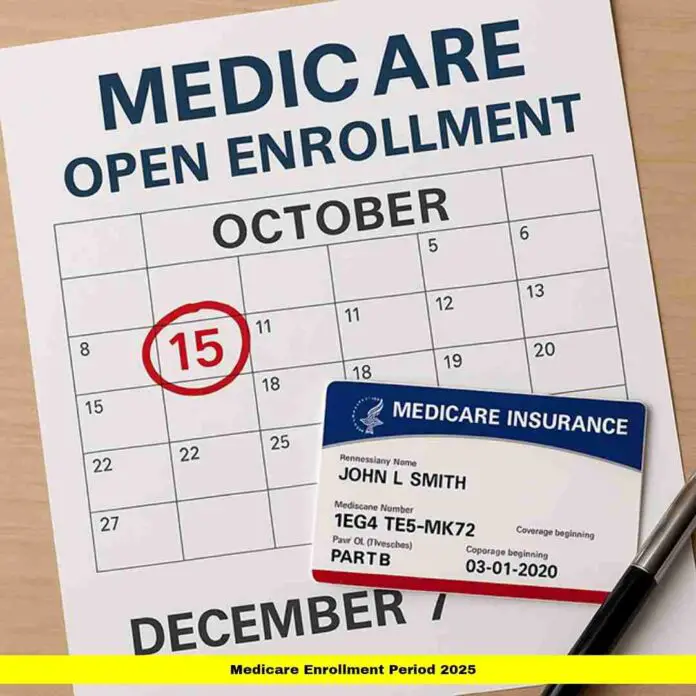
The Medicare enrollment period 2025 is one of the most crucial times of the year for millions of Americans who rely on Medicare for their health coverage. Taking place from October 15 to December 7, 2025, this annual window gives beneficiaries the opportunity to review, adjust, or change their Medicare Advantage or Prescription Drug plans. Missing this period could mean staying locked into a plan that no longer meets your medical or financial needs.
Table of Contents
Key Points Summary
- The Medicare enrollment period 2025 runs from October 15 to December 7, 2025, with any changes effective January 1, 2026.
- Beneficiaries can switch between Medicare Advantage plans, join or drop Part D drug coverage, or return to Original Medicare.
- Plan costs, provider networks, and drug formularies will change in 2026, making this enrollment season especially important.
- New Special Enrollment Periods (SEPs) introduced in 2025 allow more flexibility for low-income or dual-eligible individuals.
- Reviewing your plan early can prevent surprise costs and ensure your coverage aligns with your health needs.
Understanding the Medicare Enrollment Period 2025
Each year, Medicare offers its open enrollment season for beneficiaries to review their existing coverage and make adjustments. In 2025, the period runs from October 15 to December 7, giving current enrollees a chance to modify their plans ahead of the new benefit year. Changes made during this time will officially begin on January 1, 2026.
This window is particularly important for those who use Medicare Advantage (Part C) and Medicare Part D prescription plans. Providers often adjust their pricing, provider networks, and covered medications annually. By reviewing your plan, you ensure that your chosen doctors, hospitals, and prescriptions remain covered under your policy for the following year.
Why the 2025 Enrollment Period Matters
The Medicare enrollment period in 2025 comes with new opportunities and considerations. Healthcare costs continue to evolve, and many plans are adjusting their structures to align with inflation and medical expense trends. In addition, the Centers for Medicare & Medicaid Services (CMS) have rolled out enhanced consumer protection measures, making it easier for enrollees to compare plans.
Beneficiaries will also see new Special Enrollment Periods (SEPs) introduced this year, designed to assist those who may have missed their original window due to life changes such as relocation, loss of coverage, or financial hardship. This expansion makes Medicare more flexible than ever before.
Who Can Make Changes During This Period
The Medicare enrollment period is open to anyone already enrolled in Medicare. This includes individuals who want to:
- Switch from Original Medicare to a Medicare Advantage plan.
- Move from one Medicare Advantage plan to another.
- Drop Medicare Advantage and return to Original Medicare (Parts A and B).
- Enroll in, change, or drop a Part D Prescription Drug Plan.
If you’re satisfied with your current plan and don’t take action, your coverage will automatically renew for 2026. However, automatic renewal doesn’t guarantee the same benefits, as premiums, deductibles, and coverage options may change year to year.
Additional Enrollment Periods You Should Know
Aside from the annual Medicare enrollment period, there are several other timeframes when beneficiaries can make changes:
- Medicare Advantage Open Enrollment Period: Runs from January 1 to March 31, allowing those already in a Medicare Advantage plan to switch to another plan or revert to Original Medicare.
- Initial Enrollment Period (IEP): For individuals turning 65 or newly eligible for Medicare, beginning three months before and ending three months after their 65th birthday.
- General Enrollment Period (GEP): Runs January 1 to March 31 for individuals who missed their initial window. Coverage begins July 1.
- Special Enrollment Periods (SEPs): Available for those who experience life changes such as moving to a new area or losing other health coverage.
Knowing which window applies to your situation ensures you take advantage of all available options.
How to Prepare for the 2025 Enrollment Season
Preparation is key when approaching the Medicare enrollment period 2025. The following steps can help you make the most informed choice:
- Review Plan Notices: Carefully read the “Annual Notice of Change” and “Evidence of Coverage” from your current plan. These documents outline any modifications in costs or benefits for the coming year.
- Compare Costs and Coverage: Look at your plan’s premiums, deductibles, copayments, and maximum out-of-pocket limits. Consider whether these align with your anticipated medical needs.
- Check Drug Formularies: If you take prescription medications, make sure your prescriptions remain covered and affordable under your chosen plan.
- Confirm Provider Networks: Ensure your preferred doctors, hospitals, and specialists are included in your plan’s network.
- Use Online Tools: The official Medicare Plan Finder helps compare plan options based on location, costs, and prescription needs.
These steps can prevent costly surprises and help you find the most efficient plan for your situation.
Common Mistakes to Avoid
Many beneficiaries make errors during open enrollment simply due to misunderstanding or neglecting to act. Here are some common pitfalls to avoid:
- Assuming your plan will remain the same: Providers often adjust coverage, so automatic renewal could leave you with unexpected expenses.
- Focusing only on monthly premiums: A low premium doesn’t always mean lower overall costs—review deductibles, copays, and out-of-pocket maximums.
- Ignoring medication coverage: Drug formularies change annually, and your medication may no longer be covered or could cost more.
- Missing the enrollment deadline: Once the December 7 deadline passes, you’ll have to wait until the next enrollment period or qualify for a SEP to make changes.
New Benefits and Updates for 2025
The 2025 enrollment period introduces new enhancements designed to improve Medicare’s accessibility and efficiency. Some of the most notable updates include:
- Expanded access to mental health services and telehealth coverage.
- Additional Special Enrollment Periods (SEPs) for low-income individuals.
- More flexible prescription drug coverage, improving access to affordable medications.
- Increased protection from high out-of-pocket drug costs due to new Medicare Part D reforms taking effect in 2025.
- Simplified plan comparison tools through the Medicare.gov portal, helping users make faster and better-informed decisions.
These updates reflect Medicare’s ongoing efforts to make healthcare more comprehensive and affordable for seniors and people with disabilities.
What Happens After You Enroll
Once you make your changes during the Medicare enrollment period 2025, you will receive confirmation from your new plan. You’ll also be sent your new plan ID cards and member materials before January 1, 2026. Your new coverage officially starts on that date.
If you encounter any issues with your new plan or realize you’ve made an error, you can use the Medicare Advantage Open Enrollment Period (January 1–March 31) to make a one-time change. This flexibility ensures that no one is left stuck in an unsuitable plan.
Tips for Comparing Plans Effectively
Choosing the right Medicare plan can feel overwhelming, but following a few simple guidelines can simplify the process:
- Assess your healthcare needs for the next year based on your current health and medical history.
- Calculate your total yearly costs, not just monthly premiums.
- Look at star ratings for Medicare Advantage and Part D plans to gauge quality.
- Seek assistance from licensed Medicare counselors or SHIP representatives if you’re unsure which option suits you best.
A methodical approach to comparison ensures you select a plan that provides the best coverage for your health and financial situation.
Final Thoughts
The Medicare enrollment period 2025 is a critical opportunity to secure the coverage that best matches your medical needs and budget. Whether you’re happy with your current plan or considering a change, taking a proactive approach can save you money and improve your access to care.
From October 15 to December 7, 2025, review your current coverage, compare available plans, and make sure you’re ready for the changes coming in 2026. Don’t wait until the last minute—start preparing early so your transition into the new year is seamless and stress-free.
If you’ve already explored your options or discovered useful strategies for navigating Medicare enrollment, feel free to share your experience or insights in the comments below.

