The cost of healthcare remains a top concern for older Americans, and the medicare part b premium 2026 has become a central issue for millions of Medicare beneficiaries nationwide. As monthly premiums and out-of-pocket costs rise, retirees, people with disabilities, and those approaching Medicare eligibility are taking a closer look at how these changes affect their finances and access to care.
This in-depth report explains the confirmed Medicare Part B costs for 2026, the reasons behind the increase, how income influences what beneficiaries pay, and the broader financial impact on households across the United States.
Table of Contents
What Medicare Part B Covers and Why It Matters
Medicare Part B is the medical insurance portion of Original Medicare. It covers services that beneficiaries rely on regularly, including visits to doctors and specialists, outpatient procedures, diagnostic testing, preventive screenings, mental health services, durable medical equipment, and certain home healthcare services.
Unlike hospital insurance under Part A, which is often premium-free for eligible beneficiaries, Part B requires an ongoing monthly premium. Enrollment is optional, but most Medicare recipients choose Part B because it provides access to routine and preventive medical care that would otherwise be costly out of pocket.
Because of its wide scope and essential role, any increase in Part B costs has an immediate and noticeable impact on beneficiaries’ monthly budgets.
Confirmed Medicare Part B Monthly Premium for 2026
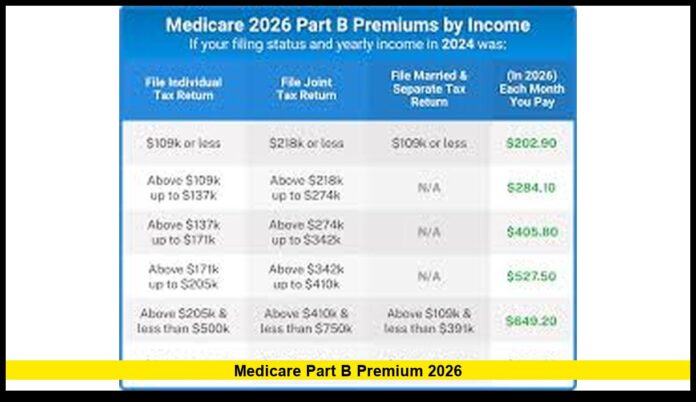
For 2026, the standard Medicare Part B monthly premium is $202.90. This represents a $17.90 increase compared with the 2025 standard premium of $185.00.
Most Medicare beneficiaries pay this standard amount. The premium is commonly deducted directly from Social Security benefit payments, while those who have not yet claimed Social Security typically receive a quarterly bill.
This increase stands out because it is significantly larger than recent annual adjustments and represents one of the steeper jumps in Part B premiums over the past decade.
Why Medicare Part B Premiums Increase
Medicare Part B premiums are recalculated every year based on projected program costs. Federal law requires beneficiary premiums to fund a portion of the total expected spending for Part B services.
Several factors influence the annual adjustment, including higher utilization of outpatient services, increased payments to healthcare providers, and rising costs for medical equipment and supplies. As Americans live longer and require more ongoing care, spending on outpatient services continues to grow.
These cost projections are reviewed annually, and premiums are adjusted accordingly to maintain the financial stability of the Medicare program.
Annual Medicare Part B Deductible for 2026
In addition to the monthly premium, beneficiaries must also pay an annual deductible before Medicare begins covering most Part B services.
For 2026, the Medicare Part B deductible is $283, up from $257 in 2025. This means beneficiaries must pay the first $283 of covered outpatient medical expenses out of pocket each year.
After the deductible is met, Medicare typically pays 80 percent of the approved amount for covered services, while beneficiaries are responsible for the remaining 20 percent. This coinsurance requirement makes Part B expenses an ongoing consideration even after the deductible is satisfied.
Income-Related Monthly Adjustment Amounts Explained
Not all Medicare beneficiaries pay the standard Part B premium. Individuals and couples with higher incomes are required to pay additional amounts known as Income-Related Monthly Adjustment Amounts, or IRMAA.
These adjustments are based on modified adjusted gross income reported on federal tax returns from two years prior. As income rises, so does the monthly Part B premium.
For affected beneficiaries, monthly costs can increase significantly above the standard premium. While IRMAA applies to a relatively small percentage of enrollees, those impacted often experience a noticeable jump in healthcare expenses.
How Medicare Costs Affect Social Security Payments
Most Medicare beneficiaries receive Social Security benefits, and Medicare Part B premiums are usually deducted automatically from those monthly payments.
Although Social Security benefits received a cost-of-living adjustment for 2026, the increase in the Part B premium absorbs a sizable portion of that adjustment for many retirees. As a result, the net increase in monthly income may be smaller than expected.
For individuals living on fixed incomes, even modest changes in net benefits can affect spending decisions related to housing, food, utilities, and healthcare.
What New Medicare Enrollees Should Know
People enrolling in Medicare Part B for the first time in 2026 are subject to the same standard premium and deductible as current beneficiaries, unless income-based adjustments apply.
It is important for new enrollees to sign up during their initial enrollment period or qualify for a special enrollment period. Delayed enrollment without qualifying coverage can lead to permanent late enrollment penalties that increase monthly premiums for life.
Understanding enrollment timelines and cost obligations helps new beneficiaries avoid unnecessary expenses.
Financial Support for Lower-Income Beneficiaries
Medicare includes programs designed to help individuals with limited income and resources manage healthcare costs. These programs may pay Part B premiums and, in some cases, help cover deductibles and coinsurance.
Eligibility varies by state, but income and asset limits determine qualification. In recent years, access to these programs has improved, allowing more eligible beneficiaries to receive assistance and reduce out-of-pocket costs.
For many participants, this support makes the difference between maintaining coverage and facing financial hardship.
Additional Medicare Cost Changes in 2026
Beyond Medicare Part B, other parts of the Medicare program also experienced cost adjustments in 2026. Hospital deductibles under Part A increased, and Medicare Advantage plans introduced updated premiums, benefit structures, and out-of-pocket limits.
Because Medicare Advantage plans are offered by private insurers, costs and coverage details vary by plan and location. Beneficiaries enrolled in these plans should review annual notices carefully to understand how changes affect their coverage.
Planning Ahead for Rising Healthcare Costs
With confirmed increases now in place, beneficiaries can take steps to better manage their healthcare expenses:
- Review Medicare coverage annually to ensure it still meets medical and financial needs
- Compare Original Medicare and Medicare Advantage options
- Check whether income changes could affect future premiums
- Monitor Social Security statements for accurate premium deductions
- Consider budgeting specifically for healthcare-related expenses
Advance planning helps reduce surprises and supports long-term financial stability.
The Bigger Picture for Medicare Beneficiaries
The medicare part b premium 2026 reflects broader trends in healthcare spending and demographic shifts across the United States. As the population ages and demand for outpatient care grows, cost adjustments remain an ongoing reality for Medicare participants.
While higher premiums and deductibles pose challenges, understanding how these costs are calculated and who they affect empowers beneficiaries to make informed decisions about coverage, budgeting, and retirement planning.
Medicare continues to serve as a critical safety net for older adults and people with disabilities, and staying informed is one of the best ways to navigate changes with confidence.
How are these Medicare changes affecting you or your family? Join the conversation below and stay connected for continued updates.

