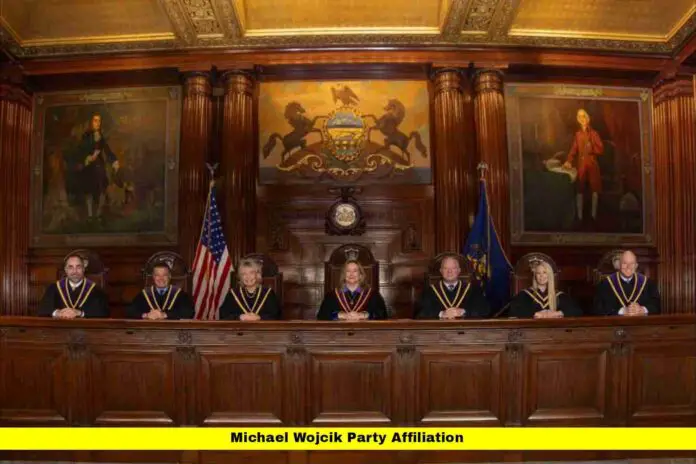
The Michael Wojcik party affiliation has become a topic of growing public interest as the Pennsylvania Commonwealth Court judge prepares for his upcoming 2025 retention election. Known for his extensive experience in administrative and municipal law, Judge Wojcik’s career began with the Democratic Party, shaping his early political and judicial trajectory. As the election nears, voters are revisiting his roots, his judicial performance, and what his original affiliation means in today’s context.
Table of Contents
Michael Wojcik’s Background and Early Career
Before joining the bench, Michael H. Wojcik built an impressive career in law and public service. A graduate of Duquesne University School of Law, he practiced law in Pittsburgh, where he specialized in municipal, tax, and employment issues. His deep understanding of government operations made him a natural fit for public service roles, including positions as Solicitor for Allegheny County and legal counsel for multiple local agencies.
These early experiences grounded his perspective on public accountability and justice — values that would later define his judicial career. His legal expertise and civic involvement helped him gain the Democratic Party’s nomination when he decided to run for the Pennsylvania Commonwealth Court in 2015.
Elected as a Democrat in 2015
In 2015, Michael Wojcik officially entered the political scene as the Democratic Party’s nominee for the Pennsylvania Commonwealth Court. His campaign emphasized fairness, integrity, and accessibility in the justice system — themes that resonated with Democratic values.
That year, Pennsylvania voters elected him to a ten-year term on the Commonwealth Court. His victory as a Democrat was part of a broader trend in Pennsylvania judicial elections, where party endorsement played a critical role in building name recognition and securing statewide support.
His Democratic Party alignment is well-documented in state election records, reflecting his official affiliation at the time of his election. However, once he assumed judicial office, his focus shifted firmly toward impartiality and non-partisan service under Pennsylvania’s judicial code.
Understanding Retention Elections and Non-Partisan Status
Pennsylvania’s judicial system uses retention elections for appellate judges after their initial ten-year term. Unlike traditional elections, retention votes are non-partisan — meaning no party affiliation appears on the ballot. Voters simply vote “Yes” to retain or “No” to remove the judge.
This structure was designed to uphold judicial independence and minimize political influence after a judge’s first election. Therefore, while Michael Wojcik’s roots are Democratic, his 2025 retention ballot will not display any party label. His performance, fairness, and record on the bench will serve as the key factors guiding voters’ decisions.
Michael Wojcik’s Judicial Record and Reputation
Since taking office in 2016, Judge Wojcik has built a reputation for being analytical, fair, and balanced. He has handled a wide range of cases involving state agencies, local government, property assessments, taxation, and employment law. His rulings often emphasize procedural fairness and adherence to statutory principles, rather than ideological leanings.
Wojcik’s approach reflects the professionalism expected of Pennsylvania’s appellate judges. Over the years, he has been commended for his legal writing, reasoned opinions, and consistency in applying the law. His tenure showcases an ability to separate political influence from judicial duty — a hallmark of effective and ethical judging.
Bar associations and judicial evaluation commissions have frequently rated him as “recommended,” highlighting his experience, integrity, and judicial temperament.
The Balance Between Party Roots and Judicial Independence
Although Wojcik began his judicial career as a Democratic nominee, his conduct on the bench demonstrates independence from party lines. Once elected, judges in Pennsylvania are expected to operate free from partisan influence, and Wojcik has adhered closely to that expectation.
Still, his Democratic background offers insights into his worldview. It suggests a potential inclination toward fairness, inclusivity, and individual rights — values traditionally associated with Democratic judicial philosophy. Yet, his rulings show no pattern of bias toward political interests, underscoring his commitment to neutrality.
This balance between party origin and non-partisan service is a defining feature of his judicial career.
Public Interest in Michael Wojcik’s Party Affiliation
Public curiosity about Judge Wojcik’s political affiliation has resurfaced as voters become more engaged in understanding the judiciary’s composition. In an era where political polarization influences public trust in government, even judicial candidates’ past affiliations draw attention.
Voters seeking transparency appreciate knowing where a judge began politically, even if that affiliation no longer dictates judicial behavior. In Wojcik’s case, his Democratic roots serve as a factual part of his identity but do not define his judicial performance.
Legal analysts often note that judges with political experience bring valuable insights into how government decisions affect ordinary citizens. Wojcik’s public service background, combined with his Democratic alignment at the time of election, reflects a focus on public accountability — an asset in his judicial capacity.
Facts About Michael Wojcik’s Political and Judicial Career
| Detail | Information |
|---|---|
| Full Name | Michael H. Wojcik |
| Court | Pennsylvania Commonwealth Court |
| Elected As | Democratic Party nominee (2015) |
| Term Start | January 2016 |
| Current Election Type | Retention (Non-Partisan) |
| Next Election | November 4, 2025 |
| Term Length | Ten years |
| Ballot Party Label | None (Retention Election) |
This table provides a clear overview of Wojcik’s background, confirming his Democratic affiliation at election and non-partisan status during his upcoming retention vote.
How Pennsylvania’s System Shapes Judicial Careers
The Pennsylvania judicial system is unique in how it balances political elections and judicial independence. Judges are first elected through partisan races, often backed by major political parties. However, once they complete their first term, they face retention votes designed to remove party influence from the process.
This means that while Judge Wojcik’s Democratic roots are an important historical fact, his current evaluation depends entirely on his record. In retention elections, campaign activities are typically minimal — judges may release performance summaries, endorsements from bar associations, and statements about their service, but they do not campaign on political platforms.
This system ensures continuity in the courts while allowing voters to remove judges who have failed to meet professional expectations.
Why Party Affiliation Still Matters to Voters
Even though the ballot is non-partisan, party affiliation remains relevant in understanding a judge’s foundational values and approach. For many voters, it signals the principles that guided their entry into public service.
Michael Wojcik’s Democratic background offers insight into his early motivations and the networks that supported his candidacy. At the same time, his impartial judicial record proves his ability to separate law from politics. This combination reassures voters who value both transparency and independence in the judiciary.
In Pennsylvania, where judges often come from partisan backgrounds, Wojcik’s career serves as an example of how a jurist can transition from political candidacy to a role of neutrality and integrity.
Looking Ahead to the 2025 Retention Election
As Judge Wojcik approaches the 2025 retention election, voters will have the opportunity to decide whether he should continue serving on the Commonwealth Court for another ten-year term. His Democratic Party background, while factual, will not appear on the ballot. Instead, voters will focus on his record, judicial ethics, and service quality.
Retention elections rarely generate the same attention as partisan contests, but they remain essential for maintaining accountability within the judiciary. For Judge Wojcik, strong professional evaluations and a consistent record of fairness make his case for retention compelling.
Michael Wojcik’s Legacy and Ongoing Role in Pennsylvania Law
Judge Wojcik’s legacy lies in his steady, thoughtful application of law and his commitment to impartiality. His decisions on the Commonwealth Court have influenced state governance, public employment law, and administrative regulations.
By blending experience from his Democratic beginnings with non-partisan professionalism, he embodies the balance between civic engagement and judicial restraint. His journey from political candidate to respected jurist demonstrates how initial party affiliations can evolve into lifelong commitments to justice.
As he seeks retention, his track record speaks louder than his political origins, and his work continues to shape Pennsylvania’s legal landscape.
Conclusion
The Michael Wojcik party affiliation remains a meaningful part of his story — he began as a Democrat, won office under that banner, and has since served nearly a decade with professionalism and fairness. While his retention ballot in 2025 will carry no party label, understanding his political origins offers valuable context for voters assessing his service.
In the end, his career reflects a broader truth about Pennsylvania’s judiciary: that fairness, diligence, and integrity can transcend party lines. As voters prepare to decide his future, Judge Wojcik’s balanced record stands as a reminder that justice is stronger when guided by principle rather than politics.
Do you think a judge’s past party affiliation should influence how voters decide in retention elections? Share your thoughts and be part of the ongoing conversation about judicial independence and accountability.

