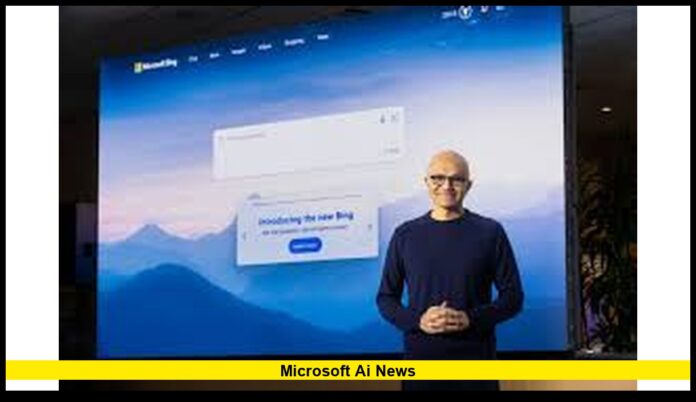
The latest Microsoft AI news highlights a wave of confirmed developments as the company accelerates its efforts to bring advanced artificial intelligence into workplaces, classrooms, and daily productivity tools. As of early December 2025, Microsoft introduced new features, adjusted its commercial strategy, and expanded education initiatives, signaling another pivotal moment in its AI-driven direction.
Table of Contents
Major AI Announcements at Ignite 2025
Microsoft revealed several new AI capabilities designed to reshape how individuals and organizations use technology. The company expanded its core productivity suite with upgraded AI support, focusing on faster workflows and deeper integration.
One of the biggest highlights is the evolution of Microsoft 365 Copilot. New features now include personalized insights through a system designed to learn how users work across documents, email, and meetings. Apps such as Word, Excel, and PowerPoint now offer an integrated mode that allows users to perform tasks with conversational instructions. This mode can generate documents, analyze data, or design presentations based on short prompts.
Microsoft is also preparing to roll out voice-driven interactions inside its productivity apps. These updates will allow users to speak directly to Copilot to schedule tasks, manage email, or summarize collaboration threads. The preview phase for these enhancements is planned for late 2025 and early 2026.
For businesses, Microsoft introduced a centralized AI management system designed to oversee large numbers of AI agents within an organization. This tool allows companies to control security, governance, and deployment as AI agents become more involved in workplace operations. The company is also reinforcing infrastructure behind these features by emphasizing next-generation “agentic AI,” which focuses on autonomous agents that can operate across complex systems.
AI Education and Access Initiatives
Another major focus this month is Microsoft’s expansion of nationwide AI education. The company is investing further in hands-on programs for rural communities, aiming to increase access to modern digital skills. This initiative will help both students and educators understand AI fundamentals, ethics, and practical uses.
The latest research from the company shows a notable gap in global AI access. Over a billion people have used AI tools during the last three years, yet billions more remain disconnected from the infrastructure required to access such technology. With this context in mind, Microsoft is prioritizing programs that broaden digital literacy and introduce real-world applications such as agricultural and environmental AI projects.
Market Shifts and Adjusted Sales Expectations
Recent weeks brought a significant shift inside Microsoft’s commercial strategy. The company lowered sales targets for certain AI software divisions after adoption rates fell short of projections. This is the clearest sign yet that businesses are showing caution toward large-scale AI investments.
Following these internal adjustments, Microsoft’s stock saw a brief downturn as analysts and investors assessed the situation. While AI remains central to the company’s long-term plans, the updated expectations reflect a more measured timeline for widespread enterprise adoption. Many customers are navigating the challenges of cost, integration complexity, and return-on-investment uncertainty.
Industry observers note that this moment represents a broader trend across the tech sector. Even as AI becomes more powerful, many organizations need more time to adapt workflows, train employees, and establish guidelines before committing to advanced agent-based systems.
Internal Strategy: Building the “AI Factory”
Within the company, leadership is focusing on a redesigned strategy that positions AI at the heart of every product category. This internal transformation is often described as an “AI Factory” model, where Copilot capabilities and AI agents are embedded directly into software, infrastructure, pricing systems, and long-term planning.
Microsoft is expanding its data infrastructure to support this strategy. New tools built for enterprise-scale data environments are being designed to support the next generation of autonomous and semi-autonomous AI agents. These systems rely heavily on real-time data flows, requiring organizations to modernize their internal data systems before fully adopting agentic AI.
Another development involves unused or underused GPU resources within certain areas of AI infrastructure. This signals that while capacity is growing, enterprise workloads are still catching up. The company appears to be focused on striking a balance between preparing for future demand and recognizing current adoption trends.
What These Updates Mean for U.S. Businesses
Businesses across the United States are watching these developments closely. For many organizations, Microsoft’s AI tools present substantial opportunities to streamline processes and reduce repetitive work. Updated Copilot features can support employees by automating document creation, summarizing meetings, analyzing reports, and improving communication across teams.
However, the slower-than-expected adoption rates show that many companies are proceeding carefully. Industries with strict compliance requirements or complex workflows may require more extensive planning before adopting autonomous AI agents. This aligns with the broader reality that effective AI integration requires not just tools but also new skill sets, governance models, and clear internal policies.
Workforces may also see shifts over time. As AI tools handle more routine tasks, employees may shift toward roles that involve oversight, strategy, collaboration, or creative work. Microsoft’s continued investment in education suggests that the company sees significant value in preparing the next generation of workers for an AI-powered future.
Looking Ahead
Microsoft’s December 2025 AI direction shows a mix of rapid innovation and realistic recalibration. The company continues to build powerful AI tools and broaden access while adjusting to the pace at which businesses adopt these technologies. With ongoing investment in autonomous agents, productivity enhancements, education, and infrastructure, Microsoft is signaling that AI will remain at the core of its identity for the long term.
How quickly organizations embrace this shift will depend on budgets, training efforts, and the growing need to modernize internal systems. But one thing is clear: Microsoft is preparing for an AI-driven future, even as it adapts to present-day realities.
Share your thoughts below and let us know how these developments impact your work or business.

