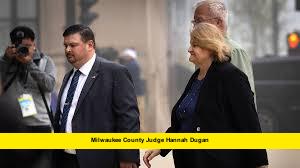
Milwaukee County Judge Hannah Dugan was found guilty of a felony obstruction charge in federal court on December 18, 2025, marking a significant and rare conviction of a sitting judge. In a case that drew national scrutiny, a federal jury convicted her on one count of obstructing a federal proceeding related to her actions during an April courthouse incident, while acquitting her on a separate misdemeanor count. The verdict has immediate legal and political implications, and it has reignited debates about judicial conduct, federal immigration enforcement, and the limits of judicial authority.
Table of Contents
Historic Verdict Ends Dramatic Trial
In a federal courtroom in Milwaukee, a jury deliberated for several hours before announcing that Milwaukee County Judge Hannah Dugan was guilty of impeding a federal immigration enforcement action. The trial centered on events from April 18, 2025, when Dugan, a judge on the Milwaukee County Circuit Court, was accused of altering federal agents’ attempt to arrest a man suspected of being unlawfully present in the United States. Jurors clearly differentiated between the two charges, acquitting Dugan of the lesser misdemeanor count that alleged she knowingly concealed the individual to prevent arrest but convicting her of a single count of obstructing a proceeding, a felony offense that carries potential prison time. The judge’s sentencing date has not yet been scheduled.
The Incident That Sparked Federal Charges
The prosecution’s case focused on evidence stemming from an encounter between Judge Dugan and federal agents deployed by U.S. Immigration and Customs Enforcement (ICE). On April 18, federal agents arrived at the Milwaukee County Courthouse to arrest Eduardo Flores-Ruiz, a Mexican national who was appearing in Dugan’s courtroom on unrelated state misdemeanor charges. According to prosecutors, Dugan became aware of the agents’ presence and then directed them away from the standard public entrance to her courtroom.
Prosecutors alleged that Dugan then sent Flores-Ruiz and his attorney out through a restricted “jury door” or side exit in an attempt to prevent the agents from apprehending him inside the courthouse. Flores-Ruiz temporarily evaded arrest but was ultimately caught outside after a brief foot chase. He later was deported. The jury accepted the prosecution’s argument that Dugan’s conduct constituted obstruction of a federal proceeding by interfering with the agents’ ability to carry out their duties.
Defense Arguments Highlight Confusion and Policy Questions
Dugan’s defense team did not deny the basic facts of the April incident but urged jurors to see the judge’s actions as grounded in procedural confusion and courthouse policy. Attorneys argued that Dugan was attempting to follow internal protocols regarding interactions with federal law enforcement when ICE agents were inside the courthouse. They stressed that no audio or video evidence showed Dugan explicitly attempting to hide the man from federal arrest and that she believed she was acting in line with established judicial procedures rather than deliberately impeding federal officers.
Lead defense attorney Steven Biskupic called the guilty verdict “disappointing” and signaled plans to pursue post-trial motions and eventual appellate review. The defense has suggested that Dugan acted without malicious intent and within the scope of her judicial responsibilities, a claim that resonated with some observers even as the jury convicted her of obstruction.
Political Crosscurrents and National Spotlight
The trial of Milwaukee County Judge Hannah Dugan occurred against a backdrop of intense national debate over immigration enforcement and the use of local courthouses as sites for federal immigration arrests. Federal prosecutors framed the case as an assertion of rule-of-law principles, emphasizing that no one — including a judge — should interfere with federal enforcement actions.
Supporters of the conviction, including some federal officials involved in the prosecution, view it as a necessary check on actions they say could undermine enforcement of federal immigration policy. Opponents, however, have raised concerns about federal overreach and the potential chilling effect on local judicial independence. Critics argue that charging a sitting judge for courtroom decisions — especially in the emotionally charged arena of immigration — sets a concerning precedent and could discourage judges from exercising discretion in complex, high-stakes situations.
Reactions from Legal Community and Public Officials
Reactions to the verdict have been sharply divided. Some supporters of strong federal action against immigration violations hailed the conviction as a clear message that obstruction will not be tolerated, even from those within the judiciary. Federal leaders involved in the case highlighted the importance of ensuring that officials entrusted with upholding the law do not interfere with federal enforcement efforts.
At the same time, many legal scholars and civil liberties advocates expressed alarm. Some argue that the case reflects a politicized use of federal prosecutorial power against judicial actors who operate within a separate constitutional branch. The defense pointed to broader concerns about federal involvement in local judicial matters and the potential implications for separation of powers.
Judge Dugan’s Background and Career
Hannah C. Dugan, born in 1959, has served as a Milwaukee County Circuit Court judge since her election in 2016. Before ascending to the bench, she was an attorney with deep ties to the Milwaukee legal community, including leadership roles in local bar associations and nonprofit legal aid organizations. She also served as executive director of Catholic Charities in southeastern Wisconsin, where she worked on refugee and immigrant issues.
Her suspension from the bench followed her arrest by the FBI in April 2025, shortly after the incident at the courthouse. Under Wisconsin law, her conviction could disqualify her from continuing to serve as a judge, though formal action on her judicial position will proceed separately through judicial authorities.
Next Legal Steps and Potential Sentencing
With the guilty verdict secure on the obstruction charge, the focus now shifts to sentencing and potential appeals. The felony conviction carries a potential prison sentence of up to five years and fines of up to $250,000, though the actual sentence — if any — will be determined by the federal judge overseeing the case. No official sentencing date has been announced, and defense attorneys have indicated they plan to challenge both the verdict and legal theories underlying the obstruction count.
If the defense can secure relief on appeal, aspects of the conviction could be reversed or reduced. However, appellate review will likely take months or years, leaving the long-term outcome unresolved for some time.
National Implications of the Dugan Verdict
The conviction of Milwaukee County Judge Hannah Dugan has already reverberated well beyond Wisconsin. Legal observers across the country are watching closely, noting that this case underscores the complex interplay between local judicial authority and federal enforcement powers. It raises important questions about the boundaries of judicial discretion, the treatment of immigration matters within state courts, and how federal agencies can interact with state and local officials.
As this story continues to evolve, many in the legal community expect heated debate over the appropriate balance between enforcing federal law and preserving judicial independence. With both political and legal ramifications, the Dugan case may serve as a reference point in future disputes involving jurisdictional authority and individual rights within the U.S. justice system.
—
What do you think this verdict means for the future of judicial independence and federal enforcement? Share your thoughts and stay tuned for further developments.

