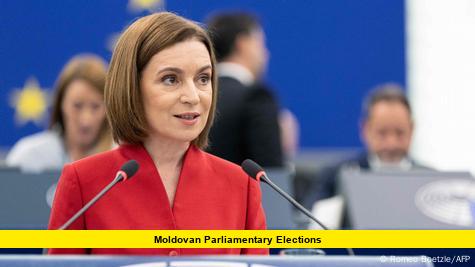
The Moldovan parliamentary elections of September 28, 2025, have reshaped the country’s political landscape and drawn international attention. With nearly all votes counted, the pro-European Party of Action and Solidarity (PAS) has taken a strong lead, though coalition talks may determine the final outcome. These elections are being described as one of the most consequential in Moldova’s history, as they reflect a clear choice between closer integration with the European Union or a return toward the influence of Russia.
Table of Contents
Strong Performance by PAS
According to preliminary figures, PAS secured close to 48% of the vote, which translates into around 54 seats in the 101-seat Parliament. This makes PAS the clear winner of the election and the dominant political force in Moldova. However, the party fell slightly short of the 51-seat majority required to govern without coalition partners.
In second place, the Patriotic Electoral Bloc, led by figures with strong ties to Moscow, captured approximately 26–27% of the vote and around 27 seats. This bloc represents a significant portion of Moldovan voters who continue to favor neutrality or closer economic and political alignment with Russia.
The Alternative bloc, a newer centrist alliance, received about 8–9% of the vote, securing 8 seats. Several smaller parties and independents also made it into Parliament, though their impact will largely depend on coalition negotiations.
Voter turnout stood at just over 52%, a relatively strong showing that reflects the high stakes of this election.
Why the Elections Matter
The Moldovan parliamentary elections were not just a contest between parties — they represented a decision about Moldova’s long-term identity and global orientation. For many voters, supporting PAS was about accelerating reforms, securing energy independence, and ensuring Moldova moves closer to full European Union membership.
For others, however, the choice was about protecting cultural ties with Russia, maintaining lower costs of energy, and pursuing neutrality in foreign policy. This divide has defined Moldovan politics for decades, but the 2025 elections brought it into sharper focus than ever before.
Election Day Challenges and Allegations
The campaign period and election day itself were tense, marked by allegations of interference and security concerns. Authorities reported:
- Dozens of arrests linked to attempts to destabilize the vote.
- Raids across the country targeting individuals suspected of supporting foreign interference.
- The exclusion of a major pro-Russian party, Heart of Moldova, from the ballot after a court ruling.
- Accusations of vote buying, cyberattacks, bomb threats, and disinformation campaigns.
These incidents underscored the vulnerability of Moldova’s democratic institutions, but also the determination of authorities to safeguard the integrity of the vote.
How the System Works
Moldova’s parliamentary elections are held using proportional representation in a single nationwide constituency. This means:
- Every voter casts a ballot for a party list rather than an individual candidate.
- Seats are allocated based on the percentage of the national vote.
- A total of 101 seats are contested, with 51 seats required for a majority.
This system often results in fragmented parliaments where coalition-building is essential, especially when no party reaches an outright majority.
The Role of the Diaspora
One of the most fascinating elements of the Moldovan parliamentary elections is the influence of Moldovans living abroad. For the 2025 election, more than 300 polling stations were opened overseas, and for the first time, mail voting was allowed in a parliamentary contest.
The diaspora traditionally leans heavily toward PAS, as Moldovans working in Western Europe often support pro-EU policies. Early reports suggest that this trend continued in 2025, with overseas votes helping PAS secure its commanding lead.
Seat Distribution at a Glance
Below is an overview of the preliminary seat allocation:
| Party / Bloc | Vote Share (%) | Seats Won |
|---|---|---|
| Party of Action and Solidarity (PAS) | ~48% | 54 |
| Patriotic Electoral Bloc | ~26–27% | 27 |
| Alternative Bloc | ~8–9% | 8 |
| Other Parties & Independents | Remainder | 12 |
This distribution shows that while PAS is the clear leader, it will likely need cooperation from smaller groups to achieve stable governance.
What Comes Next for PAS
For PAS, the immediate challenge is forming a government. Several scenarios are possible:
- Minority Government: PAS could attempt to govern alone but would need to negotiate on individual laws.
- Coalition with Alternative: A partnership with the Alternative bloc could deliver a stronger pro-European front.
- Issue-Based Support: PAS may secure informal backing from smaller parties to pass key legislation without forming a formal coalition.
Regardless of the option chosen, PAS’s control of Parliament is strong enough to ensure that Moldova will continue moving in a pro-European direction.
Reaction from Opposition
The Patriotic Electoral Bloc has already voiced dissatisfaction with the results, calling for public demonstrations. Its leaders argue that the exclusion of certain parties and the arrests of pro-Russian activists undermined the fairness of the election.
While protests are possible, the opposition remains divided and unlikely to mount a serious challenge to PAS in Parliament.
International Implications
Globally, the elections carry weight far beyond Moldova’s borders. The European Union views the PAS victory as a mandate for continued reforms and closer integration. Western allies, including the United States, are expected to support Moldova’s efforts to modernize its institutions and resist outside interference.
For Russia, the outcome represents a setback. Moscow has long sought to maintain influence in Moldova, particularly through pro-Russian parties and its support base in the breakaway region of Transnistria. These elections suggest that Moldova’s electorate is increasingly committed to a European future.
Domestic Challenges Ahead
Despite its strong performance, PAS faces significant challenges:
- Economic pressure, with many Moldovans concerned about inflation and the high cost of energy.
- Corruption, which continues to erode public trust and requires structural reforms.
- Regional instability, as the ongoing war in neighboring Ukraine creates uncertainty and security risks.
How PAS addresses these issues will determine whether its electoral success translates into lasting public support.
A Defining Moment for Moldova
The 2025 Moldovan parliamentary elections will be remembered as a turning point. They revealed the strength of Moldova’s democratic institutions, despite interference attempts. They also showed a clear preference among voters for continued European integration.
For citizens, the hope is that this election will usher in a period of stability and progress. For international observers, the outcome reinforces Moldova’s role as a frontline state in the broader contest between Western democracy and Russian influence.
The Moldovan parliamentary elections highlight a nation standing at a crossroads — and the path it has chosen points toward Europe. The coming months will reveal how firmly Moldova can walk this road, but one thing is clear: the world is watching. Share your thoughts below and stay engaged as Moldova enters this pivotal new chapter.

