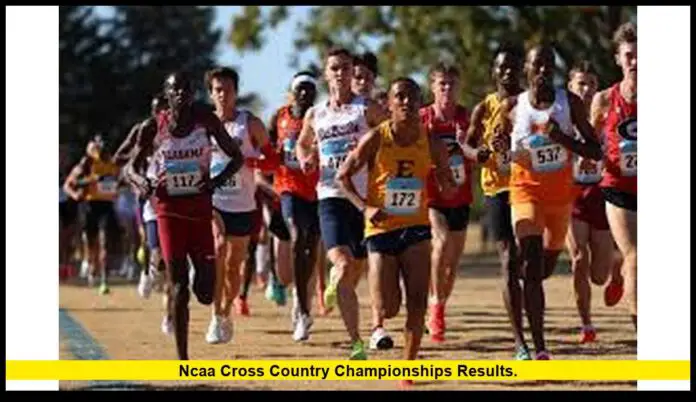
The latest NCAA cross country championships results arrived on Nov. 22, 2025, at the Gans Creek Cross Country Course in Columbia, Missouri, and they reshaped the landscape of collegiate distance running. On a crisp morning with fog lifting over the grass terrain, the nation’s top programs and athletes delivered defining performances that will echo into future seasons.
Table of Contents
Women’s 6-K Race – Individual and Team Triumphs
In the women’s division, the individual crown went to Alabama’s Doris Lemngole, who posted a remarkable time of 18 : 25.4 to become only the second athlete in the past 14 years to defend the title. She edged BYU freshman Jane Hedengren, who ran 18 : 38.9, and Florida’s Hilda Olemomoi, who took third in 18 : 46.4.
At the team level, North Carolina State captured the national team championship with 114 points, beating BYU (130) and Oregon (153). The win marked NC State’s fourth team national title in five years — evidence of sustained depth and recruiting strength.
Additional top individual women’s results:
- 4th: Riley Chamberlain (BYU) – 18 : 47.0
- 5th: Hannah Gapes (NC State) – 18 : 51.3
- 6th: Grace Hartman (NC State) – 18 : 52.6
- 7th: Isca Chelangat (Oklahoma State) – 18 : 56.1
- 8th: Vera Sjoberg (North Carolina) – 18 : 56.5
- 9th: Silan Ayyildiz (Oregon) – 18 : 57.9
- 10th: Mary Bonner Dalton (Notre Dame) – 18 : 58.0
The women’s team scoring underlines how NC State’s fifth scorer placed well enough to hold off teams with stellar top‐two or three finishers but weaker depth.
Men’s 10-K Race – Title Shift and Team Momentum
On the men’s side, the national team title went to Oklahoma State, which dominated the day with four runners finishing in the top 12 and a final team score of 57 points. This performance underscored how depth and consistent top finishes trump a lone star.
Individually, Habtom Samuel emerged as the national champion with a time of 28 : 33.9. Samuel, who had finished runner-up in prior years, finally claimed the crown, demonstrating poise, race maturity and a well-timed surge.
Washington State’s Solomon Kipchoge finished third in the men’s race with a strong 28 : 40.1, after moving up in the second half of the race. His team placed 17th overall with 491 points, earning All-America honors for multiple athletes.
Team Results Snapshot
Women’s Top Teams – Final Standings
| Rank | Team | Points |
|---|---|---|
| 1 | North Carolina State | 114 |
| 2 | BYU | 130 |
| 3 | Oregon | 153 |
| 4 | New Mexico | 216 |
| 5 | Florida | 225 |
Men’s Result Highlights
- Champion: Oklahoma State – 57 points (four in top 12)
- Notable individual: Habtom Samuel – 28 : 33.9
- Third place: Solomon Kipchoge (Washington State) – 28 : 40.1
These results confirm that in both divisions, team performance rests on placing five runners deep, not just one or two standout athletes.
Course Conditions & Competitive Dynamics
The Gans Creek course delivered classic cross-country terrain: grass fields, undulating hills, tight turns and morning dew that added a tactical dimension. With the women’s race starting at 10:20 a.m. ET and the men’s at 11:10 a.m., athletes faced cool air and slightly slick footing in places.
Races broke open around the middle section: leaders initiated surges as the field entered the hills, separating from the chase pack. In both top races, the decisive moves came after 60–65% of the distance, when athletes who had conserved energy earlier began to press.
Pack cohesion favored teams with strong second, third and fourth runners. Programs that staggered finishing positions tightly (for example, three runners finishing within the top 35) gained measurable advantage over those relying on one front‐runner.
Significance & Program Impacts
The championships results signal several key takeaways:
- Alabama’s individual win reinforces how a single athlete can define a program’s profile.
- NC State’s team title illustrates the payoff of sustained recruiting and development.
- Oklahoma State’s men’s team victory shifts the upper tier and sets up the Cowboys as a program to watch.
- The narrowing gap between top teams suggests that next season could see flipped dynamics among top 10 programs.
For coaches, these races provide insight into what matters: deep scoring, strategic surges, pack tactics and terrain management. Programs that scored inside the top 10 can leverage this performance in recruiting and offseason training, while those outside will analyze the tape to clamp down on where points were lost.
Athlete Breakthroughs & Emerging Stars
Beyond the champions, several athletes made significant strides: freshmen who ran inside the top 20, team scorers who improved by many places from regional meets, and individuals from non-traditional schools earning All-America status. These performances highlight how the NCAA field remains dynamic and open to surprises.
Team programs with fresh talent will be positioned for the next year, while veterans will aim to build on momentum. The women’s freshman who placed second will certainly be a focal point next season, and the men’s deeper packs suggest rising competition.
What the Results Mean for Fans & Athletes
- The events reaffirm that national championships hinge on more than front‐runners; supporting runners matter just as much.
- Fans should note that terrain and race conditions at the national level favor smart pack movement over raw speed alone.
- Athletes looking ahead should focus offseason on tactics, hills and mid‐race surges.
- The broader depth across the field means surprise breakouts are more likely and future team standings may shift significantly.
Looking Ahead
With the national meet done, the collegiate distance‐running world turns its attention to indoor track and spring track seasons. Many of the top runners from cross country will transition south and into indoor events, while teams will rebuild for next fall’s campaign. Programs that challenged or beat favorites this year will aim to maintain momentum, while former champions will adjust tactics to reclaim dominance.
Meanwhile, recruiting news, coaching moves and facility enhancements will all ripple out of these results. The national finish line in Columbia will stimulate renewed focus in training, terrain simulation and athlete development.
The NCAA cross country championships results from Columbia reflect both tradition and change. Elite performances and deep team efforts combined to shape outcomes that will influence collegiate distance running for years. As the athletes recover and the teams regroup, the story of next season already begins.
We invite you to share your thoughts on the championships, the results that surprised you and your expectations for next season. Stay tuned for more updates and analysis.

