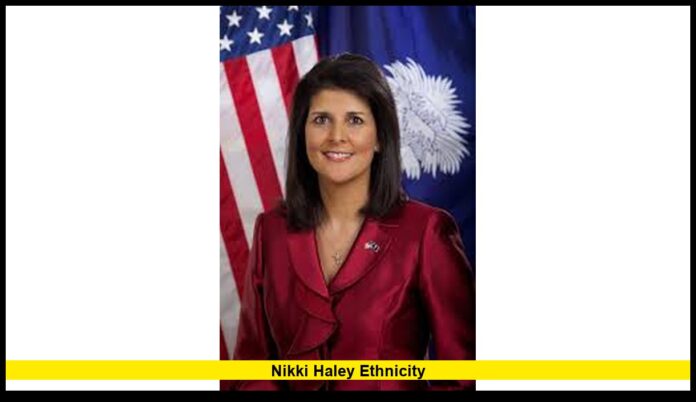
The topic of Nikki Haley ethnicity continues to draw strong interest as the former South Carolina governor and former U.S. ambassador remains an influential figure in American politics. Her cultural background, personal history, and public identity shape a story that is both distinctly American and rooted in deep ancestral ties.
Table of Contents
Her Indian American Roots
Nikki Haley was born Nimarata Nikki Randhawa on January 20, 1972, in Bamberg, South Carolina. She is a first-generation American whose parents immigrated to the United States from the Punjab region of India. Both parents came from Punjabi Sikh families and carried their cultural traditions with them as they settled in the American South.
Her father arrived in the United States after completing academic studies in Canada and later became a biology professor. Her mother, trained in law, transitioned into education before launching a clothing boutique that became a well-known family business in their community. Their immigrant journey and strong cultural grounding played an important role in shaping Haley’s early years.
Understanding Her Cultural Identity
Growing up in a small rural town, Haley experienced the blending of Indian heritage with Southern American culture. Her household reflected Punjabi values, language, and traditions, while her day-to-day life took place in a predominantly Black and White community. This duality influenced her personal identity and helped form her worldview.
Key facts about her early identity include:
- Her given name, “Nimarata,” originates from Punjabi, while “Nikki” is a Punjabi-derived name meaning “little one.”
- She was raised in a Sikh household during her childhood.
- She later converted to Christianity as an adult, though she has publicly acknowledged and honored her Sikh roots.
This background positions her as one of the most prominent Indian American figures in U.S. political history.
Marriage and Changing Identity
In 1996, Nikki Randhawa married Michael Haley, adopting the surname that would later become widely recognized across the country. Her marriage also marked the beginning of her Christian faith, though she continued attending Sikh services with her family on important occasions. Her ability to navigate two cultural identities remains a key part of her public narrative.
Ethnicity and Its Role in Her Political Career
Haley became the first Indian American to serve in a U.S. cabinet-level role when she was appointed U.S. ambassador to the United Nations. Before that, she served as governor of South Carolina from 2011 to 2017, becoming the first woman and first Indian American to hold that office.
Her ethnicity has been a recurring point of discussion in the political arena. It has shaped public perception in several key ways:
- Representation: Haley’s rise in government expanded visibility for Indian Americans within the Republican Party.
- Cultural diversity: Her background is often highlighted as part of the broader story of increasing diversity in American political leadership.
- Campaign narratives: Discussions around identity sometimes emerge during election cycles, particularly when addressing immigration, minority outreach, or demographic shifts in the electorate.
While her ethnic identity is significant, Haley has consistently positioned herself as an American public servant first, often stating that her family’s immigrant story reflects core national values.
Public Perception and Ethnic Identity Today
As of 2025, Nikki Haley remains a high-profile voice in national conversations. Her Indian American heritage continues to be mentioned in discussions of representation, generational change, and the role of cultural identity in leadership. She has spoken about the challenges of growing up in a small Southern town during a period when few families resembled her own, noting that this upbringing informed her sense of resilience and determination.
Her ethnic background remains a part of how many Americans relate to her story, but it does not overshadow her political accomplishments. Instead, it complements her broader narrative as a leader who navigated cultural complexity from childhood through her public career.
A Clear Summary of Nikki Haley’s Ethnicity
Below is an at-a-glance profile of her ethnic and cultural background:
| Category | Details |
|---|---|
| Ethnic Origin | Indian American |
| Ancestral Region | Punjab, India |
| Family Religion (Her Parents) | Sikh |
| Name at Birth | Nimarata Nikki Randhawa |
| Birthplace | Bamberg, South Carolina |
| Cultural Identity | Indian heritage, American upbringing |
| Historic Significance | First Indian American to serve in a U.S. cabinet-level role |
Why Her Ethnicity Continues to Draw Interest
The focus on Nikki Haley ethnicity remains strong because her story reflects several major themes in American culture:
- Immigrant heritage: Her background resonates with first-generation American stories.
- Cross-cultural upbringing: Her childhood offers insight into multicultural identity in the American South.
- Political symbolism: As an Indian American leader in the Republican Party, she represents both diversity and ideological alignment that challenge assumptions about demographic politics.
These elements ensure that her ethnic identity continues to be part of political, cultural, and social discussions.
Final Thoughts
Nikki Haley’s ethnicity traces clearly to her Indian roots and Punjabi Sikh heritage, yet her life and career embody a uniquely American journey. Her story bridges cultures, generations, and political landscapes in a way that keeps her background central to how many view her place in national leadership.
Share your thoughts below on how cultural identity shapes today’s political leaders and join the conversation.

