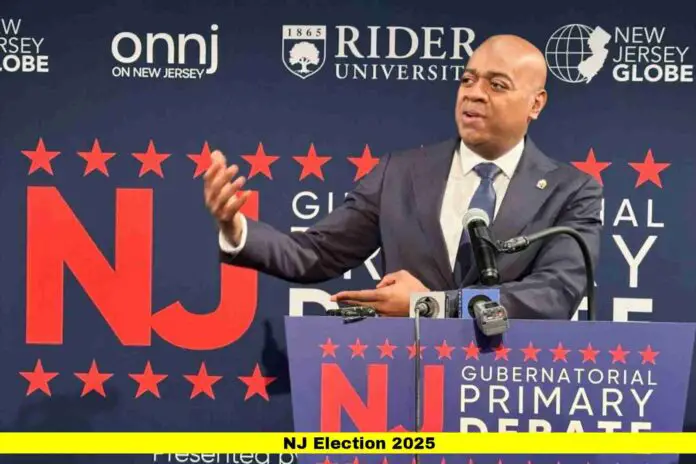
The NJ election has taken center stage as voters across the state head to the polls to decide the future of New Jersey’s leadership. With the governor’s seat and all 80 General Assembly seats up for grabs, this election is shaping up to be one of the most consequential in years. Democrat Mikie Sherrill and Republican Jack Ciattarelli are locked in a tight race for governor, while both parties fight fiercely for control of the legislature. The outcome will not only determine the state’s political direction but also send ripples through the national political landscape.
Table of Contents
The High-Stakes Governor’s Race
The battle for the governor’s mansion has drawn intense attention both locally and nationally. Mikie Sherrill, a Democratic congresswoman and former Navy helicopter pilot, has campaigned on a message of moderation and pragmatism. She promises to tackle New Jersey’s affordability crisis, protect reproductive rights, and continue investing in education and infrastructure. Sherrill positions herself as a unifying candidate who can bridge political divides while keeping the state moving forward.
Jack Ciattarelli, a former state assemblyman, is running on a platform centered around lowering taxes, reducing regulations, and making New Jersey more business-friendly. Having narrowly lost the 2021 gubernatorial race to Phil Murphy, Ciattarelli returns with more name recognition, deeper organization, and renewed momentum. He appeals to voters frustrated with high living costs and what he describes as government overreach.
The NJ election has evolved into a contest between two clear visions: one focused on maintaining progressive policies while improving efficiency, and another centered on fiscal restraint and economic revitalization.
Affordability as the Defining Issue
Affordability has emerged as the single most important issue driving voter sentiment in this NJ election. New Jersey consistently ranks among the top states for property taxes, housing costs, and general living expenses. Both candidates have been pressed to provide concrete solutions, as voters express frustration over wages not keeping up with costs.
Mikie Sherrill has proposed expanding property tax rebates, incentivizing housing development, and ensuring the state continues investing in infrastructure and public services that benefit the middle class. She argues that responsible spending—not drastic cuts—will help the state thrive without compromising essential programs.
Jack Ciattarelli, on the other hand, promises bold tax reform. He has pledged to simplify the tax code, cap spending, and attract more businesses to create jobs. Ciattarelli frequently points out that many residents are leaving the state due to unaffordable costs, calling it a “make-or-break moment” for New Jersey’s competitiveness.
This focus on affordability cuts across party lines, resonating with both suburban families and urban voters who feel squeezed by inflation and high utility bills.
The Role of National Politics
While the NJ election is fundamentally a state contest, it carries national implications. The outcome could signal broader political trends ahead of the 2026 midterms and the 2028 presidential race.
Jack Ciattarelli has aligned himself with conservative fiscal policies but has been cautious in distancing from the more divisive national rhetoric. He has positioned his campaign as a “New Jersey first” movement—one that emphasizes independence from Washington politics. Mikie Sherrill, by contrast, has presented herself as a defender of state autonomy, women’s rights, and public education, while promising to keep New Jersey aligned with progressive values.
National parties and political action committees have poured millions into the race, viewing it as a bellwether for voter sentiment in the post-pandemic economy. If Democrats hold the governor’s office, it would reinforce their dominance in the state. But if Republicans manage an upset, it could mark a major shift in New Jersey’s political identity.
A Closer Look at the Legislative Battle
Beyond the governor’s race, the NJ election will determine control of the General Assembly, where all 80 seats are up for grabs. Democrats currently hold a majority, but Republicans have been gaining ground, especially in South and Central Jersey districts.
For Democrats, retaining control is essential for implementing Sherrill’s policy agenda. For Republicans, gaining even a few additional seats could give them leverage to block major legislation and push for fiscal reforms. Both parties have focused heavily on suburban swing districts—areas that have become political battlegrounds in recent years.
Local issues such as school funding, zoning, and infrastructure have also played a major role in these legislative contests. Candidates on both sides are emphasizing direct engagement with voters, focusing on door-to-door campaigning and community events rather than relying solely on television ads.
Voter Turnout and Early Voting Trends
Early voting data has provided important clues about the direction of this NJ election. Democrats have shown strong participation in mail-in and early voting, while Republicans are relying on high Election Day turnout. Historically, early ballots have favored Democrats, but Election Day votes often narrow the margin as more conservatives cast their ballots in person.
Turnout among younger voters and independents remains a key variable. Suburban counties like Bergen, Somerset, and Middlesex have seen higher engagement compared to previous cycles, suggesting growing voter enthusiasm. Meanwhile, strong turnout in urban centers such as Newark, Paterson, and Jersey City could prove decisive for Democrats, as these areas tend to vote overwhelmingly blue.
Political analysts suggest that the final outcome may hinge on a few thousand votes in competitive counties where economic concerns and moderate stances could swing support either way.
Economic Vision and Competing Policy Proposals
Economic recovery and growth remain at the heart of every NJ election debate. Both candidates have presented contrasting blueprints for the state’s financial future.
Mikie Sherrill’s plan emphasizes targeted investments in small businesses, renewable energy, and workforce development. She believes these initiatives can create sustainable jobs while keeping the state on a path toward innovation and climate resilience. Her campaign has also highlighted the importance of maintaining stable funding for education and public transit to support long-term growth.
Jack Ciattarelli’s economic vision focuses on cutting red tape, lowering taxes, and attracting private investment. He argues that by easing business regulations and reducing government interference, New Jersey can create a stronger environment for entrepreneurship. Ciattarelli’s message resonates strongly with small business owners and residents who feel overburdened by taxes and state bureaucracy.
Education, Infrastructure, and Public Services
Education remains one of the most sensitive and significant topics in this NJ election. New Jersey boasts one of the top public school systems in the country, but disparities in funding between districts continue to be a concern.
Mikie Sherrill supports maintaining robust education funding while expanding early childhood programs and vocational training. She also advocates for increased teacher support and classroom resources. Ciattarelli, meanwhile, has called for revisiting the state’s school funding formula, arguing that it unfairly benefits certain districts while straining others.
Infrastructure and transportation are also central issues. New Jersey commuters face daily challenges with outdated roads, bridges, and public transit. Sherrill has pledged to continue investments in infrastructure modernization, emphasizing green technologies and long-term sustainability. Ciattarelli’s approach prioritizes cost efficiency and partnerships with private firms to reduce public spending.
The Demographic Shifts Shaping the NJ Election
Demographic changes are playing a major role in reshaping New Jersey’s political landscape. The state’s growing Hispanic and Asian-American populations are emerging as key voting blocs that could decide the election. Both campaigns have made concerted efforts to connect with these communities through outreach events, bilingual materials, and targeted messaging on education and economic opportunity.
Additionally, suburban women—once a reliably Democratic base—are being courted by both sides. Sherrill appeals to this group through her stance on healthcare and family policies, while Ciattarelli is seeking to attract them with promises of financial relief and local empowerment. The tug-of-war over these voters could ultimately determine the final outcome.
What the Election Means for the Future
The 2025 NJ election is about more than just who occupies the governor’s mansion—it’s about what kind of state New Jersey wants to be. A Sherrill victory would likely mean continuity in progressive governance, with policies focused on social equality, environmental protection, and middle-class support. A Ciattarelli win, on the other hand, would represent a pivot toward fiscal conservatism, deregulation, and tax reform.
For residents, the stakes are deeply personal. Issues such as affordability, property taxes, and access to quality education directly impact their daily lives. This is why voter turnout and engagement are expected to be higher than in previous off-year elections.
The outcome will also influence how national parties strategize for upcoming elections. If Democrats hold New Jersey, it will reinforce their strength in the Northeast. If Republicans succeed, it could embolden the GOP to target similar states with traditionally Democratic leanings.
NJ Election Summary Table
| Category | Details |
|---|---|
| Election Date | November 4, 2025 |
| Governor Candidates | Mikie Sherrill (Democrat) vs. Jack Ciattarelli (Republican) |
| Main Voter Issues | Affordability, taxes, education, healthcare, infrastructure |
| Legislature Seats Contested | 80 General Assembly seats |
| Early Voting Patterns | Democrats lead mail-in voting; GOP counting on Election Day surge |
| Demographic Trends | Rising influence of Hispanic, Asian-American, and suburban women voters |
| Expected Outcome | Race too close to call; both parties claim momentum |
Conclusion
The NJ election of 2025 is not just another political contest—it’s a defining moment for the state’s future direction. With two strong candidates, an energized electorate, and major issues on the line, New Jersey stands at a crossroads. Whether the voters choose continuity under Democratic leadership or a new path with Republican reform, the result will reshape the state’s economic and political identity for years to come.
As polls close and results come in, one thing is clear: this election has captured the heart of New Jersey’s voters like few others before it. What are your thoughts on who should lead the Garden State? Share your opinion below and join the conversation on the future of New Jersey.

