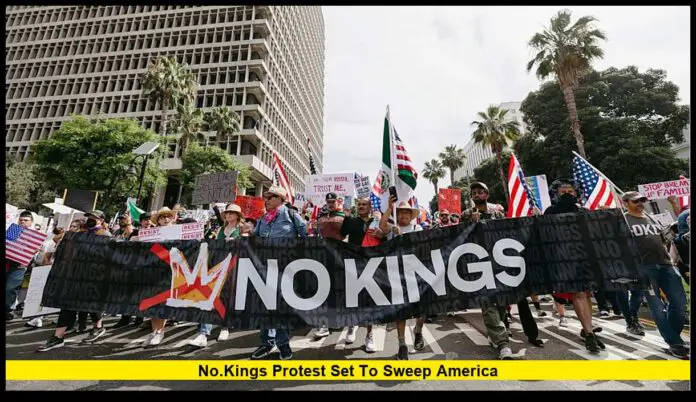
The no.kings protest is set to sweep across the United States once again, with organizers preparing for thousands of demonstrations on October 18, 2025. From major cities to small towns, people are gearing up to join a nationwide movement that has grown rapidly over the past few months.
This wave of coordinated action comes during a turbulent political moment in the country, giving the protest renewed urgency and attention.
Table of Contents
A Movement With a Clear Message
The no.kings protest is a grassroots effort built on one core idea: resistance to the concentration of power in the hands of a single leader. The slogan “No Thrones. No Crowns. No Kings.” has become the rallying cry for thousands who say they are standing up for democratic principles and civil liberties.
Unlike traditional political rallies that push for specific legislation, the no.kings protest focuses on symbolism and civic engagement. Organizers describe the protest as a reminder that the U.S. government is meant to serve the people, not any single figure or party.
Why the Protests Are Returning Now
The timing of this protest is significant. The federal government has been in a shutdown since October 1, and frustration across the political spectrum is growing. Supporters of the movement argue that the shutdown, combined with increased use of executive power, underscores why citizens must remain active and vocal.
Several factors are driving this renewed wave of demonstrations:
- Rising public concern about executive overreach
- A polarized political climate leading into the 2026 election cycle
- A desire among activists to keep momentum going after the massive summer protests earlier this year
By choosing mid-October, organizers hope to harness both political tension and grassroots energy to amplify their message nationwide.
Nationwide Scope and Key Locations
On October 18, demonstrations under the no.kings protest banner are expected to take place in all 50 states. Organizers say more than 2,500 rallies, marches, and gatherings are planned, making this one of the largest coordinated protest efforts of the year.
Major cities like New York, Washington, Los Angeles, Chicago, Atlanta, and Dallas are preparing for large turnouts. Smaller towns are also playing a role, with communities across the Midwest, Mountain West, and rural areas planning creative events that reflect local character.
In some places, events will take the form of marches through city centers. Others will feature rallies at government buildings, candlelight vigils, art installations, or community forums. The flexibility of the protest structure allows each location to tailor its message and methods while still uniting under a shared theme.
How Organizers Are Structuring the Event
Organizers emphasize nonviolent action, community involvement, and visibility. Common elements of the no.kings protest include:
- Symbolic Displays: Participants carrying white flags, holding signs with the slogan, or wearing coordinated colors to create striking visuals.
- Choreographed Actions: Drone light shows, group chants, and formation rallies designed for powerful aerial images.
- Decentralized Leadership: Instead of one central figure, local groups are responsible for shaping their events, ensuring a broad base of participation.
- Social Media Amplification: Participants are encouraged to share images, videos, and livestreams to make the movement trend online and reach wider audiences.
This structure mirrors successful protest movements of the past decade, combining physical presence with digital reach to create lasting impact.
Political Reactions Intensify
As expected, the return of the no.kings protest has sparked intense political debate. Supporters see it as a necessary defense of democratic values. Critics, particularly from conservative circles, have portrayed the movement as disruptive and politically motivated.
Several political leaders have issued statements in recent weeks criticizing the protests, accusing organizers of escalating tensions during an already fragile period for the federal government. Meanwhile, participants argue that dissent is a fundamental part of democracy and that their message is aimed at all political leaders, not just one party.
This clash of perspectives is adding even more attention to the upcoming demonstrations.
Public Sentiment Ahead of the Event
Public opinion about the no.kings protest remains mixed but passionate. Many Americans view the protest as an important check on political power, appreciating its nonpartisan framing and emphasis on civic engagement. Others are skeptical, questioning whether the protests can lead to tangible change.
Still, turnout numbers are expected to be high. The summer wave of no.kings demonstrations drew millions of people across more than two thousand locations, and early indicators suggest October’s events could match or exceed those numbers in several major cities.
Comparison to the Summer Wave
The first major wave of no.kings protest demonstrations earlier this year focused on symbolism and broad civic unity. The upcoming October protests, however, carry a more strategic tone.
Key differences include:
| Aspect | Summer Protests | October Protests |
|---|---|---|
| Tone | Inspirational, launch-focused | Sharper political edge due to shutdown |
| Participation | Massive crowds in urban centers | More balanced between cities and small towns |
| Goals | Build visibility and momentum | Sustain pressure and maintain public discourse |
| Timing | Independent of government events | Aligned with ongoing shutdown and heightened political activity |
The shift shows a movement evolving in real time, adapting its strategy to current national conditions.
Potential Outcomes and What’s Next
It’s unclear exactly what the immediate political impact of the no.kings protest will be. Organizers have not outlined specific legislative demands, preferring to keep the focus on democratic principles rather than policy details.
However, several potential developments may follow:
- Expansion of local protest chapters into long-term civic organizations
- Continued demonstrations into 2026, particularly around key political dates
- Influence on public discourse and media narratives around executive power
- New partnerships with other movements focused on voting rights, civil liberties, and government accountability
The decentralized nature of the protest makes it flexible, allowing participants to shape its direction beyond a single day of demonstrations.
Why the No.Kings Protest Matters
The no.kings protest represents more than just another day of rallies. It’s a test of how modern grassroots movements operate in a hyperconnected political environment. By blending physical gatherings with powerful imagery and a clear message, the movement aims to leave a lasting mark on American political culture.
It also reflects a growing sentiment among many Americans: that no leader, regardless of party, should hold unchecked power. In an era of sharp polarization, this idea has drawn both praise and criticism, but it’s undeniably resonating across the country.
Closing Thoughts
As October 18 approaches, the no.kings protest is shaping up to be one of the most significant civic demonstrations of the year. Whether you support it, oppose it, or are simply watching from the sidelines, its scale and symbolism are likely to spark nationwide conversations about power, democracy, and civic responsibility.
How the nation responds may reveal as much about where America is headed as the protest itself.

