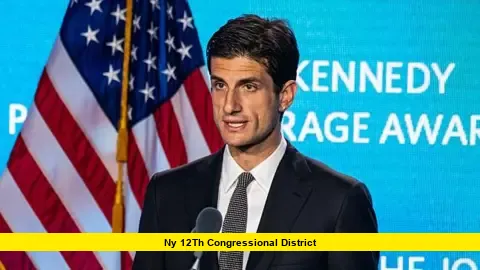
The NY 12th Congressional District stands at the center of New York’s political stage as 2025 draws to a close. With longtime Representative Jerrold Nadler confirming he will not seek re-election, one of Manhattan’s most influential congressional seats is now up for grabs. This transition marks the end of an era and the beginning of a generational shift that could redefine political leadership in one of the nation’s most Democratic and urbanized districts.
Table of Contents
District Snapshot: Understanding the NY 12th Congressional District
Located entirely within Manhattan, the NY 12th Congressional District includes many of the city’s most recognizable neighborhoods—the Upper West Side, Upper East Side, Midtown, Chelsea, Hell’s Kitchen, Murray Hill, and Kips Bay. It is one of the most densely populated urban districts in America, home to more than 750,000 residents.
This district is known for its deep Democratic lean, boasting a Cook Partisan Voting Index (PVI) of D+33, making it one of the most reliably blue seats in the U.S. House of Representatives. The median household income hovers around $153,000, one of the highest in the nation, reflecting its concentration of professionals, academics, and business leaders.
Its voters are highly engaged, progressive, and often set the tone for urban policy trends nationwide—from affordable housing and transportation reform to climate resilience and civil rights.
Jerrold Nadler’s Retirement: The End of an Era
For over 30 years, Jerrold Nadler has been a central figure in New York’s congressional delegation. First elected in 1992, Nadler became known as a progressive champion, serving on the Judiciary Committee and leading on issues of civil liberties, social justice, and oversight.
Nadler’s decision to step down signals a major generational and ideological transition in Manhattan politics. His tenure bridged multiple political eras—from the Clinton and Obama years to the modern Democratic divide between progressives and moderates. His departure leaves an open seat that will be one of the most closely watched contests heading into the 2026 elections.
Without the presence of a long-standing incumbent, the NY 12th Congressional District is now a battleground for the city’s emerging political generation—leaders who blend traditional Democratic values with 21st-century priorities like sustainability, technology, and affordability.
Jack Schlossberg Steps Into the Spotlight
Among the candidates stepping forward, Jack Schlossberg—grandson of President John F. Kennedy—has officially declared his candidacy for the NY 12th seat. At 32 years old, Schlossberg represents both a symbolic and generational change in New York politics.
In his campaign announcement, Schlossberg positioned himself as a voice for a new generation focused on public service, civic renewal, and climate leadership. His message emphasizes bridging the gap between historic Democratic ideals and the challenges of modern urban life.
His campaign themes include:
- Addressing the rising cost of living and expanding affordable housing options in Manhattan.
- Building climate-resilient infrastructure to protect the city’s coastal neighborhoods.
- Defending democracy and voting rights at the federal level.
- Supporting local businesses and workers affected by post-pandemic economic challenges.
With deep family roots in public service and a strong media presence, Schlossberg’s entry immediately elevated the race’s national profile. Yet, his challenge will be proving his local connection and policy depth to Manhattan voters, who tend to favor candidates with strong community records.
A Crowded Democratic Field
While Schlossberg brings name recognition, the NY 12th race is far from a one-person contest. Several seasoned Democratic figures are already positioning themselves to compete in the 2026 primary.
Micah Lasher, a current New York State Assembly member and former senior aide to Nadler, has emerged as an early favorite among establishment Democrats. Lasher’s experience and close ties to Manhattan’s political networks make him a formidable opponent.
Alex Bores, another state legislator, is also expected to run. Known for his focus on technology policy and data-driven urban reform, Bores represents a pragmatic wing of the party focused on innovation and modernization.
Liam Elkind, a nonprofit leader and community organizer, and Jami Floyd, a media professional and advocate, are among other potential contenders expected to make the race competitive.
The primary is expected to become one of New York’s most expensive and closely watched Democratic contests, with candidates competing not only on policy but also on authenticity, generational vision, and community connection.
The Political Weight of the NY 12th District
Why does this single congressional seat attract such national attention? The answer lies in its symbolic and strategic importance.
- Urban Leadership:
The district represents some of the nation’s most influential urban voters—residents who shape policy discussions on housing, climate, education, and culture. - Democratic Stronghold:
With its heavy Democratic advantage, the real battle is fought in the primary. The winner there almost always secures the seat in November. - Media Visibility:
Because it’s based in Manhattan, the NY 12th Congressional District often becomes a focal point for national political debates. The district’s representative routinely appears on national platforms to discuss progressive priorities. - Fundraising Hub:
The concentration of affluent donors and business leaders gives candidates a unique ability to build war chests that rival statewide campaigns. - Generational Shift:
Nadler’s retirement and Schlossberg’s candidacy illustrate the broader changing of the guard within the Democratic Party—from establishment figures to younger, digitally connected leaders.
Key Issues Defining the Campaign
Candidates running in the NY 12th race must navigate complex issues that directly affect Manhattan residents:
- Affordable Housing: As rents continue to soar, housing remains a central concern. Candidates are proposing stronger rent protections, increased public housing investment, and zoning reforms.
- Public Transportation: Funding for subway modernization and safe, accessible transit options are top of mind for voters.
- Climate Change: With Manhattan’s vulnerability to flooding and extreme weather, sustainable infrastructure and environmental planning are core campaign priorities.
- Healthcare Access: Expanding affordable healthcare and mental health resources is a growing issue across the city.
- Public Safety: Candidates are addressing crime and policing policies with a focus on reform, prevention, and community safety.
The winning candidate will need to balance these urban priorities with national Democratic goals—proving capable of representing both Manhattan and the larger progressive movement.
Election Timeline and What Comes Next
The race will unfold in several phases leading up to the June 2026 Democratic primary:
- Late 2025 to Early 2026: Candidate filings, campaign launches, and initial fundraising efforts.
- Spring 2026: Candidate forums, debates, and early endorsements from unions and community groups.
- June 2026: The Democratic primary will determine the nominee, effectively deciding the next member of Congress from this district.
- November 2026: The general election, where the Democratic nominee is expected to prevail given the district’s overwhelming partisan advantage.
By early 2027, the winner will take office—ushering in a new chapter of representation for Manhattan in Washington.
Looking Ahead: The Stakes for Manhattan and Beyond
The NY 12th Congressional District race is not merely a local contest—it reflects the future direction of the Democratic Party in urban America. The district embodies many of the challenges facing major U.S. cities: economic inequality, climate threats, and generational divides in leadership.
A victory for a younger, reform-oriented candidate like Schlossberg could symbolize a shift toward modernization and inclusivity in urban politics. A win by a veteran insider, however, might reaffirm the importance of experience and established networks in navigating Congress.
Either way, the outcome will help shape Manhattan’s—and the nation’s—progressive identity for years to come.
The NY 12th Congressional District is entering a defining moment. As new voices rise and old ones step aside, Manhattan stands ready to choose the kind of leadership that will guide it through the next generation of change. Stay tuned, and share your thoughts on who you believe best represents New York’s future.