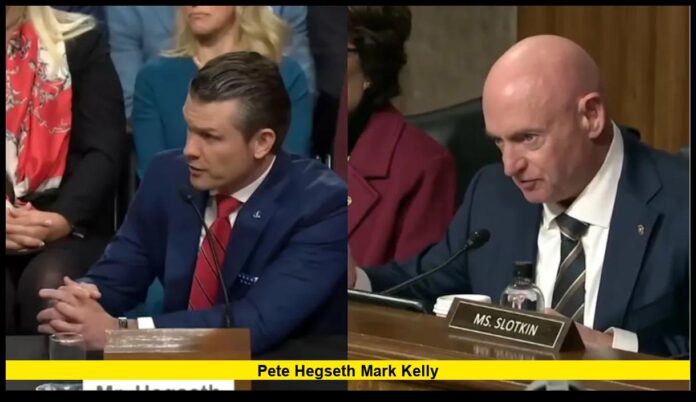
The ongoing tensions surrounding Pete Hegseth Mark Kelly escalated sharply this week as the Pentagon deepened its investigation into Senator Mark Kelly’s appearance in a video urging service members to reject “illegal orders.” The latest developments confirm that Defense Secretary Pete Hegseth continues to support aggressive disciplinary measures, including the possibility of recalling Kelly, a retired Navy captain, to active duty under the Uniform Code of Military Justice.
Table of Contents
Who the Key Figures Are
Pete Hegseth’s Position and Influence
Pete Hegseth currently serves as the U.S. Secretary of Defense. A former Army National Guard officer, he stepped into the cabinet role with a strong reputation for enforcing strict chain-of-command standards. His leadership over the Pentagon has been marked by an assertive approach toward discipline, accountability, and military readiness.
Mark Kelly’s Background and Role
Mark Kelly is a sitting U.S. Senator from Arizona, a former Navy combat pilot, and a retired Navy captain. He completed multiple space missions as a NASA astronaut before entering public office. Kelly’s lengthy military background keeps him connected to active-duty and veteran communities, which is why his participation in the recent video drew immediate national attention.
What Sparked the Controversy
The situation began when Kelly joined several Democratic lawmakers in a widely shared video. In it, he urged troops to reject unlawful or unconstitutional orders. His message was framed as a reminder of service members’ duty to uphold the Constitution, but it quickly raised alarms within the Pentagon.
The video arrived during a period of heightened scrutiny over military policies, including directives tied to operations in international waters. It instantly set off debates about military obedience, free speech, and political influence on the armed forces.
As a retired officer, Kelly remains legally subject to the military justice system. This made him the only participant in the video who could potentially face court-martial or other UCMJ actions.
Hegseth’s Response and Escalating Actions
Pete Hegseth responded forcefully.
He sharply criticized the message conveyed in the video, arguing that it could weaken discipline across the armed forces. Hegseth also publicly challenged Kelly over the uniform he wore in the video—claiming the medals were improperly displayed and calling it a discrediting presentation.
Hegseth later confirmed that if Kelly is recalled to active duty, an inspection of his uniform and decorations will be among the first actions taken. He emphasized that retired officers have obligations under the UCMJ and that violating those obligations carries serious consequences.
The Defense Secretary also stated that the Pentagon is prepared to consider prosecution if the investigation finds that Kelly’s actions encouraged insubordination or undermined command authority.
Kelly’s Reaction to Pentagon Pressure
Mark Kelly, for his part, has strongly dismissed the Pentagon’s moves as politically influenced. He has stated that recalling him to active duty for punishment would be unprecedented and unnecessary.
Kelly maintains that the video merely reminded troops of their constitutional duty and contained no directive to disobey lawful orders. He has also argued that warning service members about unlawful commands has long been part of basic military training and leadership responsibilities.
In recent public comments, Kelly emphasized that he will not be intimidated by threats of recall or court-martial. He says he stands by every word in the video and views the investigation as an attempt to silence dissent.
Legal Questions Raised
The clash between Hegseth and Kelly has sparked nationwide debate among legal experts and military specialists. Some of the most significant questions include:
- Can a sitting U.S. Senator be recalled to active duty?
While legally possible for retired officers, doing so for a member of Congress could raise constitutional concerns regarding separation of powers. - Does political speech fall under UCMJ jurisdiction?
Retired officers remain subject to military law, but prosecutions related to political speech are rare. - Is Kelly’s video truly a call for disobedience?
Interpretations differ, and the Pentagon must determine whether the message crossed the line into undermining military authority. - Would prosecution violate free-speech protections?
Some argue that pursuing charges could infringe on First Amendment rights, especially for an elected official.
These debates remain unresolved as the investigation continues.
The Broader Civil-Military Divide
This dispute comes during a time of reevaluation of civil-military relations in the United States. The military’s role in political conversations has been a point of concern for years, but the confrontation between Hegseth and Kelly places that issue under an even brighter spotlight.
Several themes have emerged:
1. Military Obedience vs. Constitutional Duty
Supporters of Hegseth argue that a unified chain of command is essential for military function. Supporters of Kelly say service members must understand they cannot blindly follow unlawful directives.
2. Retired Officers in Politics
Kelly’s position as both a retired officer and a sitting senator creates an unusual overlap between political and military worlds. The military’s ability to discipline retired officers who hold elected office has rarely, if ever, been tested in modern history.
3. Public Perception of the Armed Forces
The dispute has sparked conversations about trust in military leadership and the importance of keeping partisan conflict separate from military duty.
4. The Future of Military Speech
This confrontation may set precedents about what retired officers can or cannot say publicly, especially when their views conflict with active-duty leadership.
Current Status of the Investigation
As of today, the Pentagon’s investigation into Kelly remains active. No formal charges have been filed.
Officials have confirmed that the review includes both the content of the video and Kelly’s presentation of his military uniform. The Department of Defense continues to evaluate whether Kelly violated UCMJ statutes or engaged in conduct unbecoming of a retired officer.
Kelly continues to perform his duties in the Senate and has remained publicly vocal, appearing in interviews and issuing statements defending his actions. The situation remains fluid, with both legal and political implications that could unfold over the coming weeks.
Why This Matters to American Readers
This confrontation represents more than a disagreement between two public figures. It raises questions that strike at the heart of U.S. governance and military structure:
- How much authority does the Pentagon hold over retired officers?
- What protections does a senator have from executive-branch pressure?
- Can political messages be treated as military violations?
- Where is the boundary between military obedience and constitutional oversight?
The developing situation involving Pete Hegseth and Mark Kelly will likely influence future discussions about military law, political speech, and the responsibilities of both public officials and service members.
Share your thoughts below as this high-stakes standoff continues to unfold.

