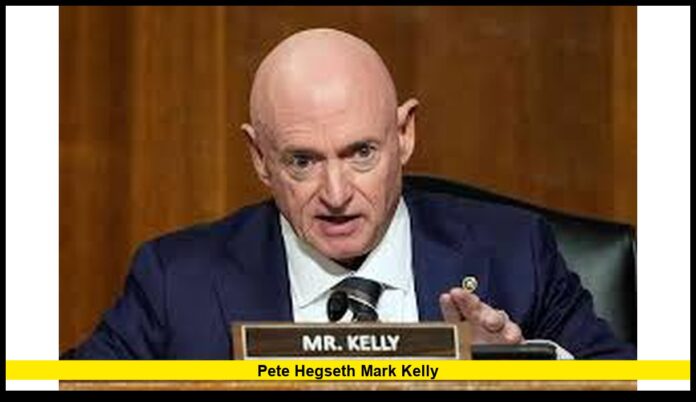
Pete Hegseth Mark Kelly are locked in a high-stakes conflict after the Pentagon announced a formal review into Senator Mark Kelly, while Defense Secretary Pete Hegseth has publicly condemned Kelly’s recent video message to U.S. troops. The Department of Defense said it received credible allegations of misconduct and that the review may lead to recall to active duty for possible court-martial proceedings. Meanwhile, Hegseth has accused Kelly of undermining military cohesion and displayed ribbon-placement criticisms as part of his public rebuke.
This article examines the current status of the investigation, the public exchange between the two men, potential legal implications, and what to expect next in this unfolding dispute.
Table of Contents
What Triggered the Investigation
The chain of events began when Senator Mark Kelly released a video alongside other lawmakers instructing service members they must refuse illegal orders. Because Kelly is a retired Navy captain, the Pentagon indicated he remains subject to the Uniform Code of Military Justice. The review was launched after Defense Department officials received “serious allegations of misconduct” citing the video and Kelly’s role.
The official announcement said the inquiry may result in “recall to active duty for court-martial proceedings or administrative measures.”
Kelly responded by declaring he would not be silenced and that his oath to the Constitution outweighs threats.
In the meantime, Secretary Hegseth labeled the video “despicable,” argued it threatens chain-of-command adherence and publicly criticized Kelly’s ribbon rack in a photo for incorrect placement.
Hegseth’s Public Attack and Political Fallout
Hegseth has taken an unusually aggressive public stance against Kelly. Beyond the review, he has:
- Accused Kelly of delivering a politically motivated message to troops, rather than a disciplined military advisory.
- Highlighted what he claims are errors in Kelly’s uniform imagery, focusing on medal placement as a symbol of credibility.
- Framed Kelly’s actions as “undermining command authority,” which he says jeopardizes military readiness.
His remarks triggered a political backlash. Some GOP lawmakers supported his stance; others warned his rhetoric risks politicizing military institutions. Kelly’s supporters say the public comments amount to intimidation and misuse of disciplinary tools.
Kelly’s Defense and Pushback
Kelly has defended himself vigorously, insisting that his directive to troops was solely about upholding lawful orders. He described himself as having “given too much to this country to be silenced by bullies.”
Key points in Kelly’s response:
- Emphasized his service as a Navy officer and former astronaut to reinforce credibility.
- Argued that asking troops to refuse unlawful orders is consistent with military law and constitutional duty.
- Criticized Hegseth’s public attacks as distraction from the actual issue of military-civil relations and rule of law.
Kelly additionally rejected suggestions of sedition, saying the video aimed at protecting the Constitution, not undermining the military.
Legal and Military Discipline Implications
The Pentagon review carries potentially serious consequences because it invokes existing law allowing recall of retirees to active duty for misconduct. Key legal aspects include:
- Kelly is uniquely subject to UCMJ jurisdiction because he retired after serving as a Navy captain, unlike other lawmakers in the video.
- A recall to active duty for court-martial is rare—especially for an elected U.S. senator—and raises constitutionality questions.
- Any move toward prosecution would create a novel precedent about the limits of political speech by retired military officers.
Analysts say major factors will include whether Kelly’s remarks truly constitute active “undermining” of military discipline or fall under protected speech. The review’s outcome could affect future treatment of veterans turned politicians.
Political Context and Reactions
The dispute between Hegseth and Kelly unfolds amid rising tensions over civil-military relations and political polarization. The public exchange has drawn responses across the spectrum:
- Many Democrats view the review as a tool of political intimidation, warning that it sets a dangerous precedent for military discipline being used against elected officials.
- Some Republicans support Hegseth’s call for discipline, citing the need to maintain order in the armed forces and protect the chain of command.
- Military and veterans organizations remain publicly silent for the most part, watching how the legal and institutional norms evolve.
The situation has already spilled into media coverage, with remarks about professionalism, uniform standards and the proper role of retired officers in public political activity.
What Happens Next: Timeline & Key Milestones
Here’s a rough breakdown of what to expect going forward:
- Pentagon to complete its fact-gathering review: statements note that the process will determine whether recall or administrative steps are appropriate.
- If recall is recommended, Kelly would face active-duty status, possibly court-martial, or administrative measures.
- Congress may hold hearings on the matter, especially if constitutional or civil-military issues emerge.
- Public comments from Hegseth and Kelly are likely to continue, influencing public perception and institutional trust.
The timeline is unclear. Because retired officers face complex procedural safeguards, and Kelly is an elected official, this case could unfold over weeks or months.
Broader Significance for Military Oversight
Beyond the individual dispute, this moment touches on important structural questions:
- Should retired military officers who become politicians remain subject to UCMJ jurisdiction when engaging in political expression?
- How far can Defense Department officials—especially a sitting Secretary of Defense—go in publicly criticizing lawmakers without triggering concerns about misuse of the uniform for partisan aims?
- What message does this send to active-duty service members about permissible public advocacy and political speech?
Observers note that the case may redefine boundaries between military discipline and political rights for future veterans-turned-public servants.
The clash involving Pete Hegseth and Mark Kelly has moved rapidly from a video message to an institutional review that could reshape military-political norms. With legal, constitutional and partisan dimensions intertwined, the outcome of this review may echo far beyond the individuals involved.
If you’ve been tracking this dispute, share your view below — we’d like to know what you think will happen next and why.

