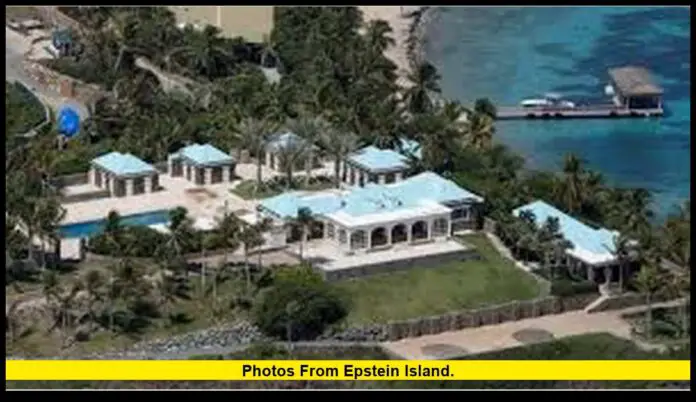
A new set of visuals from Jeffrey Epstein’s private Caribbean estate on Little Saint James was released on December 3, 2025, by House Democrats, offering one of the most detailed looks yet inside the property at the center of long-running criminal and civil investigations. These newly shared images and short video clips include areas of the island never before shown publicly and are part of a broader effort to increase transparency ahead of scheduled federal document disclosures later this month.
Table of Contents
What the newly released images show
The material includes photographs of bedrooms, courtyards, storage areas, offices, and open-air spaces across the island. Among the images drawing the most attention is a room containing a yellow dental-style examination chair surrounded by masks mounted on the walls. Another notable image shows a study area with a chalkboard covered in handwritten terms such as “power,” “deception,” “truth,” and other fragmented phrases.
Additional photos show swimming pools, staircases, empty rooms, and various domestic items believed to be the same locations repeatedly referenced in survivor accounts and legal filings. Investigators have stated that the visuals do not introduce new allegations but provide meaningful physical context to documents already part of public records.
Why lawmakers made the images public
Members of the House Oversight Committee said the timing reflects a push for transparency, as federal agencies face a mid-December deadline for releasing additional documents tied to Epstein’s network, associates, and financial activities. Lawmakers argue that making the images public allows the American public and survivors to see physical locations long cited in court documents, depositions, and sworn testimony.
The committee described the images as “never-before-seen” by the public and encouraged continued cooperation between federal agencies and investigators in the U.S. Virgin Islands, who originally captured the photos during earlier phases of the investigation.
When and how the images were captured
According to the committee, the visuals were recorded by investigative teams in the U.S. Virgin Islands during previous evidence-gathering work. The material was later provided to congressional investigators as part of ongoing oversight into how federal authorities handled the Epstein case, including decisions related to evidence management, prosecutorial actions, and inter-agency coordination.
While the images themselves are not new to investigators, this marks the first time many of them have been made publicly viewable.
Reactions from survivors and investigators
Survivor advocates have welcomed the release, saying it provides important visibility into the settings discussed throughout years of litigation. They also emphasized that the public release helps maintain pressure for full transparency as additional federal documents are expected soon.
Lawmakers have echoed that point, stating that releasing visuals supports efforts to evaluate whether federal agencies followed proper protocols and whether additional records should be unsealed.
What the images do—and do not—establish
The photos help the public understand the physical environment of the island, but they do not introduce new evidence of crimes committed by individuals who have not been charged. Officials noted that the images act as supplements to existing documentation such as travel logs, financial records, depositions, and witness testimony.
Legal experts warn that visuals alone cannot be interpreted as proof of wrongdoing; instead, they must be considered within the full body of verified evidence.
Upcoming disclosures and the December deadline
Federal agencies are approaching a mid-December deadline to release more Epstein-related files mandated under recent congressional action. Lawmakers say the new images are designed to highlight the need for the forthcoming disclosures and to ensure the public remains informed.
Oversight members have signaled they will seek additional materials from federal departments and private entities to complete ongoing reviews.
Addressing privacy and legal constraints
The committee said steps were taken to ensure no sensitive victim information was exposed. Prior releases of court documents in past years included images that required significant redaction to protect survivors. This latest set of visuals was reviewed to avoid releasing identifying or sensitive personal material.
Officials noted that transparency must be balanced with privacy laws, ongoing legal proceedings, and protections for those who suffered abuse.
How the public should interpret this material
For researchers, journalists, and the general public, the newly posted images act as visual confirmation of locations frequently described in testimony and investigative summaries. They do not replace legal documents or court findings, but they can help the public better understand narratives that have circulated for years.
Experts stress that images can help generate new questions but must be interpreted strictly alongside existing evidence.
What comes next
House investigators are expected to continue seeking unredacted records and may issue further public releases depending on what federal agencies disclose in the coming weeks. The Justice Department’s forthcoming document release is anticipated to provide additional clarity about evidence handling, associated individuals, and past prosecutorial decisions.
The Oversight Committee stated that it will maintain pressure for full cooperation as part of its ongoing review.

