Traits seen across human populations rarely come from a single genetic switch. Today’s genetic science confirms that most physical characteristics and health tendencies emerge from the combined influence of many genes working together. This understanding has reshaped how researchers, doctors, and educators explain variation, risk, and biological diversity in the United States.
Recent large-scale genetic research has deepened clarity around this model. Advanced sequencing tools, population-wide data projects, and improved statistical methods now allow scientists to map how small genetic effects accumulate over time. The result is a far more accurate picture of how humans develop, adapt, and respond to their environments.
Table of Contents
The Shift From Simple Genetics to Complex Models
Early genetic education focused on traits controlled by one gene. While useful for teaching basic principles, that framework could not explain the continuous range seen in real life. Height does not come in neat categories. Skin tone does not follow clear-cut ratios. Disease risk rarely depends on a single inherited factor.
Modern research has confirmed that most traits arise from many genetic contributors. Each gene adds a subtle influence. Together, they create a spectrum of outcomes rather than fixed types.
This shift marks one of the most important changes in biological science over the past several decades.
Why Traits Exist on a Spectrum
Human characteristics often display gradual variation. This happens because no single gene determines the final outcome. Instead, dozens or even thousands of genetic variants combine their effects.
Each variant slightly increases or decreases expression. When added together, these effects produce wide diversity across a population. This explains why traits blend smoothly rather than appearing in rigid groups.
Such variation is not random. It follows predictable patterns that scientists can now measure with high precision.
The Role of Small Genetic Contributions
In complex traits, no single gene dominates. Each genetic factor plays a minor role, often contributing less than one percent to the final result.
These small effects matter because they stack together. When many such influences align, they shape measurable differences in appearance, physiology, and susceptibility to certain conditions.
This cumulative process is why large datasets are essential. Only by studying many individuals can researchers detect patterns that would otherwise remain invisible.
Environmental Influence and Genetic Expression
Genes do not act alone. Lifestyle, surroundings, and social conditions interact with inherited factors throughout life.
Nutrition, physical activity, stress exposure, education, and access to healthcare all affect how genetic tendencies appear. A person may carry variants linked to a particular outcome, yet never show it due to environmental protection.
This interaction explains why genetics sets probabilities rather than guarantees.
Examples of Traits Influenced by Multiple Genes
Many familiar characteristics follow this pattern. They show smooth variation rather than sharp distinctions.
These include body height, skin shade, eye coloration, body weight patterns, blood pressure levels, cholesterol balance, and many aspects of cognitive performance. Even behavioral tendencies often reflect layered genetic influence.
In each case, genes shape potential while experience shapes expression.
Advances in Population-Based Genetic Research
The growth of population-scale genetic studies has transformed understanding. Large volunteer datasets allow scientists to compare genetic differences across thousands or millions of individuals.
These projects confirm that most traits link to many genetic regions scattered across the genome. Each region contributes a modest effect, reinforcing the idea that complexity is the norm.
Such findings have been replicated across independent studies, strengthening confidence in the results.
From Research to Risk Estimation
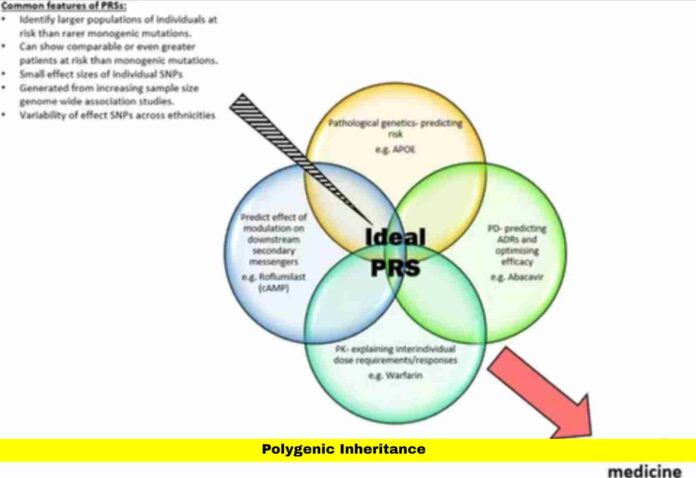
One practical outcome of this work is the development of combined genetic indicators. These tools summarize many genetic signals into a single estimate.
Researchers use these estimates to study tendencies related to heart health, metabolic balance, immune response, and neurological patterns. The goal is not prediction with certainty but improved understanding of relative risk.
Clinicians treat these tools as one part of a broader assessment, not as standalone answers.
Limits of Genetic Prediction
Even with advanced tools, genetics cannot explain everything. Many traits remain influenced by unknown factors. Measurement limits and population differences also affect accuracy.
Researchers emphasize caution. Genetic indicators work best when combined with clinical data, family history, and lifestyle information.
This balanced approach helps prevent overinterpretation and supports responsible use.
Impact on Modern Medicine
Healthcare has begun to integrate insights from complex genetic models. Screening strategies increasingly consider individual variation rather than one-size-fits-all guidelines.
Doctors use genetic information to refine prevention plans, adjust monitoring schedules, and support early intervention. This approach aims to improve outcomes while respecting individual differences.
Medical institutions continue to evaluate best practices as research evolves.
Educational Changes Reflecting Scientific Progress
Biology education has adapted to reflect current knowledge. Students now learn that most traits result from interactions among many genes and the environment.
This update reduces confusion and helps learners understand why real-world traits rarely follow textbook ratios. It also prepares future professionals for careers in healthcare and research.
Clear education builds trust and scientific literacy.
Public Understanding and Media Communication
As genetic topics enter mainstream discussion, clear communication becomes essential. Simplified explanations risk misleading audiences if they ignore complexity.
Recent coverage has improved by emphasizing probability, interaction, and diversity. This helps counter myths about genetic determinism and reinforces the role of personal and societal factors.
Accurate messaging supports informed public dialogue.
Ethical Considerations in Genetic Research
The expansion of genetic data raises ethical questions. Privacy protection, informed consent, and data security remain top priorities.
There is also ongoing discussion about how genetic information should be used outside healthcare. Safeguards aim to prevent discrimination and misuse while allowing beneficial research.
Ethical oversight continues to evolve alongside scientific capability.
Diversity and Representation in Studies
Early genetic research focused heavily on limited populations. This reduced accuracy for underrepresented groups.
Recent efforts prioritize broader inclusion. Diverse datasets improve reliability and fairness in research findings. They also enhance understanding of how genetic effects vary across backgrounds.
This progress strengthens the scientific foundation for future applications.
Technology Driving New Discoveries
Computational advances now allow scientists to analyze enormous datasets efficiently. Machine learning tools identify subtle patterns across thousands of genetic markers.
These technologies reveal interactions that traditional methods could not detect. As tools improve, understanding of complex traits becomes more detailed and precise.
Innovation continues to accelerate discovery.
Implications for Preventive Health
Understanding layered genetic influence supports prevention-focused care. Individuals with elevated risk can benefit from earlier screening and lifestyle guidance.
This approach shifts focus from treatment to prevention. It also empowers individuals with information while emphasizing that change remains possible.
Public health strategies increasingly reflect this model.
Moving Beyond Genetic Determinism
One of the most important lessons from modern genetics is balance. Genes influence tendencies, not destinies.
Recognizing complexity reduces stigma and blame. It highlights shared humanity while respecting individual differences.
This perspective aligns science with compassion and realism.
Ongoing Research Directions
Scientists continue refining models that integrate genetics with environmental data. Long-term studies track how influences change across the lifespan.
Researchers also explore how gene interactions evolve across generations. These efforts aim to build a more complete picture of human development.
Progress remains steady and evidence-based.
Why This Knowledge Matters Now
As genetic information becomes more accessible, understanding its limits and strengths is essential. Accurate interpretation protects individuals and improves decision-making.
This knowledge supports better healthcare, stronger education, and informed public policy. It also encourages curiosity rather than fear about human biology.
The science continues to grow, guided by evidence and responsibility.
A Clearer View of Human Diversity
The modern view of genetics celebrates variation rather than oversimplification. It explains why differences are natural and expected.
By embracing complexity, science moves closer to explaining real human experience. This understanding fosters respect, accuracy, and progress.
How do you think modern genetics should shape healthcare and education in the years ahead? Share your thoughts below or stay connected for ongoing updates on this evolving field.

