Table of Contents
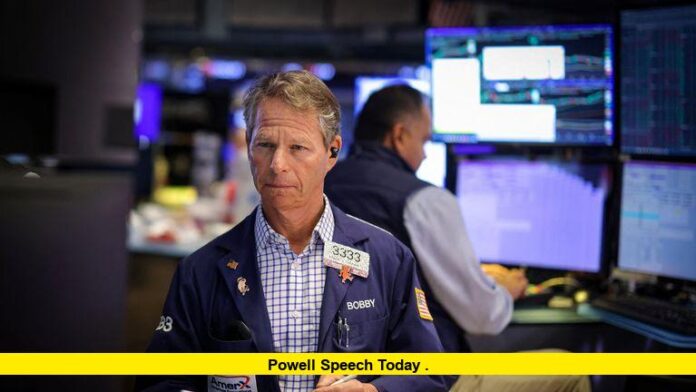
Powell Speech Today — Markets Brace for Signals on Rate Cuts
Today, investors and analysts are watching closely as Federal Reserve Chair Jerome Powell delivers remarks at the Hoover Institution’s George P. Shultz Memorial Lecture Series at Stanford University. The speech arrives just days before the Fed’s final policy meeting of the year. Markets have already priced in an 87.6% chance of a 25-basis-point interest rate cut this December.
Powell’s address—and the context surrounding it—could offer important clues about the central bank’s next moves on interest rates, inflation, and economic support.
What We Know: Timing, Context, and Market Expectations
- The speech is scheduled for 8:00 p.m. ET.
- The remarks come as the Fed ends its ongoing period of quantitative tightening (QT), a process by which the central bank shrinks its balance sheet. Today marks the official conclusion of that process.
- Many investors see this speech as potentially signaling a shift toward easier monetary policy. Support from key Fed officials for a December rate cut has already boosted market expectations.
- That said, the remarks are being delivered during the Fed’s “blackout” period — a span before a formal policy decision when public policy commentary is often restrained.
What Powell Will (And Won’t) Address
During today’s remarks, Powell is expected to reflect on economic policy and financial stability rather than announce new policy moves. Analysts believe he will:
- Acknowledge the end of QT and what it means for liquidity and markets.
- Review recent economic trends — including inflation, labor markets, and growth.
- Reiterate the Fed’s commitment to its dual mandate: price stability and maximum employment.
Importantly, because we are in the blackout window before the next meeting, Powell is unlikely to release a detailed policy roadmap or signal another immediate rate change.
Why This Matters: Market and Economic Implications
🔹 Liquidity Boost Might Be on the Horizon
With QT ended, markets may see an uptick in liquidity. That often translates into greater confidence for stocks, bonds, and other risk assets.
🔹 Rate-Cut Expectations Remain High
With traders pricing in nearly a 90% chance of a December rate cut, Powell’s tone could either reinforce expectations — or inject caution. For investors, even subtle word choices could sway markets.
🔹 Watch for Economic Data Signals
Upcoming data — particularly on inflation (especially the Personal Consumption Expenditures Index) and job market stats — will become pivotal. They could heavily influence the Fed’s December decision.
🔹 Potential Market Volatility Ahead
If Powell stays neutral or avoids strong signals, markets might react to uncertainty. Stocks and risk assets could wobble as traders digest his remarks alongside upcoming economic reports.
What to Watch For in Powell’s Remarks
- Language about inflation — whether he calls it “elevated,” “moderating,” or continues to stress caution.
- References to the labor market — especially if he notes any signs of weakening or fragility.
- Comments on financial conditions or liquidity — ending QT could be seen as more accommodative, which would favor risk assets.
- Unspoken tone or emphasis — often what’s not said in these speeches matters more than what is.
What It Means for Everyday Americans
- Borrowing costs (for mortgages, auto loans, credit cards) could come down if the Fed cuts rates again — which could make buying or refinancing cheaper.
- Investments — Stocks and bonds may respond positively if liquidity rises, but volatility could spike depending on how markets read Powell’s tone.
- Economic outlook — A move toward easing could help support job growth and consumer spending; but much depends on inflation data and how the Fed interprets it.
Stay tuned: Powell’s remarks tonight may shape financial headlines and economic expectations for weeks to come. Expect ripple effects from Wall Street to Main Street.

