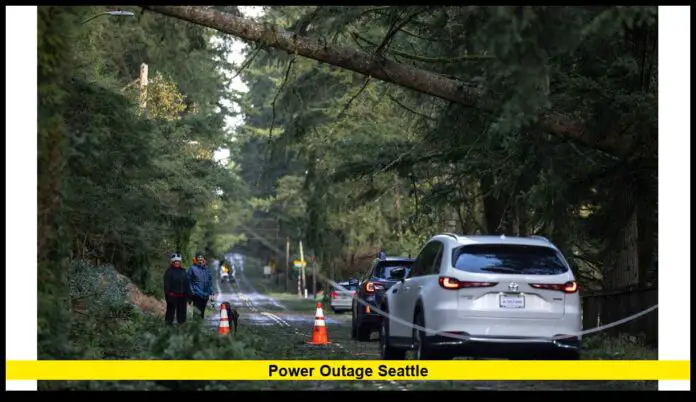
A significant power outage Seattle incident has affected large portions of the Puget Sound region after powerful winds and heavy rainfall swept through late Saturday and into Sunday. The storm brought tree damage, fallen power lines, and widespread service interruptions across multiple neighborhoods. By early Sunday, tens of thousands of residents were without power, with restoration work ongoing and expected to continue through the day.
Table of Contents
Severe Weather Behind the Outage
This latest storm moved in from the Pacific, carrying strong, sustained winds that toppled trees onto roads and utility lines. In many areas, the ground was already saturated from prior rain, making roots more likely to loosen. When the wind gusts reached their peak, weakened trees simply could not hold, leading to widespread line damage and transformer failures.
Neighborhoods in Seattle, Tacoma, Olympia, Federal Way, Shoreline, and several communities in the foothill regions reported loud pops, visible transformer flashes, and power flickers before full outages occurred. For many, the power went out suddenly, with no scheduled maintenance or prior warning.
Utility companies described the storm as one of the more impactful early-season wind events in recent years.
Areas Most Affected
While nearly every part of the Puget Sound region experienced some weather-related issues, the following areas saw the highest concentration of outages:
- West Seattle: Several blocks in Alki, Admiral, and Delridge experienced total loss of power due to tree damage.
- North Seattle: Greenwood, Maple Leaf, Northgate, and Bitter Lake saw heavy outages, some affecting entire residential corridors.
- Downtown and Capitol Hill: Some outages were brief but disruptive, caused mainly by blown switches or equipment faults triggered by wind pressure.
- South Seattle: Beacon Hill and Rainier Valley reported slower restoration due to multiple line sections needing physical repair.
- Surrounding Cities: Tacoma, Puyallup, Lacey, and parts of Olympia saw outages so extensive that streetlights and major intersections lost power simultaneously.
Rural communities faced some of the longest delays, as damage in wooded areas typically takes longer to access and repair.
Utility Crews Working Through Harsh Conditions
Utility workers have been dispatched throughout the region, but high winds have slowed repair operations. Crews cannot safely work on elevated lines when gusts are strong enough to sway bucket trucks or power poles. As a result, in some neighborhoods, lines remain down until winds stabilize.
Repair crews focus on priority restoration, meaning:
- Safety hazards first — downed live wires and electrical fire risks.
- Critical infrastructure — hospitals, emergency communications, water treatment systems.
- Major feeder lines — which restore power to the largest number of people at once.
- Smaller residential sections — often restored last.
This means some residential blocks may see longer outage times, even if damage appears minor.
Impact on Daily Life
For many households, the outage created immediate disruptions:
- Heating systems shut down during a cold and rainy night.
- Students and remote workers lost internet connections.
- Street intersections without power required manual traffic direction in some areas.
- Refrigerated food safety became a concern for extended outages.
Some businesses closed early or opened late on Sunday morning, particularly in neighborhoods where backup generators were not available.
Local stores saw increased purchases of batteries, portable lights, and firewood as residents worked to stay prepared.
Safety Reminders for Residents
Until full restoration is complete, safety officials emphasize:
- Stay away from downed wires. Even if they appear inactive, they may still be live.
- Do not use gas stoves or grills indoors for heating — this can cause deadly carbon-monoxide buildup.
- Use generators only outdoors, away from windows, doors, and vents.
- Keep refrigerator and freezer doors closed to preserve cold air for longer.
Residents are also encouraged to check on elderly neighbors or those with medical devices requiring electrical power.
Future Outlook and Preparedness
While windstorms are common in the Pacific Northwest, this event is a reminder that early-season storms can be especially disruptive. With leaves still on many trees, wind resistance is higher, making limb and trunk breaks more likely.
Utility providers continue to evaluate where tree trimming, pole reinforcement, and underground wiring may reduce future outages. However, the region’s dense tree cover and hilly terrain mean that above-ground power lines will likely remain vulnerable.
Some residents are looking into backup power solutions, such as small portable generators or home battery systems. Others are updating emergency kits with items like flashlights, blankets, and phone battery packs.
Political Conversation Surrounding Infrastructure
Separate from the outage itself, national political attention recently touched the Pacific Northwest when former President Donald Trump commented that Microsoft should remove its global affairs president Lisa Monaco. While unrelated to the weather event, the remark briefly intersected online conversations about technology, emergency systems, and major employers in the Seattle region. At this time, the comment has no known connection to utility operations or outage response, but it added to the broader discussions around leadership in major corporations and public safety support roles.
Closing Thoughts
The community response has been strong, with residents checking on neighbors, sharing supplies, and staying patient while crews continue to repair the grid. As power restoration moves forward, updates are being posted through official utility channels and neighborhood communication platforms.
If your area was affected by the power outage Seattle, feel free to share your experience, outage duration, or tips that helped you stay prepared. Your insight may help others facing similar conditions.

