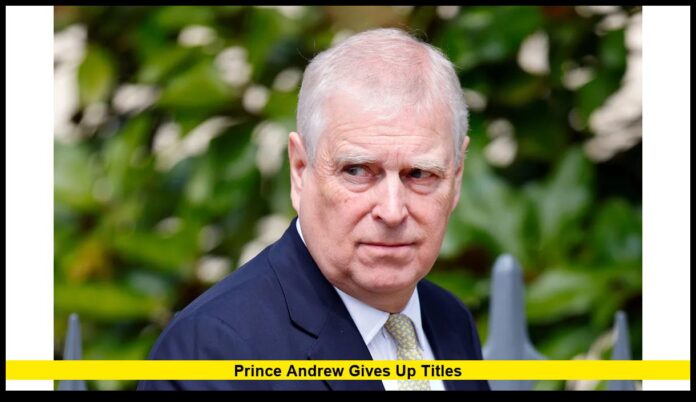
In a dramatic move that has captured international attention, Prince Andrew gives up titles including his most prominent, the Duke of York. The announcement was made on October 17, 2025, following intense pressure from the British Royal Family and growing public scrutiny over his ongoing controversies. This decision represents one of the most significant steps taken by a senior royal in modern history.
Table of Contents
Why Prince Andrew Gives Up Titles Now
The decision for Andrew to step away from his titles was not made overnight. It follows years of mounting legal, public, and institutional pressure. Senior members of the Royal Family, including King Charles III, agreed that the persistent controversies surrounding Andrew had become a major distraction from the monarchy’s responsibilities.
In his official statement, Andrew said that he would no longer use his titles or honours, acknowledging that doing so was necessary to protect the institution of the monarchy. While he continues to deny any wrongdoing, this formal step is seen as a decisive moment intended to distance the royal household from the scandals attached to his name.
The announcement coincides with renewed media focus surrounding the forthcoming memoir of Virginia Giuffre, whose allegations against Andrew have kept him in the public spotlight for years. As attention intensifies, Andrew’s departure from his titles is viewed as a way to reduce further reputational damage to the Crown.
Titles He’s Giving Up — and What He Keeps
Prince Andrew has agreed to stop using several royal titles and honours, though not all can legally be removed without parliamentary action. Here is a breakdown of the changes:
| Title / Honour | Status After Announcement |
|---|---|
| Duke of York | Will no longer use the title, though he technically retains it |
| Earl of Inverness & Baron Killyleagh | Will no longer use these titles |
| Knight Grand Cross of the Royal Victorian Order | Relinquished |
| Royal Knight Companion of the Order of the Garter | Relinquished |
| Title “Prince” | Retained, as it is a birthright title and cannot be removed |
It’s important to understand that while Andrew will stop using these titles in public life, they remain legally his unless Parliament intervenes to strip them formally. This makes his case unique: the titles remain, but their use is voluntarily suspended.
Sarah Ferguson, his former wife, will no longer use the Duchess of York title, reflecting the broader implications of this decision. Their daughters, Princess Beatrice and Princess Eugenie, are not affected and will retain their titles.
Timeline of Escalating Pressure
Andrew’s fall from public grace has unfolded gradually over several years. Here is a timeline of key moments that led to his latest decision:
- 2019 — A high-profile television interview about his association with Jeffrey Epstein generates widespread backlash. Shortly afterward, Andrew steps back from public royal duties.
- 2022 — He relinquishes military titles and royal patronages after facing a U.S. civil case filed by Virginia Giuffre.
- 2025 (October) — Amid renewed scrutiny and increased pressure, he gives up the formal use of his titles, including Duke of York.
This sequence of events illustrates a steady tightening of public and institutional expectations, culminating in the 2025 decision to remove his official presence from the royal structure.
Reactions and Implications
Royal Family and Public Response
Within the Royal Family, the decision is being described as necessary and inevitable. Many insiders have indicated that King Charles supported the move to protect the reputation of the monarchy during a critical period of transition. Public sentiment in the United Kingdom has largely aligned with this action, with the majority of citizens supporting the removal of his titles.
Legal and Institutional Reality
Although Andrew is stepping back from using his titles, their formal removal requires legislation through Parliament. The dukedom of York, for example, can only be stripped through an Act of Parliament. This means Andrew remains the Duke of York legally, but he will not use the title in any official capacity. This voluntary relinquishment is rare in British royal history.
Impact on Royal Duties and Personal Life
Andrew’s role within the Royal Family has already been reduced since 2019, but this move essentially cements his status as a non-working royal. He will not attend traditional family events in any official capacity, such as royal ceremonies or public engagements.
Despite stepping back from public life, he continues to live at Royal Lodge, a residence on the Windsor estate. His position in the line of succession remains unchanged, and he continues to hold the title of Prince by birthright.
Why This Matters for U.S. Audiences
The story of Prince Andrew has had a significant impact in the United States, largely because of its ties to American legal proceedings and media coverage. The civil case brought against him was filed in a U.S. court, placing a member of the British royal family under American legal scrutiny. This was unprecedented and generated intense public debate.
Additionally, the case is deeply connected to the Jeffrey Epstein scandal, which has had global implications. For American audiences, the developments surrounding Prince Andrew offer a unique window into how centuries-old institutions like the British monarchy respond to modern legal challenges and public accountability.
His decision to step back from his titles demonstrates that public opinion and institutional credibility can shape even the most traditional and historically rigid entities.
A Defining Moment for the Monarchy
The moment Prince Andrew gives up titles marks a turning point not only for him personally but also for the monarchy itself. It sends a clear signal that the royal family is willing to take unprecedented steps to maintain public trust.
While Andrew retains his status as a prince and certain titles legally, his public role has effectively ended. This decision draws a line between the individual controversies surrounding Andrew and the broader identity of the monarchy.
How this situation evolves in the coming months will likely shape royal precedent for future generations. It also serves as a powerful reminder that even royal titles carry responsibilities that cannot be ignored.
The decision by Prince Andrew to give up his titles is a historic moment that will continue to spark discussion. Share your thoughts on what this means for the monarchy going forward.

