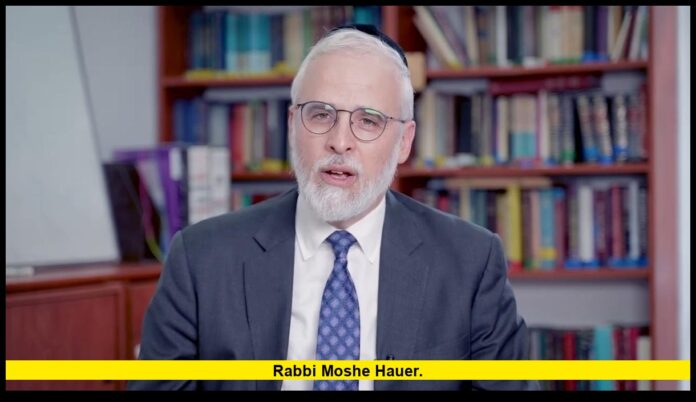
The name Rabbi Moshe Hauer has been at the center of mourning and reflection across Jewish communities in the United States following his unexpected passing on October 15, 2025, during the Jewish holiday of Shemini Atzeret. His sudden death, reportedly due to a heart attack at his home in Baltimore, has deeply impacted the Orthodox community he served and led for decades.
Table of Contents
A Pillar of Jewish Leadership
Rabbi Moshe Hauer was widely regarded as one of the most respected rabbinic voices of his generation. Serving as the Executive Vice President of the Orthodox Union (OU) since May 2020, he became a central figure in guiding American Orthodox Jewry through moments of challenge and growth.
Prior to his national role, Rabbi Hauer spent over 26 years as the spiritual leader of Congregation Bnai Jacob Shaarei Zion (BJSZ) in Baltimore, Maryland. His leadership there transformed the synagogue into a vibrant center of Torah learning, communal support, and spiritual inspiration.
He was admired for his ability to connect across generations, his unwavering commitment to Torah values, and his skill in addressing contemporary issues with clarity and compassion.
Educational and Rabbinic Background
Rabbi Hauer’s leadership was rooted in a deep foundation of Torah scholarship and academic excellence. He received rabbinic ordination and a doctorate in Talmudic Law from Ner Israel Rabbinical College, one of the most prominent yeshivas in North America.
He also earned a Master of Science from Johns Hopkins University, giving him a unique ability to bridge traditional rabbinic learning with a broader intellectual perspective. This combination defined much of his work: deeply grounded in Torah, yet thoughtful and responsive to the modern world.
A Sudden and Painful Loss
On the morning of Shemini Atzeret, Rabbi Hauer reportedly suffered a fatal heart attack at his home in Baltimore. Because of the holiday, announcements were delayed until after Yom Tov, when the news spread quickly across Jewish communities in the U.S. and abroad.
The timing of his passing during such a spiritually significant holiday added to the sense of shock and solemnity. Within hours, synagogues, schools, and community organizations shared statements of grief, highlighting his extraordinary influence and expressing condolences to his family.
Leadership at the Orthodox Union
When Rabbi Moshe Hauer assumed the role of Executive Vice President of the Orthodox Union, he became the organization’s primary rabbinic voice. His responsibilities were vast, and his leadership coincided with some of the most complex periods in recent Jewish communal life.
Under his guidance, the OU strengthened initiatives in:
- Jewish Education – Advocating for strong Torah learning and improving access to Jewish schools.
- Public Policy and Advocacy – Engaging with U.S. lawmakers and representing Orthodox interests nationally.
- Community Support – Providing leadership during times of crisis, including antisemitic threats and global challenges.
- Religious Guidance – Offering halachic clarity and moral leadership on contemporary issues.
Colleagues frequently described him as calm, articulate, and deeply thoughtful, with an uncommon ability to express nuanced Torah positions in ways that resonated with both religious and secular audiences.
Impact in Baltimore and Beyond
Long before his national leadership, Rabbi Hauer’s impact in Baltimore was profound. At Congregation Bnai Jacob Shaarei Zion, he oversaw significant growth in membership, educational programming, and community involvement. His shiurim (Torah classes) attracted people from a range of backgrounds, creating a spiritual hub in the heart of the community.
His approach to leadership was defined by humility. He was known for listening as much as he spoke, offering personal guidance to individuals and families with genuine care. Many Baltimore residents considered him not just their rabbi, but their mentor and friend.
Even after moving into his national position, he maintained strong ties with his Baltimore community, often returning to speak, teach, and participate in communal life.
A Voice of Thoughtful Guidance
Throughout his career, Rabbi Moshe Hauer became a trusted voice of Jewish thought on pressing issues. Whether speaking about challenges facing the Orthodox community, global events affecting Israel, or moral questions in public life, his words carried weight.
He frequently delivered keynote addresses at major Jewish conferences, appeared on panels, and authored essays exploring contemporary issues through the lens of Torah. His clarity and compassion earned him respect across the ideological spectrum within Orthodox Judaism.
Timeline of Rabbi Moshe Hauer’s Life and Leadership
| Year | Milestone |
|---|---|
| 1960s | Born and raised in Baltimore, Maryland. |
| 1980s–1990s | Received rabbinic ordination and doctorate from Ner Israel; earned Master’s from Johns Hopkins University. |
| 1994 | Appointed Rabbi of Congregation Bnai Jacob Shaarei Zion (BJSZ) in Baltimore. |
| 2020 | Became Executive Vice President of the Orthodox Union. |
| 2020–2025 | Led national Jewish initiatives, represented Orthodox communities in the U.S. |
| October 15, 2025 | Passed away suddenly at home in Baltimore during Shemini Atzeret. |
National and International Reaction
The news of Rabbi Hauer’s passing led to an outpouring of grief and tributes across Jewish communities in the U.S., Israel, and other countries.
- Rabbinic leaders spoke of losing a colleague whose voice brought unity and depth to national conversations.
- Community members shared personal stories of his kindness and accessibility.
- Jewish organizations acknowledged his strategic vision and steady leadership, especially during turbulent times.
His funeral is expected to draw large crowds, with thousands paying their respects to a leader whose impact spanned both local and national spheres.
A Legacy That Will Endure
While his passing is sudden and heartbreaking, Rabbi Moshe Hauer’s legacy is already firmly established. His decades of Torah teaching, communal leadership, and personal guidance have shaped thousands of lives. His recorded lectures, published writings, and the institutions he strengthened will continue to influence future generations.
More than anything, his legacy is one of integrity, scholarship, and service. He combined intellectual brilliance with personal humility, guiding communities not from a distance but from within.
How has Rabbi Moshe Hauer’s leadership impacted you or your community? Share your reflections and memories in the comments below.

