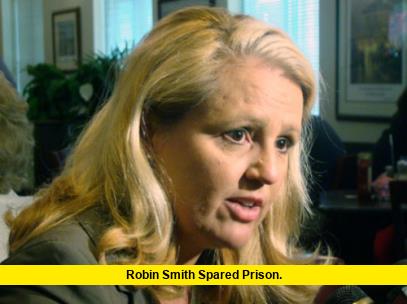
In a major legal development that drew immediate statewide attention, Robin Smith spared prison after a federal judge overturned her previously imposed incarceration and re-sentenced the former Tennessee lawmaker to probation. The ruling came just as Smith was preparing to report to federal custody, marking a striking shift in one of Tennessee’s most closely watched public corruption cases in recent years.
The decision closes a turbulent chapter in a case that exposed deep concerns about ethics in state government, the limits of accountability, and how sentencing outcomes can change when extraordinary legal circumstances emerge.
Table of Contents
Prison Term Vacated at the Eleventh Hour
Robin Smith, a former Republican state representative from Hixson, had been sentenced to eight months in federal prison for her role in a political corruption scheme. That sentence was scheduled to begin this week. Instead, the court intervened at the last moment, removing the prison term and replacing it with one year of probation.
The ruling meant Smith would not serve any time behind bars. Instead, she will remain under court supervision while complying with the terms of probation set by the judge. The decision stunned observers because sentence reversals after final judgment are rare, especially when a defendant is already preparing to report to prison.
Who Is Robin Smith?
Robin Smith served in the Tennessee House of Representatives for more than a decade, representing the Hixson area. During her tenure, she held leadership roles within her party and was considered a reliable figure in state politics.
Her political career ended after federal investigators uncovered a scheme involving the misuse of taxpayer funds. Smith later admitted her involvement and pleaded guilty, becoming a central figure in a case that would ultimately entangle some of the most powerful figures in Tennessee government.
The Corruption Case Explained
At the center of the case was a political consulting operation that prosecutors described as fraudulent. A company was created and presented as a legitimate vendor, but it was used to route public funds for political benefit rather than lawful government purposes.
Smith acknowledged that she participated in steering business toward this entity while serving in public office. Her actions violated federal law governing honest services, which requires public officials to act in the best interest of the public rather than for personal or political gain.
The case sent shockwaves through the state because it involved high-ranking officials and raised questions about oversight, transparency, and ethical safeguards in the legislature.
Original Sentencing and Fallout
After pleading guilty, Smith cooperated extensively with federal prosecutors. Her cooperation proved critical during the prosecution of other defendants tied to the scheme. Despite this, the court initially imposed an eight-month prison sentence, along with additional penalties.
That outcome surprised some legal observers, as cooperating defendants often receive reduced or non-custodial sentences. Still, the judge determined at the time that a prison term was appropriate given the seriousness of the offense and the need to deter public corruption.
Smith accepted the sentence and prepared to serve it.
A Sudden Shift in the Legal Landscape
The legal environment surrounding the case changed dramatically after two of Smith’s co-conspirators received presidential pardons. Those individuals had been convicted of crimes tied to the same scheme but were suddenly absolved of their prison sentences through executive action.
This development created a striking disparity: Smith, who had cooperated with prosecutors, now faced incarceration while others more centrally involved in the scheme would not serve time at all.
Her legal team moved quickly, arguing that enforcing Smith’s prison sentence under these circumstances would be fundamentally unfair.
Judge Reconsiders the Sentence
The court reviewed the request and ultimately agreed to modify Smith’s punishment. The judge vacated the prison term and replaced it with probation, citing the unusual and narrow circumstances surrounding the case.
While the detailed reasoning was not released publicly, the outcome reflected recognition that sentencing equity had been disrupted by events beyond the court’s control. The revised sentence ensured Smith would still be held accountable without imposing incarceration that no longer aligned with the broader case outcome.
What Probation Means for Smith
Under the new sentence, Smith will serve one year of probation. During that time, she must comply with all court-ordered conditions, which typically include regular reporting, restrictions on certain activities, and strict compliance with the law.
Probation remains a criminal sentence, but it allows Smith to remain in the community rather than entering federal prison. The court retains authority to impose additional penalties if probation terms are violated.
The Role of Cooperation
Smith’s cooperation played a key role throughout the case. She provided testimony and evidence that helped prosecutors build their case against other participants in the scheme. Her assistance was repeatedly cited as valuable during earlier court proceedings.
In federal cases, cooperation is often weighed heavily at sentencing. The revised outcome reinforces the principle that defendants who assist law enforcement should not face harsher consequences than those who do not, particularly when external factors alter the final outcomes for others involved.
Public Reaction Across Tennessee
Reaction to the ruling has been mixed. Some observers argue the revised sentence reflects fairness and consistency, especially given the pardons granted to other defendants. They view probation as an appropriate resolution that still acknowledges wrongdoing without imposing disproportional punishment.
Others express concern that avoiding prison undermines accountability for elected officials who abuse public trust. For critics, the case underscores frustrations about unequal consequences and the perception that political figures are treated differently within the justice system.
Impact on Public Trust
The case has reignited debate about ethics in government and how corruption cases are punished. While the legal system followed established procedures, the final outcome illustrates how external actions can reshape sentencing in ways that leave the public questioning consistency and transparency.
For many Tennesseans, the case serves as a reminder of the importance of ethical safeguards and vigilant oversight in public office.
What Happens Next
Smith will now focus on completing her probation. Her legal status remains that of a convicted felon, and the sentence modification does not erase her conviction.
She may continue to pursue additional legal relief, but as of now, probation represents the final resolution of her criminal sentence.
A Case That Will Be Remembered
The outcome of the case will likely be studied by legal experts and policymakers for years. It highlights the complexities of sentencing, the influence of cooperation, and how extraordinary legal actions can alter outcomes even after judgment has been entered.
For Tennessee politics, the case stands as a cautionary tale about the lasting consequences of ethical violations and the unpredictable paths high-profile prosecutions can take.
What are your thoughts on the decision to re-sentence Robin Smith to probation instead of prison? Share your perspective or stay connected for further developments.

