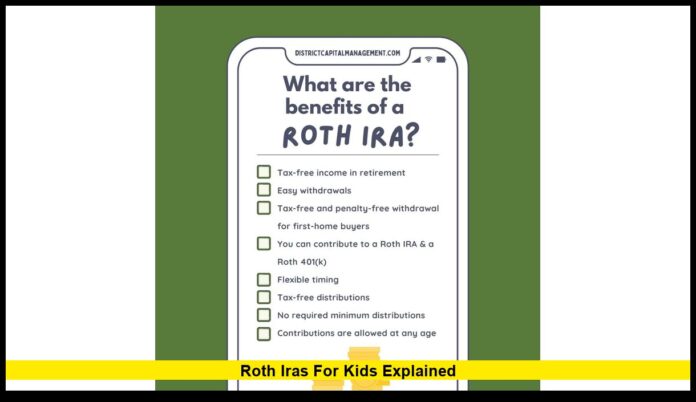
Roth IRAs for kids have quickly become one of the most popular financial tools for parents who want to give their children a head start in building long-term wealth. With stable contribution limits in 2025, new savings alternatives entering the market, and expanded rollover options, families across the United States are taking a fresh look at how these accounts can shape a child’s financial future.
Table of Contents
Why Roth IRAs for Kids Are Gaining Attention
Families are turning to Roth IRAs for kids because of their unmatched ability to combine early savings with tax-free growth. Starting early gives investments decades to compound, which can turn even modest contributions into significant sums over time.
In 2025, several changes have reinforced their importance, including the ability to roll over certain unused education savings into Roth IRAs and discussions about creating new child-focused savings programs. These developments make it even more crucial for families to understand how Roth IRAs for kids work.
Who Can Open a Roth IRA for a Child
A Roth IRA for kids is typically a custodial account, which means a parent or guardian manages it until the child reaches adulthood. The rules are straightforward:
- Earned income required: The child must have income from work—such as babysitting, acting, or a part-time job.
- Custodian oversight: A parent or guardian controls the account until the child reaches legal age (18 or 21 depending on state).
- Contribution limits: Contributions cannot exceed either the child’s earned income or the annual Roth IRA limit, whichever is lower.
This ensures that accounts are legally valid while teaching kids about responsibility and financial growth.
Contribution Limits in 2025
For 2025, the Roth IRA contribution rules for kids remain unchanged from last year:
- Maximum annual contribution: $7,000 for those under age 50.
- Earned income rule: If a child earns less than $7,000, contributions are capped at the earned amount.
- Combined limits: Contributions across all IRA accounts for the child cannot exceed the $7,000 cap.
This stability helps families plan contributions with confidence.
The Power of Long-Term Compounding
The biggest advantage of Roth IRAs for kids is time. Starting early means even small contributions can grow dramatically. For example:
- A single $7,000 deposit made at age 10, growing at an average of 7% annually, could grow to nearly $190,000 by age 60.
- Consistent contributions each year can create multi-million-dollar balances by retirement age, all tax-free.
This long horizon makes Roth IRAs one of the most effective tools for generational wealth building.
Key Benefits of Roth IRAs for Kids
- Tax-free withdrawals: Contributions grow tax-free, and qualified withdrawals in retirement are not taxed.
- Flexible use of contributions: Contributions (but not earnings) can be withdrawn at any time, penalty-free.
- Early qualified uses: Earnings can be tapped for first-time home purchases or higher education, under specific conditions.
- Financial education: Kids learn about saving and investing, building habits that last a lifetime.
Comparing Roth IRAs to Other Options
While Roth IRAs are powerful, they aren’t the only child-savings option. Here’s how they compare:
- 529 Plans: Great for education, but restrictive for other uses. Recent law changes allow some rollovers from 529s into Roth IRAs, creating flexibility.
- Custodial Investment Accounts: More flexible than 529s but lack the tax-free growth advantage. Assets become fully accessible to the child at adulthood.
- Traditional IRAs: Less useful for children, since their current tax rate is already very low, making Roth IRAs far superior.
How to Set Up Roth IRAs for Kids
- Confirm earned income – The child must have verifiable income.
- Choose a provider – Major brokerages like Fidelity, Schwab, or Vanguard offer custodial Roth IRAs.
- Open the account – The custodian sets up the Roth IRA in the child’s name.
- Fund the account – Contributions can come from the child’s earnings, or parents can contribute on their behalf (not exceeding earned income).
- Select investments – Long-term growth options like index funds or ETFs are most common.
- Teach the child – Review statements together and explain how investing works.
Recent Developments in 2025
529-to-Roth Rollover Option
Families can now roll up to $35,000 of unused 529 plan funds into a child’s Roth IRA over their lifetime, giving more flexibility when education savings go unused.
New Child Savings Programs
Discussions in Washington around new child-focused accounts highlight the growing interest in early savings. While still evolving, they show policymakers are paying attention to the benefits of early investing.
Stable Contribution Rules
The contribution cap for 2025 remains $7,000, providing predictability for planning.
Strategies for Maximizing Roth IRAs for Kids
- Match your child’s contributions: Parents can add money to match what their child earns, up to the limit.
- Contribute early in the year: More time in the market means more growth.
- Use diversified investments: Index funds and ETFs reduce risk while capturing long-term growth.
- Track carefully: Avoid over-contributing beyond earned income or annual limits.
- Leverage rollovers: Move unused 529 funds into Roth IRAs when applicable.
Potential Pitfalls to Avoid
- No earned income: Without taxable earned income, contributions aren’t allowed.
- Overcontribution: Exceeding the limit can trigger penalties.
- Premature withdrawals: Taking out earnings too soon may result in taxes and penalties.
- State laws: Custodian rules differ, so check local guidelines.
Why Roth IRAs for Kids Are a Smart Choice
By combining long time horizons with tax advantages, Roth IRAs for kids create opportunities for generational wealth building that few other accounts can match. They encourage financial literacy, offer flexibility, and lock in benefits that can last a lifetime.
For parents, guardians, and even grandparents, this is one of the most impactful tools available to support a child’s financial success.
FAQ
Q1: Can a child with babysitting income open a Roth IRA?
Yes, as long as the income is verifiable and reported for tax purposes.
Q2: What happens when the child turns 18 or 21?
The account transfers fully to the child, who then manages it as their own Roth IRA.
Q3: Can parents contribute to a child’s Roth IRA even if the child didn’t earn income?
No, the child must have earned income for contributions to be allowed.
Disclaimer: This article is for informational purposes only and does not provide financial, tax, or legal advice. Families should consult a qualified advisor before making investment decisions.

