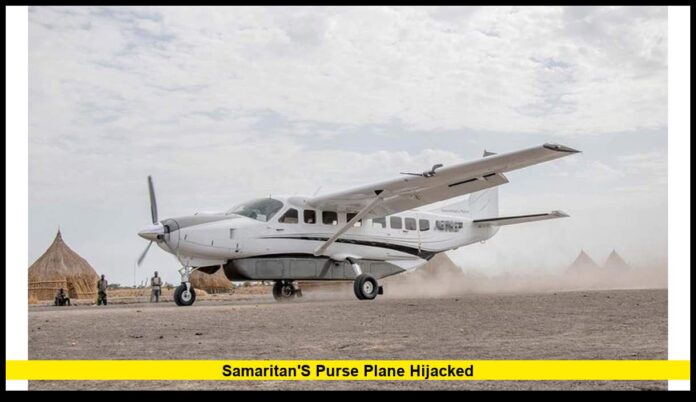
The samaritan’s purse plane hijacked incident on December 2, 2025, has drawn global attention after an armed man seized a humanitarian aircraft traveling from Juba to Maiwut in South Sudan. The latest verified updates confirm that the hijacker was arrested safely, nobody on board suffered serious injuries, and the aid mission is now under security review.
The aircraft involved was a Cessna Grand Caravan transporting medical supplies for a humanitarian relief operation. The organization confirmed that the pilot and one staff member were aboard when the armed man emerged mid-flight and forced the pilot to divert from the original route.
Table of Contents
How the Incident Unfolded
Shortly after takeoff from Juba, the suspect, who had concealed himself in the rear of the aircraft before departure, revealed a weapon and ordered the pilot to fly toward Chad. The pilot remained calm, communicated the need for a refueling stop, and negotiated a landing in Wau. Once on the ground, security forces surrounded the plane and detained the suspect without any violent confrontation.
Authorities have confirmed the following sequence:
- The aircraft departed Juba in the morning on a scheduled aid route.
- A man hidden in the back cabin stood up mid-flight and demanded the pilot divert the plane.
- The pilot convinced the hijacker that refueling was necessary.
- The diversion to Wau allowed security officials to arrest the suspect quickly.
- No crew member or passenger suffered physical harm.
The medical supplies on board were intact and later transferred to continue the planned humanitarian mission.
Who the Suspect Is
Officials identified the hijacker as a resident of the Abyei Administrative Area. He reportedly wore a vest resembling the logo of a local air charter operator while at the airport. That company has since denied any employment connection with him. Authorities have not confirmed the motive, and investigators are now examining whether the hijacker acted alone or had broader objectives.
Security teams are assessing how the suspect gained access to the aircraft. Early reports indicate he may have used a disguise to blend in with airport staff before entering the ramp area, raising concerns about airport screening protocols.
The Aircraft and Crew
The Cessna Grand Caravan is a widely used turboprop aircraft designed for rugged, remote operations. Humanitarian organizations rely on it to access regions with limited infrastructure. The aircraft was carrying medicines and supplies meant for mobile medical teams operating in Maiwut.
Only two crew members were on board during the incident:
- The pilot
- One humanitarian staff member accompanying the medical shipment
Both were evaluated after the event and reported uninjured.
Timeline of Key Events
| Time (Local) | Event |
|---|---|
| Morning, Dec. 2 | Plane departs from Juba International Airport on routine humanitarian mission. |
| Shortly after takeoff | Hijacker emerges, displays weapon, orders diversion toward Chad. |
| Mid-flight | Pilot negotiates landing for “necessary refueling.” |
| Arrival in Wau | Aircraft lands safely; security forces surround the plane. |
| Within minutes | Hijacker arrested; crew escorted to safety. |
Authorities launched a full investigation into the breach, including interviews with airport staff, examination of surveillance footage, and review of aircraft access logs.
Humanitarian and Security Impact
This incident highlights ongoing security risks facing aid flights in regions affected by political tension, armed groups, and unstable borders. Humanitarian aircraft often carry essential supplies, making them crucial lifelines for communities lacking access to healthcare, food, or emergency support.
Possible impacts include:
- Temporary tightening of airport access controls
- Review of screening procedures for humanitarian flights
- Additional security escorts for aid aircraft
- Revised training protocols for pilots and humanitarian staff
Despite the hijacking, the organization reported that its medical operations in the region remain active. However, leadership is expected to reassess logistics and security routes in the coming days.
Another Recent Aviation Event Raises Pressure
The hijacking occurred only one week after a separate aircraft, also connected to humanitarian operations in the region, crashed during a flight in Unity State. That unrelated accident resulted in the deaths of three crew members.
Although the two incidents are not connected, the close timing has intensified attention on the safety environment for aid missions in South Sudan. Aviation regulators and humanitarian agencies have already begun parallel reviews that may lead to updated procedures or operational safeguards.
U.S. Interest and Relevance
Samaritan’s Purse is headquartered in North Carolina and is one of the most active U.S.-based humanitarian groups operating in conflict zones. Any threat to its aircraft or personnel overseas draws close monitoring from American organizations that rely on its global logistics network.
For U.S. readers, several points stand out:
- Aid programs supported by American donations depend on reliable transportation routes in Africa.
- U.S. nationals working on overseas humanitarian missions often travel on small aircraft like the one hijacked.
- Events like this can influence future travel advisories and safety guidelines.
- Aviation disruptions may delay medical shipments funded by American partners.
The safe outcome of this hijacking is a relief for families, donors, and partners connected to the organization’s work.
What Investigators Are Currently Examining
Authorities in South Sudan are now focused on three core areas:
1. Access and Screening Failures
Investigators are reviewing how the hijacker entered the airport’s secure zone, boarded the aircraft, and concealed himself without being detected.
2. Motive and Background
Officials have yet to release a motive. They are analyzing the suspect’s travel history, past employment, and any possible affiliations.
3. Future Prevention Steps
Following the incident, aviation officials are evaluating whether additional screening technology, staffing increases, or flight-line access restrictions are needed.
Key Facts at a Glance
- Date: December 2, 2025
- Location: Flight from Juba to Maiwut, diverted to Wau
- Aircraft: Cessna 208B Grand Caravan
- Purpose: Delivery of medical supplies
- People on board: Pilot and one staff member
- Casualties: None
- Outcome: Hijacker arrested; aircraft secured
- Investigation: Active and ongoing
Looking Ahead
Humanitarian groups operating in South Sudan remain focused on maintaining access to isolated communities while supporting increased security measures. The swift resolution of the incident demonstrated strong coordination between pilots and local law enforcement, but it also underscored the need for enhanced airport protection.
As investigators work to close remaining gaps, aid flights continue delivering essential support to the region, though with heightened vigilance.
Share your thoughts below and stay connected for the latest verified developments as this story continues to unfold.

