The San Antonio election results 2025 have brought significant changes to the city’s leadership and major public projects, marking a pivotal point for Texas’s second-largest city. With new leaders elected and major propositions passed, voters have set the course for San Antonio’s development, economy, and civic direction for the next decade.
Table of Contents
Voters Approve Major Propositions
The most discussed outcomes in the San Antonio election results 2025 are the two high-profile propositions — Proposition A and Proposition B. Both measures were designed to boost local development by increasing visitor-related taxes to fund key infrastructure projects. Proposition A focused on expanding the hotel occupancy and rental car tax to upgrade major entertainment venues, including the Frost Bank Center, Freeman Coliseum, and the San Antonio Stock Show & Rodeo complex. Proposition B proposed a similar tax increase to finance a new downtown arena and entertainment district.
Proposition A passed with approximately 57% support, while Proposition B was approved narrowly with about 53% of the vote. This shows that voters are open to long-term investment in San Antonio’s infrastructure without increasing the tax burden on residents. City officials estimate that these taxes will generate hundreds of millions of dollars over the next decade, creating jobs, supporting local businesses, and enhancing San Antonio’s reputation as a regional entertainment hub.
However, not all voters were in agreement. Critics argued that the projects benefit large corporations more than residents, raising concerns about fiscal transparency. In response, city officials promised strict oversight and regular audits to ensure accountability in project execution.
Historic Mayoral Race Outcome
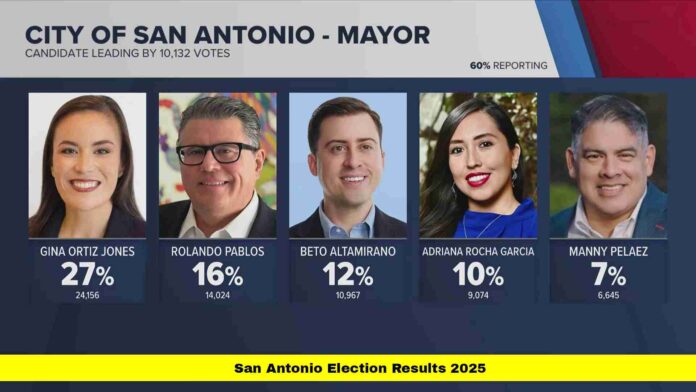
The mayoral race in the San Antonio election results 2025 was one of the most competitive in recent memory. After a crowded field of 27 candidates in the first round, the runoff election ended with Gina Ortiz Jones defeating Rolando Pablos with 54.3% of the vote. Her victory is historic — Ortiz Jones becomes the city’s first openly LGBTQ+ mayor and the first to serve a four-year term following recent changes to the city charter.
Her campaign centered on economic inclusion, affordable housing, and infrastructure modernization. Ortiz Jones emphasized that San Antonio must grow responsibly, ensuring that new investments benefit all residents, not just the downtown core.
Her opponent, Rolando Pablos, campaigned on fiscal conservatism and a vision for business expansion but conceded shortly after results were announced. Ortiz Jones’s leadership is expected to usher in a new era of collaborative governance, with a focus on balancing progress with sustainability.
City Council Elections Bring New Faces
The City Council elections also brought several new leaders into San Antonio’s political landscape. Three open council seats were filled by newcomers — Misty Spears in District 9, Ivalis Meza Gonzalez in District 8, and Ric Galvan in District 6, who won by a slim margin of just 25 votes. Incumbent Sukh Kaur secured re-election in District 1 with 65% of the vote, maintaining her influence in shaping education and housing policy.
This new mix of experienced and fresh leadership is expected to create a more dynamic council. The balance between progressive reformers and moderate incumbents could lead to lively debates on topics like zoning, policing, and city spending. With Ortiz Jones and the new council in office, residents can expect a renewed emphasis on community engagement and transparent governance.
Voter Turnout Signals Strong Civic Interest
The San Antonio election results 2025 also reflected an impressive voter turnout. More than 60,000 ballots were cast by midday on Election Day, and early voting reached over 11.5% of registered voters — one of the highest rates in recent municipal elections.
This level of engagement underscores that residents were deeply invested in the city’s future, particularly on issues tied to public investment and local infrastructure. Analysts noted that the turnout spike was driven by the economic implications of the propositions, as well as the diversity of the mayoral candidates.
Community groups and advocacy organizations also played a strong role in encouraging voter participation through neighborhood canvassing, online outreach, and local forums. This renewed energy around civic participation could reshape local politics for years to come.
Economic Implications of the Results
With the passage of the two major propositions, San Antonio is entering a new phase of economic growth and transformation. The increased hotel and rental car taxes will fund vital projects designed to attract tourism, create jobs, and revitalize downtown areas.
City planners estimate that the combined impact of Propositions A and B could bring in over $500 million in development funds. This revenue will help finance upgrades to the Frost Bank Center, enhance the Freeman Coliseum facilities, and begin work on the new multi-purpose downtown arena. The arena, once completed, is expected to attract major concerts, sporting events, and conventions, boosting San Antonio’s standing as a key entertainment destination in Texas.
Supporters argue that these projects will not only enhance the city’s image but also create thousands of construction and hospitality jobs. Local small businesses, from restaurants to hotels, are expected to see a surge in revenue once these projects are completed.
However, the city council will face the challenge of managing these projects responsibly, ensuring that spending remains transparent and that the benefits extend beyond the city’s core to neighborhoods throughout San Antonio.
Political Landscape After the Election
The political tone in San Antonio following the 2025 elections has shifted toward collaboration and inclusivity. Mayor Ortiz Jones’s administration is expected to prioritize community-driven policies while maintaining fiscal discipline. The new council will need to navigate key issues such as affordable housing, traffic management, environmental sustainability, and equitable economic growth.
San Antonio’s rapid expansion has led to debates about zoning laws and the preservation of historic neighborhoods. The council is likely to face pressure to strike a balance between supporting growth and maintaining the city’s cultural identity.
As part of her post-election address, Ortiz Jones emphasized the need for unity and accountability. She called for a “San Antonio that works for everyone,” promising to prioritize public transparency in all major decisions.
Community and Business Reactions
Following the announcement of the San Antonio election results 2025, reactions from the community and business leaders have been largely positive. The business community welcomed the approval of the propositions, viewing them as catalysts for long-term investment and tourism growth. Developers and hospitality industry representatives have already expressed interest in partnerships to advance construction and infrastructure projects.
Community leaders, while supportive of the development, stressed the importance of equitable implementation. They urged the city to ensure that new developments include affordable housing provisions, improved public transportation, and environmental safeguards. Civic groups have also requested regular progress reports and open forums to keep citizens informed about project milestones.
The election has rekindled civic pride across the city, highlighting that residents are deeply invested in shaping the community’s future.
Challenges Ahead
Despite the optimism surrounding the election results, challenges remain. Implementing the approved projects will require careful coordination among city departments, contractors, and stakeholders. Inflation and rising construction costs could strain the projected budgets. Furthermore, the city will need to address ongoing issues like homelessness, road maintenance, and public safety, which remain top concerns for residents.
The Ortiz Jones administration will also face scrutiny over how effectively it manages the transition from campaign promises to tangible results. Residents are likely to hold their leaders accountable through increased participation in city council meetings and local advocacy initiatives.
Looking Ahead: The Road to San Antonio’s Future
The San Antonio election results 2025 are more than a snapshot of political change — they are a roadmap for the city’s next chapter. With voter-backed infrastructure investments and new leadership committed to progress, San Antonio is poised for a decade of growth and innovation.
These results reflect a city that is embracing modernization while remaining rooted in its cultural identity. Whether it’s through the construction of a world-class arena, revitalized entertainment districts, or progressive leadership, San Antonio is preparing to step onto a bigger stage — locally and nationally.
As implementation begins, residents, officials, and community groups will play a crucial role in ensuring that the benefits of this new era are shared across every neighborhood.
San Antonio’s 2025 elections will likely be remembered as a defining moment — one that captured the city’s spirit of unity, ambition, and hope for a brighter future.

